Is that you again, demand destruction? This time fossil fuels are in doubt
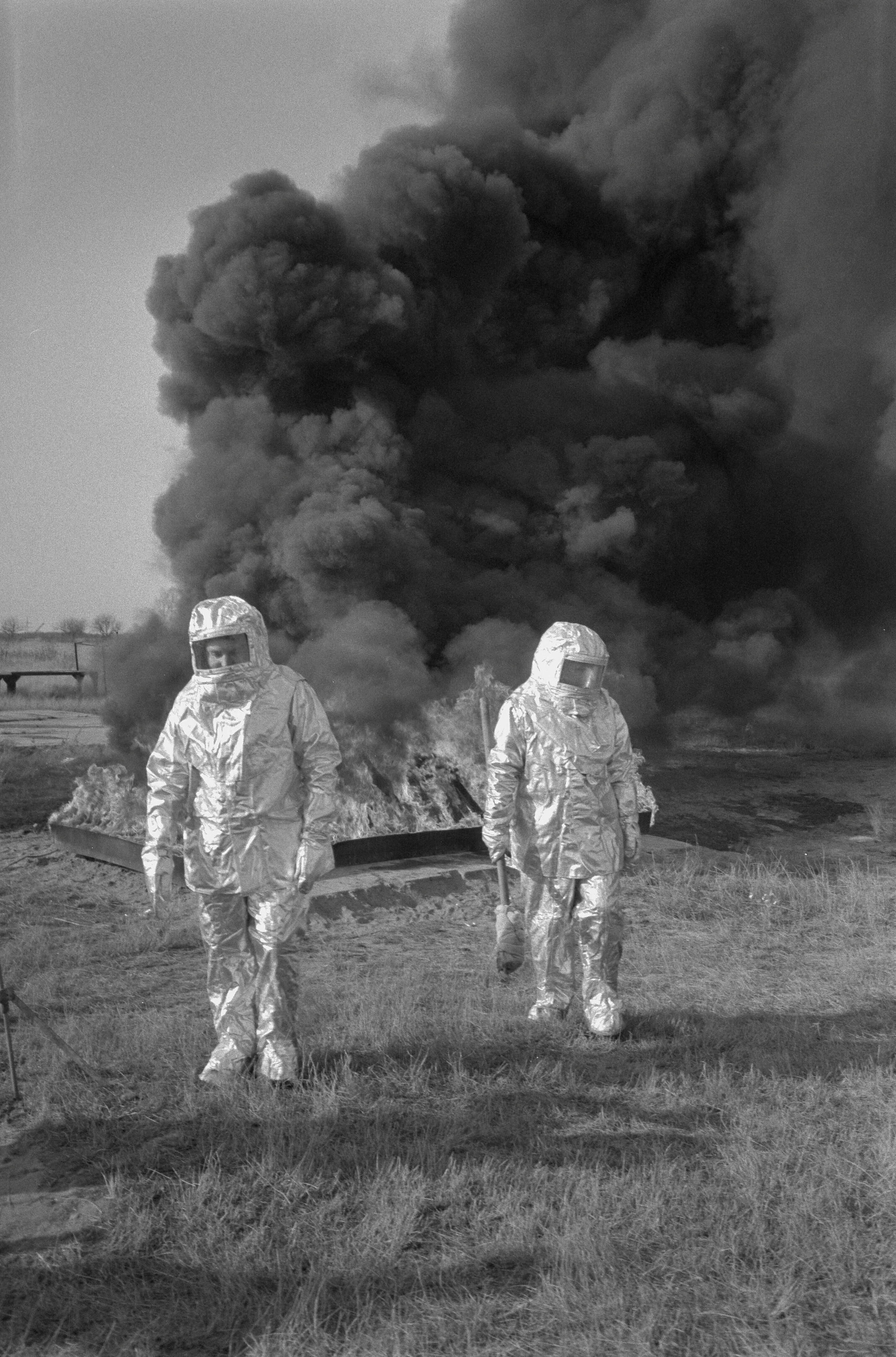
'Demand destruction' can take different forms. Asbestos, once prized for fireproofing buildings and protective gear, is now in far shorter supply. Image: Reuters/Dominique Dudouble
- ‘Demand destruction’ can happen when prices surge or supply dwindles. The term is flourishing as the squeeze in the Strait of Hormuz forces economies to forego oil imports.
- Demand can be depleted in different ways. From asbestos to whale oil, materials once deemed vital have faded away; some historical cases might be instructive.
Imagine: you’re the Asbestos King, living in a literal castle in small-town Pennsylvania.
When Richard Mattison was turning his asbestos company into a fin-de-siècle juggernaut, and his house into something fit for British royalty, the fibrous mineral was still prized by anyone erecting a building or insulating pipes. Economic activity relied on it to an extraordinary degree. By the early 1900s, Mattison owned the local bank and had built an opera house.
It wasn’t until many decades, mergers, and legal claims later that his operation followed its asbestos-industry peers into bankruptcy. Science determined the material was dangerous. We mostly stopped using it.
How about fossil fuels? Their shortcomings for human well-being have been amply demonstrated. Last month tied the mark for the world’s hottest on record, set just a couple of years ago. Human-caused climate change is being blamed. Yet, petroleum still makes the global economy tick. For now.
The supply shortage triggered by the Iran war and a throttling of the Strait of Hormuz has denied the global economy billions of barrels of oil that would otherwise be pouring into refineries, transportation, and factory production. Economies are finding fossil-fuel workarounds. The term “demand destruction” is flourishing.
In an interview not long after the trouble in the Strait of Hormuz began, Saad Rahim, the chief economist at commodity trading firm Trafigura, offered some perspective on oil flows. “At some point, given the scale of disruption,” he said, “we’re not just looking at a price impact, it’s that you don’t have the molecules, so that is demand destruction.”
More than four months later, signs of destruction are accumulating. The International Energy Agency recently estimated that overall demand for oil will decline this year by an average of 1.6 million barrels per day.
The most important question: how much of this is merely temporary, and how much will be permanent?
Historical patterns of destruction have differed, depending on context. America used about 31.5 million metric tons of asbestos during the 20th century, for example – but that was already in steep decline when the collapse of the Soviet Union, a noted power user, hastened a subsequent asbestos wind-down in much of Europe. A growing official awareness of its downsides, and related restrictions, followed in China.
But who knows, a comeback of sorts might be on the cards. Last year, America’s primary federal environmental regulator said it was reconsidering its ban on a type of asbestos used in industrial equipment. It later reversed course.
New ways to keep the lights on
One casualty of demand destruction unlikely to benefit from a rethink is whale oil.
The practice of harvesting oil from the marine mammals hit its stride in the days of Captain Ahab. At that point, it was necessary to keep the lights on. Nothing else could produce such a safe, bright flame that didn’t stink up a bedroom or the White House (not long ago, museum curators disassembling a watch used by US president Abraham Lincoln in the 1860s had to worry that it might be gummed up with the stuff).
The amount of whale oil harvested by American crews began a terminal decline in the middle of the 19th century. That was at about the same time as the discovery of a way to turn petroleum into kerosene, which prompted a wave of successful oil exploration. Concocting the liquid in a still in Brooklyn was easier than harpooning a large animal on the high seas. Kerosene would become the primary lighting fuel for the remainder of that century and into the next.
Whale oil didn’t disappear, of course. People found other uses for it, like margarine to spread on toast, or nitroglycerin to blow things up. It was only when it became clear that many types of whale were nearly extinct that whaling finally hit its peak in the 1960s.

Efforts have been made over the years to draw lessons from the whale oil industry’s fate that might be instructive. One mark of permanence for its demand destruction was every purchase of a kerosene lamp.
For 21st-century petroleum, the same might be said of every satisfied buyer of an electric car. By that measure, the permanent portion of present demand destruction may be more than negligible. Sales of electric models in countries like Australia, Brazil, India, and Viet Nam roughly doubled between March and June. Some experts have called it a tipping point.
Demand destruction or 'readjustment?'
These days, we'd probably call what Henrik Kalmeter did industrial espionage. The Board of Mines official was among of a group of Swedes sent to Britain in the 18th century to learn as much as possible about local industry, and report back. Some of his best bits of treasure concerned lead: the profitability of a high-quality lead ore, or how to turn low-quality ore into pure bars (it involves a lot of hammering).
The versatile metal was long desired for use in everything from pipes to paint. Appetite diminished, however, when the downsides of lead exposure became too devastating to ignore. Professional painters were dying at an unusual rate. A study found that car exhaust from leaded petrol made generations of people more depressed and anxious.
The last stockpile of leaded petrol was used up in 2021, and by 2024 nearly half of all countries had legal restrictions on the use of lead paint. But demand destroyed in some ways was restored in others. The use of lead in batteries increased dramatically, which has also created health concerns. It’s tough to quit things that are highly useful.
That’s true even when alternatives are available. The world added a record 800 gigawatts of renewable energy capacity last year, but oil-and-gas demand also grew – as part of something the World Economic Forum’s most recent Energy Transition Index called “addition rather than substitution.”
Assessing recently diminished demand for oil isn’t a straightforward proposition. There’s some confusion about how much is still exiting Hormuz, officially or not. And China’s heavy investment in renewable energy and electrified transportation has endowed its economy with surprising flexibility during the supply shock. The oil-importing country has managed to curb its normally considerable appetite in a way that’s been dubbed “demand readjustment.”
Still, the overall direction of things seems clear enough. There are a variety of triggers for demand destruction that can be effective. And it’s only natural to rely less on something, the more it makes daily life uncomfortably expensive.
Nearly two decades ago, a British financial historian suggested that we’ll always be spurred to find substitutes for the things we need most. “Even without whales, lamps carried on being lit,” he wrote. “That’s how capitalism works.”
License and Republishing
World Economic Forum articles may be republished in accordance with the Creative Commons Attribution-NonCommercial-NoDerivatives 4.0 International Public License, and in accordance with our Terms of Use.
The views expressed in this article are those of the author alone and not the World Economic Forum.
Related topics:

Forum Stories newsletter
Bringing you weekly curated insights and analysis on the global issues that matter.
More on Economic GrowthSee all

Ramya Krishnaswamy and Tony Simpson
October 1, 2026


