How using autonomous AI in supply chains can build economic resilience
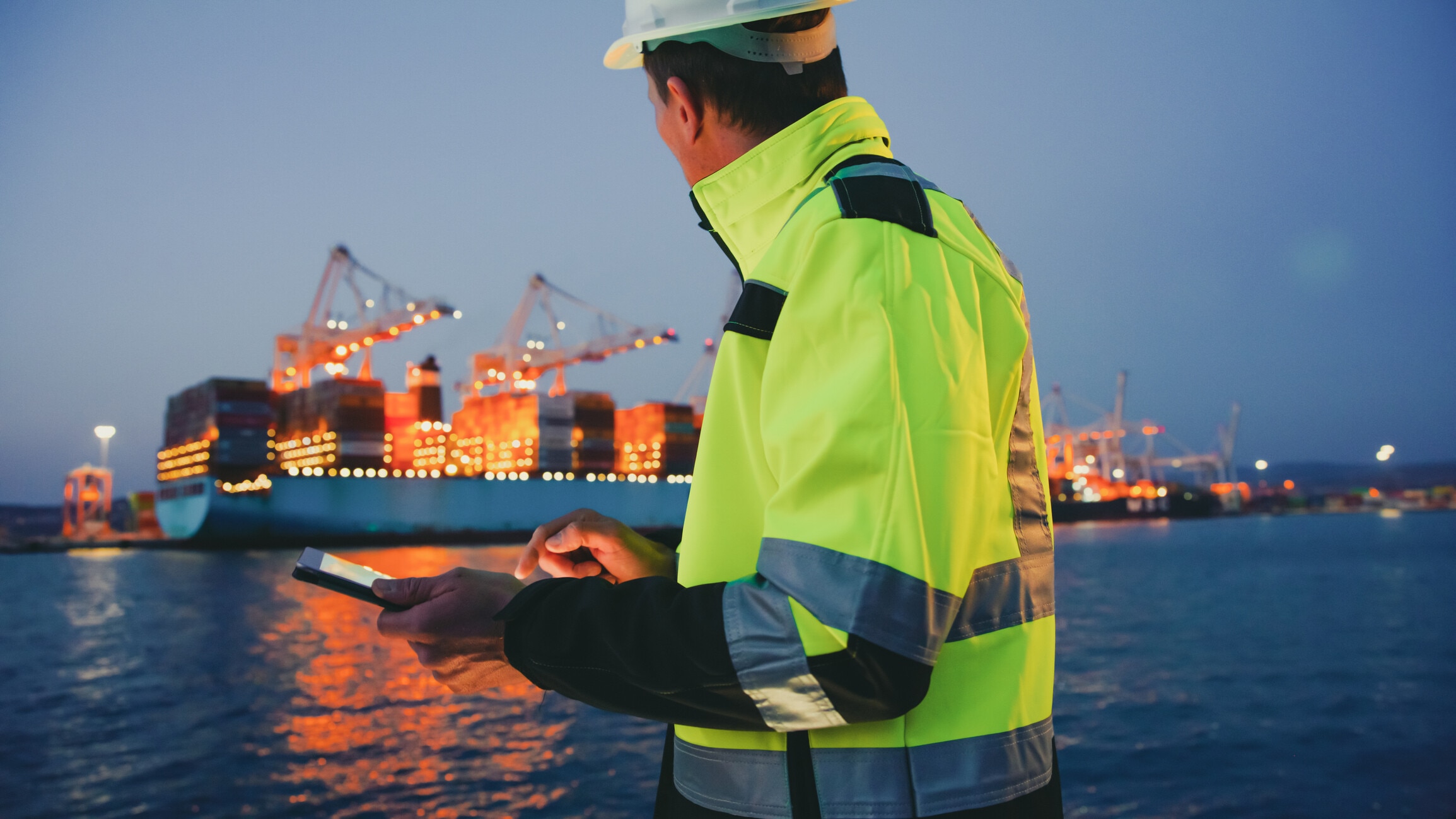
Autonomous AI can be used to make supply chains more resilient – with the right approach and human oversight. Image: Getty Images/SimonSkafar
- Supply chain disruptions cost the global economy billions, but autonomous artificial intelligence (AI) systems can help tackle the cascading risks – and costs – of such events.
- Five foundations – trusted business data, integrated processes, industry context, governance and learning loops – can help organizations use autonomous AI responsibly.
- But greater use of autonomous AI by organizations across global supply chains will require collaboration between the public and private sectors.
Supply chain disruptions cost $86 billion in 2025, according to some estimates. But as companies using artificial intelligence (AI) move from systems that detect disruption toward systems that can act on it, will greater autonomy make supply chains more resilient? The answer is not automatically yes.
Most supply chains still rely on fragmented systems, siloed data and human-mediated handoffs to make decisions. Predictive analytics have been able to improve visibility, identify anomalies and support scenario planning. But people are still needed to interpret the outputs and act across disconnected systems.
Autonomous operations address this constraint. AI agents, operating within defined guardrails, can identify disruptions, evaluate options and execute coordinated responses in real time. And this detect-decide-act-learn loop, which was once measured in days, can now close in minutes.
The humans involved in this process take on a dual role: Building the rich, governed context layer that allows autonomous systems to function, and validating critical decisions and learning loops by acting as "human-in-the-loop" experts.
A poorly governed autonomous system can make wrong decisions at greater speed and scale. Across connected networks, organizations using similar data and optimization logic could amplify demand for the same suppliers, transport capacity or inventory.
Progress therefore depends on whether the foundations beneath autonomous systems make decisions more reliable, coordinated and accountable.
Accelerating agentic AI investment
Spending on supply chain management software with agentic AI capabilities will grow from less than $2 billion in 2025 to $53 billion by 2030, according to figures from Gartner. McKinsey estimates that agentic AI could reduce the cost of goods sold by 4-7%, improve supply chain productivity by 20-50% and compress decision cycles from weeks to hours or less.
Realizing such gains will depend on five foundations:
1. Trusted business data
AI agents are only as reliable as the data on which they act. An agent that can detect a supplier disruption is valuable. One that can also check inventory buffers, recalculate production schedules, identify alternative sources and initiate procurement is transformative.
Organizations with governed, integrated enterprise data have an advantage because AI agents need both intelligence and business context.
2. Process integration
Autonomous AI operations break down at the boundaries between disconnected systems. End-to-end integration spanning procurement, manufacturing, logistics and finance enables cross-functional orchestration.
Supply chain disruptions rarely remain within one function, so an autonomous response is only as effective as its ability to coordinate across functions.
This matters even more for transformative business practices: To truly re-think processes end-to-end, companies must look beyond functional boundaries, such as logistics or production planning.
3. Industry context
Generic AI can automate processes or act as a chatbot, but consequential supply chain decisions depend on context unique to an industry, including its process logic, data models, regulations and operational constraints.
Industry-specific AI embeds this knowledge in decision flows. This provides the boundary conditions needed to determine what is possible and appropriate across planning, sourcing, manufacturing, logistics and service.
In life sciences, for example, autonomous manufacturing models can coordinate across the value chain while maintaining compliance – generic AI without regulatory depth would fall short in pharma. In energy and natural resources, AI not only detects maintenance needs but autonomously dispatches services crews, deploys the right spare parts and reschedules operations.
Embedding industry knowledge into operations in this way helps organizations apply autonomous systems reliably and at scale.
4. Governance
Autonomous does not mean uncontrolled. Organizations need frameworks for human oversight, auditability and escalation so that speed does not undermine accountability or trust. They must determine when agents can act independently, when human approval is required and when decisions should be escalated.
AI agents need both technical and business evaluations, which always state and measure adherence to a clear goal. Industry regulations must be met. Agent decision records must be available and auditable. Life cycle management and versioning need to be an integral part of any agentic system. Authorization needs to be strictly governed, with a similar or even higher rigour than with human users.
As autonomy expands, transparency, auditability and traceability across AI agents become imperative. The faster agents can execute, the more precisely organizations need to define decision rights, thresholds and escalation paths before disruption occurs.
5. Learning Loops
Autonomous supply chain decisions often hinge on codifying an unstructured world. Logistics dispatchers, purchasing teams, demand planners, maintenance team leaders or shift managers hold tacit knowledge that may never have been documented before.
Agentic learning loops can capture this knowledge. People initially validate agentic proposals, building a rich company memory where decisions are recorded, structured and governed. Over time, the autonomy increases, together with precision and accuracy, based on the ongoing learning loop.
This allows companies to make everyday decisions more intentional, including which customer to prioritize during a supply shortage, which carrier to use during a disruption or which safety stock to transfer after a demand spike. It also allows companies to capture and continuously manage the differences between operating procedures and real-world human execution.
From organizational to economic resilience
If the world economy decoupled into two self-contained trading blocs, real GDP could fall by up to 5%, according to World Trade Organization estimates. This is why companies need to be able to thrive in a highly uncertain world.
Organizations that can detect disruptions early, coordinate across networks and adapt production, sourcing and logistics in an orchestrated way are better positioned to prevent operational shocks from becoming shortages, lost sales and missed customer commitments.
Autonomous AI does not guarantee this outcome. Systems using poor data, optimizing within disconnected functions or operating without adequate governance can transmit bad decisions across supply networks more quickly. Responding reliably and intelligently matters more than responding quickly.
Coordinating autonomous AI in global trade
The organizations that will lead the AI era will not necessarily have the most sophisticated models. They will have done the harder work of integrating data, rethinking processes, embedding industry knowledge, governing autonomous systems and creating human-AI learning loops.
That work is ultimately a private sector responsibility. But as autonomous AI becomes more deeply embedded in global trade flows, shared standards for data interoperability, agent governance and systemic risk will become increasingly important. Industry coordination and policy dialogue can play a constructive role in this.
Autonomy is the capability. Resilience is the outcome. Trusted business data, integrated processes, industry context, governance and learning loops will determine whether autonomous AI can build supply chain resilience.
Don't miss any update on this topic
Create a free account and access your personalized content collection with our latest publications and analyses.
License and Republishing
World Economic Forum articles may be republished in accordance with the Creative Commons Attribution-NonCommercial-NoDerivatives 4.0 International Public License, and in accordance with our Terms of Use.
The views expressed in this article are those of the author alone and not the World Economic Forum.
Stay up to date:
Supply Chain, Logistics and Transport
Related topics:


Forum Stories newsletter
Bringing you weekly curated insights and analysis on the global issues that matter.
More on Artificial IntelligenceSee all

E. Richard Gold
September 30, 2026


