Why animal-free drug testing is no longer science fiction
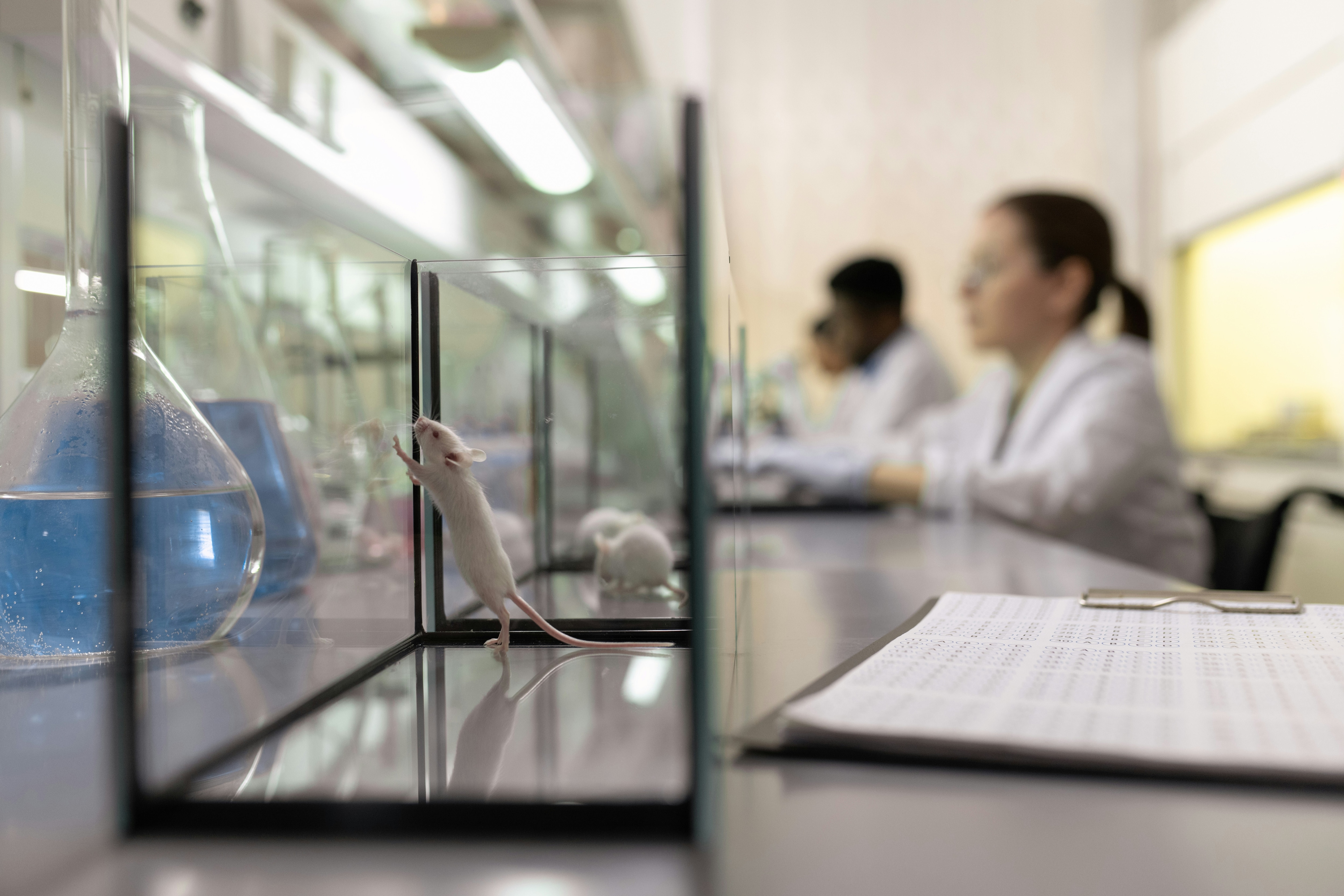
Image: Getty Images
- Over 95% of drug candidates that pass preclinical animal testing fail in human clinical trials.
- Human organoids, organs-on-a-chip and machine learning models now offer more accurate data-driven prediction tools.
- Transitioning away from default primate models will modernize pharmaceutical pipelines and accelerate future pandemic responses.
In March 2006, six healthy volunteers arrived at a London hospital to receive the first dose of an experimental drug called theralizumab. It had already passed every animal safety test, and the dose the patients received was 500 times smaller than the amount found safe in macaques, one of our closer primate relatives.
Within 90 minutes, all six volunteers were in multi-organ failure, their immune systems gone haywire from dangerous drug reactions that the macaque tests didn’t catch. Doctors were able to save their lives, though some volunteers suffered permanent, life-altering health complications.
After theralizumab, new safety protocols and tightened dosing guidelines for clinical trials were put in place. But in hindsight, it’s clear these reforms were a band-aid on a bigger problem: relying on primate testing as the default path to human trials isn’t good science.
The failure rate of animal models in preclinical research
For decades, nonhuman primates have occupied a privileged place in preclinical drug research. They theoretically mirror human biology more closely than mice, which is why we use them to test compounds before they move into human trials. And while our primate cousins sometimes provide a close-enough likeness to our own biology, they also diverge in some of the most important features that determine whether a drug will be safe or effective.
Primate testing didn’t catch theralizumab’s dangerous side effects because human immune systems are wired fundamentally differently than macaques’. The drug’s molecular target is expressed on different types of white blood cells in humans and macaques, meaning it triggers wildly different responses between the two species. Theralizumab is an extreme example, but it points to an underlying issue: the biological machinery of humans and our close evolutionary relatives differs in ways that can’t always be predicted.
Primate models can also fail in the opposite direction, flagging safe drugs as dangerous. Compounds that cause adverse reactions in macaques are typically abandoned before human testing ever begins. We’ll never know how many effective drugs didn’t reach patients because they failed a test that didn’t reflect human biology. On the other hand, ineffective drugs regularly sail through animal testing. Between 2002 and 2012 alone, 99.6% of Alzheimer’s drug candidates fizzled out in clinical trials, despite showing promise in animal models.
These patterns add up in the current state of the pharmaceutical industry. Over 95% of drugs that pass preclinical animal testing fail clinical trials, clearly demonstrating that the animal models we use to test drugs before clinical trials aren’t a reliable indicator of whether they’ll work in humans. The animals themselves make this worse: lab populations are typically inbred, genetically uniform and young – nothing like the diverse patients a drug actually has to work in. Testing on our closest animal kingdom cousins has historically been thought of as an ethical issue. It’s also a scientific and economic one.
Next-generation alternatives: Organoids, organs-on-a-Chip and AI
The good news is that better tools already exist to determine the safety and efficacy of drugs. Organoids – miniaturized, simplified versions of organs grown from real human tissue – can replicate the three-dimensional structure and behaviour of living organs better than the flat cell cultures of the past. In our own research, the human immune organoids we developed at Parallel Bio have been able to quickly detect the dangerous immune system reactions that theralizumab caused.
Organs-on-a-chip are another alternative, embedding real human cells in small devices that mimic the physical environment of an organ. In one 2022 study, liver organs-on-a-chip identified over 80% of compounds that had proven toxic in humans but were missed by prior animal testing. Organs-on-a-chip have also been used to successfully predict cancer patients’ responses to chemotherapy, albeit in a small sample.
Some of these tools don’t even require a lab at all. Machine learning models trained on human biological data can now simulate how a drug candidate binds to its target, screen for potential toxicity signals, and help researchers eliminate the weakest candidates before a single experiment is run. However, it’s essential these tools are trained on the right materials; the models are only as good as the data they use.
Taken together, these tools generate compounding, human-first datasets. Every experiment adds biological context across different types of human tissue, disease states and drug candidates, building towards a functional map of human biology, not an animal approximation.
Regulators signal a shift away from animal testing
This is no longer experimental. Multiple government agencies, including the FDA, NIH and EPA have all signaled their desire to shift away from animal testing and towards these new techniques. The FDA’s own roadmap envisions animal studies becoming the exception rather than the norm within the next three to five years. What’s needed now is for industry to follow.
We’re not asking for primate testing facilities to be shut down overnight. Alternative technologies are still developing, and there are things that they can’t measure, like how a drug acts systemically in the body, or how it affects behaviour. Animal testing remains useful there – for now. But “useful in some cases” is not a justification for making it the default in all cases for the rest of eternity. The pharmaceutical industry should commit to a concrete timeline: primate testing as the default path to clinical trials should be phased out by 2030, with exceptions reserved for cases where no validated alternative exists.
Future-proofing medicine against the next pandemic
Animal testing is often discussed in terms of the conditions the pharmaceutical industry focuses on: cancer, chronic illness, genetic disease. But the urgency extends to infectious disease, too. When COVID-19 emerged, mRNA vaccine candidates were designed within days, but validating them still depended on animal models and trial timelines that hadn’t changed in decades. The ability to model human immune responses at scale, without waiting on animal data, could be the difference between a rapid countermeasure and a months-long bottleneck. The next novel pathogen won’t wait.
There was a time when testing drugs in primates was the best option available. That time has passed. Medicine isn’t a fast-moving field, but it has always adapted when better technology arrived: the stethoscope gave way to the imaging scan; the scalpel to the laparoscope. Better tools for testing drugs are already here. It’s time we start using them.
Don't miss any update on this topic
Create a free account and access your personalized content collection with our latest publications and analyses.
License and Republishing
World Economic Forum articles may be republished in accordance with the Creative Commons Attribution-NonCommercial-NoDerivatives 4.0 International Public License, and in accordance with our Terms of Use.
The views expressed in this article are those of the author alone and not the World Economic Forum.

Forum Stories newsletter
Bringing you weekly curated insights and analysis on the global issues that matter.
More on Emerging TechnologiesSee all

Etay Maor
October 15, 2026