The future of space depends on keeping satellites alive longer
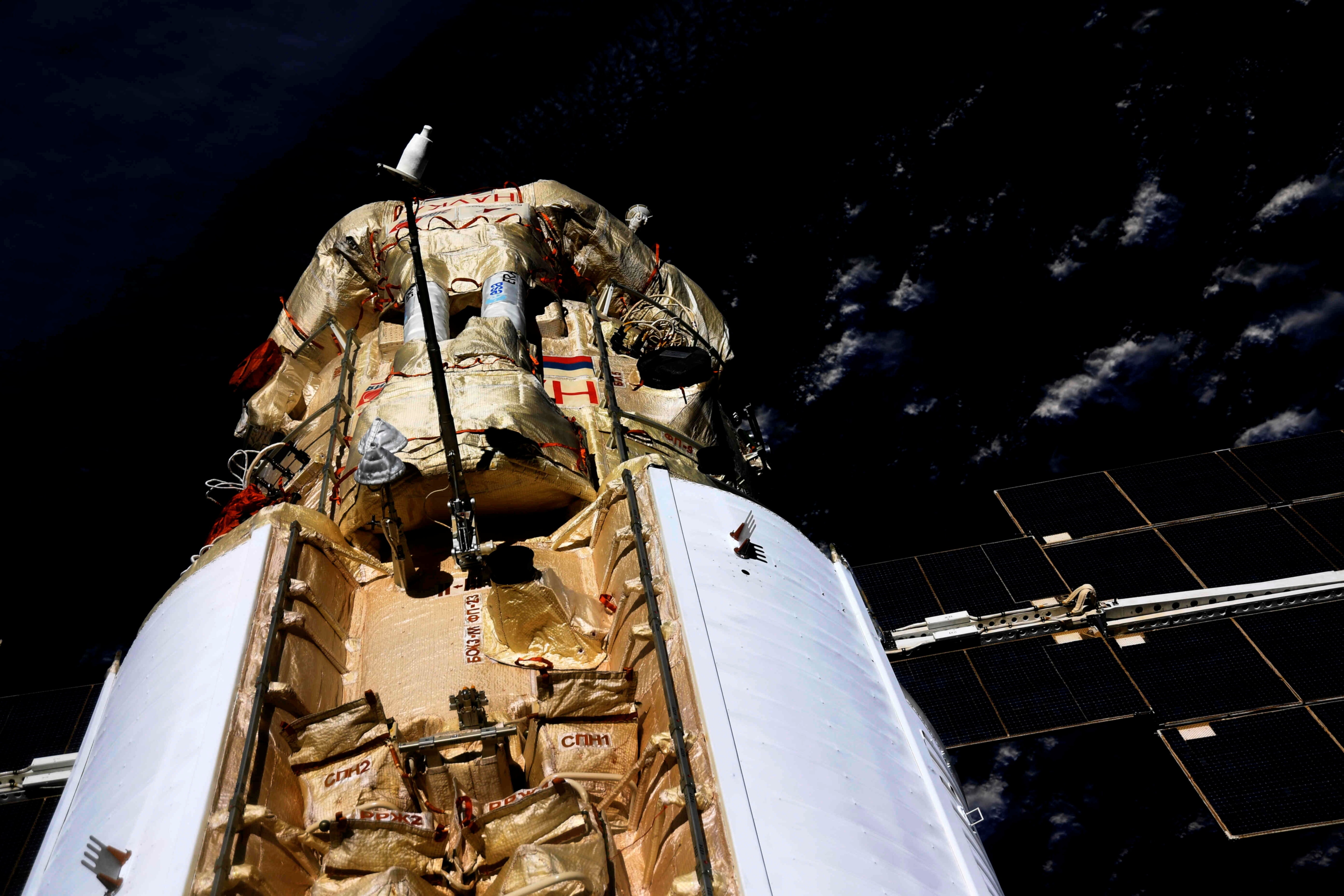
Space is becoming increasingly congested – and governments and corporates alike are waking up to the need to make satlelites last longer. Image: REUTERS
- The global space economy could reach $1.8 trillion by 2035 – but Earth's orbit already tracks more than 40,000 objects, with an estimated 1.2 million debris fragments too small to track yet capable of catastrophic damage.
- Satellites follow a "launch-and-replace" model built for an era of infrequent launches, wasting structurally sound spacecraft for minor reasons.
- On-orbit servicing and refuelling offers a practical alternative, extending satellite lifespans and slowing the accumulation of space debris.
A collision in space may seem a distant problem, but its consequences could reach Earth almost instantly. The collision of two objects wouldn’t just devastate those involved, but could release debris that could seriously interfere with or even destroy other satellites. That would be felt keenly by normal people and businesses.
Satellites support services billions rely on daily: GPS, internet connectivity, banking, weather forecasting, disaster response and global communications. As these services become embedded in modern society, space infrastructure reliability is becoming as important as roads and power grids. Yet the orbital environment is increasingly congested.
Thousands of operational satellites share space with decades of inactive spacecraft and debris. Without better ways to manage these assets throughout their operational lives, the growing risk of collisions threatens the long-term sustainability of space activities.
Is space running out of room?
The global space economy is expanding rapidly, with governments, companies and research institutions launching satellites at unprecedented rates. The global space economy could grow to US$1.8 trillion by 2035, driven by rising demand for satellite-enabled services. This growth has transformed Earth's orbit into a crowded environment: the European Space Agency (ESA) tracks more than 40,000 objects in orbit, while an estimated 1.2 million debris fragments larger than 1 centimetre remain too small to track but still capable of causing catastrophic damage.
As orbital traffic increases, so does collision probability. Even a small fragment travelling at orbital velocity can destroy a functioning satellite, generating thousands more debris pieces. In the most severe scenario, known as Kessler Syndrome, successive collisions could cascade, rendering valuable orbital regions unsafe for future missions. The consequences extend beyond the space sector. Interruptions to satellite services could affect financial systems, transportation, emergency response, climate monitoring and critical communications underpinning modern economies.
Disposable satellites no longer make sense
For decades, satellites have followed a "launch-and-replace" model. Once fuel is depleted or minor technical problems emerge, many spacecraft are retired despite remaining structurally sound. This was practical when launches were infrequent, but it's increasingly hard to justify amid rapidly expanding commercial space activity. Replacing satellites requires new manufacturing, additional launches and greater investment, while adding to orbital congestion through accumulated inactive spacecraft. Much like replacing an aircraft because it ran out of fuel would make no economic sense, retiring an otherwise healthy satellite simply because it can no longer manoeuvre is an increasingly inefficient use of valuable infrastructure.
The good news is that there are technically feasible options to avoid filling space with clutter and risking an irreversible disaster.
One technology receiving increasing attention is On-Orbit Servicing and Refuelling (OOSR). Rather than treating satellites as disposable once they face technical problems or run out of fuel, OOSR offers the possibility of maintaining, repairing and extending their operational lives directly in orbit.
Depending on the mission, servicing spacecraft can refuel satellites, inspect them for damage, reposition them, perform repairs or extend their operational lives. Extending satellite lifetimes delivers benefits beyond reducing replacement costs: every additional year of operation delays the need for another launch, conserves manufacturing resources and reduces the number of inactive satellites drifting in orbit.
Despite significant technological progress, making satellite servicing routine remains complex. Many existing satellites were never designed to be serviced, making docking and refuelling technically demanding. Autonomous navigation, robotic manipulation and precision operations must all function reliably in one of the most challenging environments engineers encounter.
If rolled out widely, these technologies support the emergence of a circular space economy. Rather than continually replacing infrastructure, operators are beginning to consider how satellites can be maintained, upgraded and reused throughout their operational lives, lifecycle management practices already standard across aviation, shipping and energy, where maintenance is recognized as more sustainable than replacement.
Around the world, governments, space agencies and commercial companies are investing in spacecraft inspection, robotic servicing, debris mitigation and life extension. While many of these capabilities are still being demonstrated, they collectively represent a shift towards managing orbital infrastructure as long-term assets rather than disposable hardware.
Toward a circular space economy
Extending satellite operational life directly improves the sustainability of the orbital environment. Keeping functional satellites in service longer reduces demand for replacement launches and slows the accumulation of inactive spacecraft that may become debris. Servicing also enables operators to relocate satellites more safely, maintain orbital positions and, in some cases, support responsible end-of-life disposal.
These benefits extend beyond individual missions. A safer orbital environment reduces risks for scientific exploration, commercial investment and international cooperation in space, and helps preserve access to critical orbital regions that future generations will depend on for communications, climate monitoring and technological innovation. Life extension alone won't solve the debris challenge, but it's an important component of a broader strategy that also includes responsible satellite design, active debris removal and improved space traffic management.
Technology is only part of the equation. International regulations, technical standards and commercial frameworks must evolve alongside servicing capabilities. Questions relating to liability, ownership, interoperability, safety and space traffic coordination require cooperation between governments, industry and international organizations. Building confidence in these technologies will depend not only on engineering success but also on developing shared rules that ensure servicing missions can be conducted safely and transparently.
A shared responsibility for sustainability in space
Humanity's dependence on space infrastructure will only grow. Protecting the vast and growing number of services that rely on them requires a shift in mindset: instead of viewing satellites as short-lived assets routinely replaced, they should be treated as critical infrastructure deserving maintenance throughout their operational life, much as societies invest in maintaining roads, bridges and power grids.
Satellite life extension is not a complete solution to orbital congestion, but it's one of the most practical and immediately deployable tools available today. Combined with stronger debris mitigation policies, responsible satellite design and international cooperation, it can help preserve Earth's orbital environment.
Don't miss any update on this topic
Create a free account and access your personalized content collection with our latest publications and analyses.
License and Republishing
World Economic Forum articles may be republished in accordance with the Creative Commons Attribution-NonCommercial-NoDerivatives 4.0 International Public License, and in accordance with our Terms of Use.
The views expressed in this article are those of the author alone and not the World Economic Forum.
Stay up to date:
Space
Related topics:


Forum Stories newsletter
Bringing you weekly curated insights and analysis on the global issues that matter.
More on Technological InnovationSee all

Linda Lacina, Pooja Chhabria, Spencer Feingold and John Letzing
October 13, 2026


