The global energy crisis is foremost an Asian energy crisis. It needs an Asian response
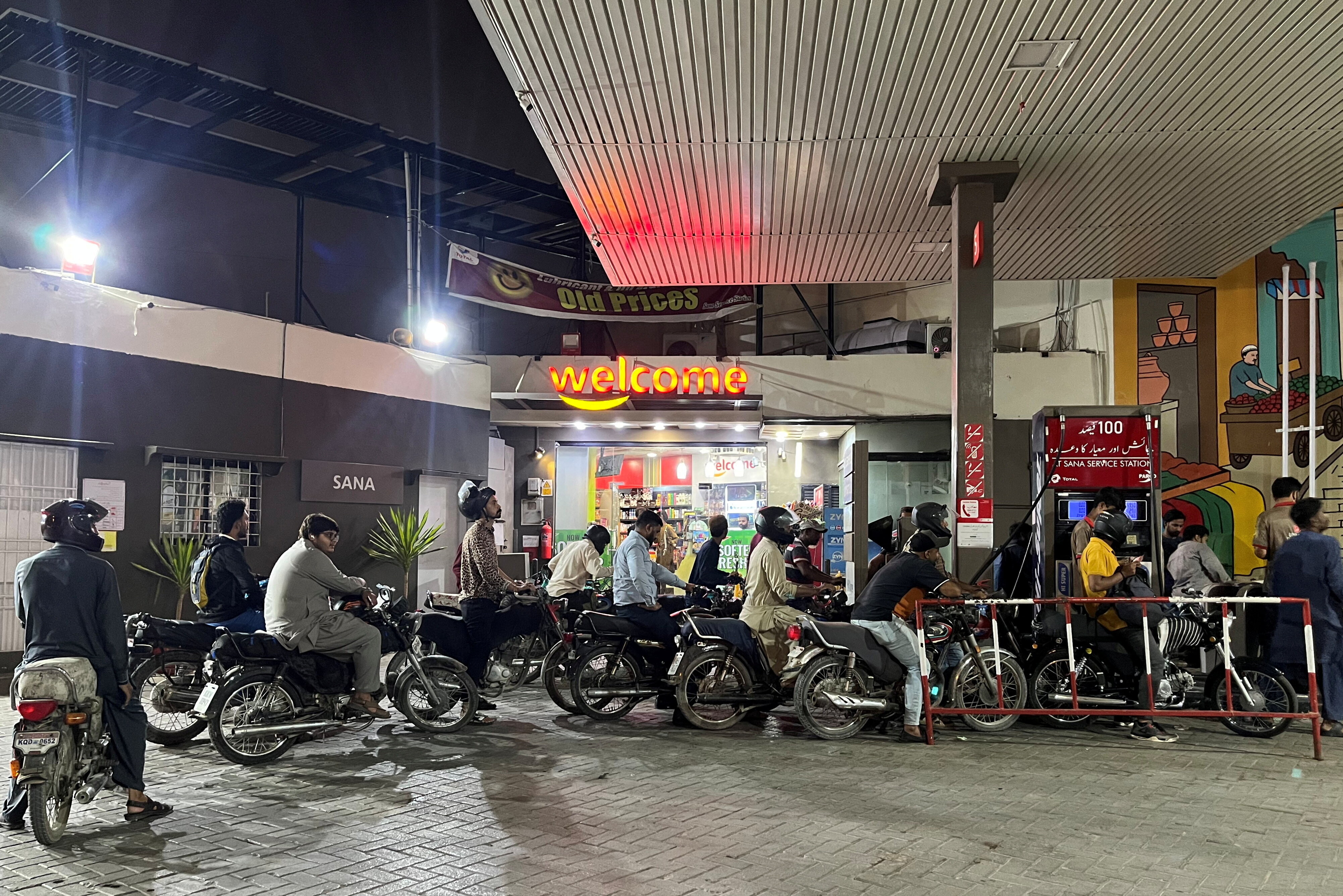
People queue for fuel in Karachi, Pakistan. Image: Reuters/Akhtar Soomro
- With greater reliance on Middle Eastern energy supplies, Asia has been hardest hit by the Strait of Hormuz closures.
- Richer Asian economies have deeper petroleum reserves and can afford to secure emergency LNG supplies – while developing countries are left exposed.
- The Asian energy crisis shows the need for greater coordinated regional action on energy security.
The attack on Iran by the US and Israel and the responses by Iran have resulted in the largest disruption of energy flow in modern history. In particular, the de facto closure of the Strait of Hormuz disrupted 34% of global crude oil trade flow and 19% of the global LNG trade flow. This is truly a global energy crisis.
While the crisis is global, Asia has been hit much more severely than other parts of the world. Asia depends on uninterrupted passage through the Strait of Hormuz for its energy supply much more than other regions such as Europe. Japan’s reliance on Middle East crude oil was 94% before the attack. The dependence of the Philippines, Vietnam, Thailand and South Korea was 96%, 87%, 74% and 69%, respectively.
To make matters worse, the reserve level of the countries in South-East Asia has been very modest. Japan and South Korea have a high level of SPR (strategic petroleum reserve) managed by their governments, but many countries in the region still lack such systems.
LNG has been very important for Asia as it lacks the pipeline connection that supported Europe prior to Russia’s invasion of Ukraine. Furthermore, Asia is more dependent on LNG coming through the Strait: Its dependence on this route was 27% in 2025, compared with 7% for Europe. The reserve level of LNG is generally limited to a few weeks due to the difficulty caused by boil-off losses during storage, as well as the lack of underground gas storage capacity compared to Europe, which can make a crisis of LNG supply more serious.
So energy supply vulnerabilities have been exposed dramatically in Asia. This is why we may see this year’s events particularly as the “Asian energy crisis”.
Why developing Asia has been hit more severely
Within Asia, the impact from the crisis varies. While Singapore and Taiwan are heavily dependent on Middle Eastern LNG, they have been procuring LNG from the spot market at premium prices. The richer economies can pay their way out of the crisis.
On the other hand, developing economies such as Pakistan and Bangladesh, heavily dependent on LNG from the Middle East, have difficulty in replacing the lost volumes from the LNG spot market as the price is too high for them. Pakistan introduced an additional two-week holiday for schools as well as planned power outages. Other developing economies in Asia, such as Sri Lanka, Laos and Cambodia, have been facing difficulties securing gasoline and diesel fuel. Sri Lanka has turned Wednesday into a holiday. The Asian energy crisis is hitting the people in developing Asia much more than the other, richer regions.
Why energy security in Asia must be strengthened
Asia has learned a painful lesson from the crisis: Its energy system was too vulnerable. The region must strengthen its energy security, by lowering its heavy dependence on Middle Eastern energy. It must strengthen its reserve system for oil. It must develop a system for countries to help each other in times of difficulty.
The IEA was created in 1974 in response to the First Oil Crisis. It was formed by advanced economies mainly from Europe and North America. The core pillar was the introduction of SPR, which required its members to keep a certain level of reserve and to release the reserve in concert in a crisis. The IEA has since played an important role in enhancing energy security globally; during the current crisis, the organization played a vital role in releasing SPR.
But the current international system does not fully address the challenges unique to Asia. As most of Asian countries dependent on the Strait (except Japan and South Korea) are not members of the IEA, the voice of Asia is limited in decision-making. There is no financing support to procure expensive energy. There is no support mechanism to develop high levels of reserves. There is no system to support each other with physical supplies of energy. There needs to be a mechanism to complement the existing international system to address unique Asian challenges.
How to enhance energy security in Asia
AZEC (Asia Zero Emission Community) was proposed by then-Prime Minister Kishida Fumio of Japan in 2022. The original design was to set up a regional framework to help the energy transition in Asia to realize carbon neutrality in the future.
In the wake of the crisis, Asia must enhance its energy security, through expanding the scope of AZEC. In fact, JPY1.5 trillion ($9.2 billion) in financing support was announced by PM Takaichi Sanae at the AZEC Plus summit meeting on 15 April this year, which includes Japan’s contributions to efforts by Asian economies to strengthen their reserve systems.
AZEC currently consists of most ASEAN members, Australia and Japan – but membership can still be expanded. The AZEC Plus summit meeting was attended by non-AZEC members, including South Korea, India, Bangladesh, Sri Lanka and East Timor. In addition, PM Takaichi agreed with Korean President Lee Jae-myung, when they met on 19 May, to assist other Asian countries in dealing with the crisis and to enhance their energy security. On 2 July, PM Takaichi visited India to meet with Prime Minister Modi to agree on the cooperation to strengthen oil reserves.
Compared with Europe, Asia has lacked a comparable regional framework to coordinate energy policy. ASEAN is a regional framework, but it is limited in its membership. The current crisis is causing much hardship for the people in Asia. But the silver lining is that the crisis may lead to a regional framework to enhance energy security in Asia for its future.
Don't miss any update on this topic
Create a free account and access your personalized content collection with our latest publications and analyses.
License and Republishing
World Economic Forum articles may be republished in accordance with the Creative Commons Attribution-NonCommercial-NoDerivatives 4.0 International Public License, and in accordance with our Terms of Use.
The views expressed in this article are those of the author alone and not the World Economic Forum.
Stay up to date:
Oil and Gas


Forum Stories newsletter
Bringing you weekly curated insights and analysis on the global issues that matter.


