What must change to unlock investment in critical minerals? 4 experts respond
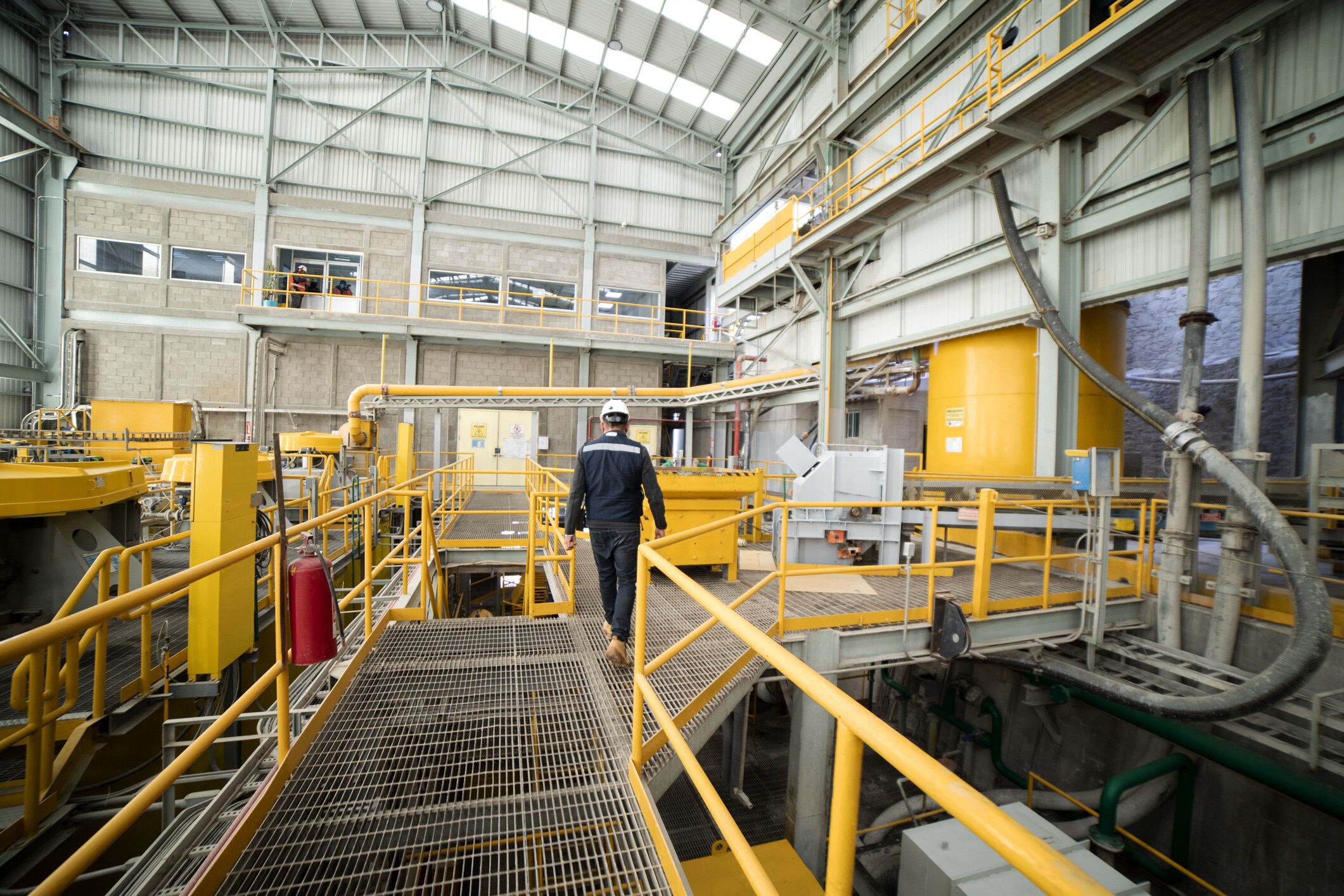
The tools to close the critical minerals financing gap already exist Image: Getty Images
Ivy Kigundu-Touré
Specialist, Communications and Operations, Centre for Energy and Materials, World Economic Forum- We asked four experts what needs to change to unlock investment in critical minerals at scale.
- The tools to close the critical minerals financing gap already exist. What’s missing is consensus on who moves first and how.
- The experts explained that turning investable projects into financed ones depends on coordinated action across finance, industry, government and development finance.
Critical minerals underpin the energy transition, digital economy and modern security infrastructure. Demand is rising rapidly, requiring substantial additional investment through 2030.
Capital is starting to move and recent projects show what is possible when public and private finance align.
In Australia, a $250 million Japanese loan and equity package helped sustain Lynas Rare Earths and establish a major rare earth supply chain outside China.
In Chile, the Japan Bank for International Cooperation provided Codelco with prepayment-linked financing for mine upgrades. Together, these examples show that the structures needed to make mineral projects bankable already exist and can be scaled.
However, this is not yet the norm.
Governments, development finance institutions, industry and private capital have developed a range of frameworks, guarantees and de-risking mechanisms to support investment.
As the World Economic Forum's report Making Critical Minerals Bankable, developed with the Center on Global Energy Policy at Columbia University, sets out, the barriers are well understood: high capital intensity, price and policy uncertainty and fragmented project pipelines that struggle to reach investment readiness.
Copper alone illustrates the stakes – a projected 25% supply shortfall by 2035 sits alongside a $250 billion investment gap by the end of the decade.
Plus, for the first since 2020, critical minerals investment declined in 2025 after several years of growth, with the strongest decline among battery metal companies.
While tools exist, what's missing is stronger coordination across the financing process: who absorbs early risk, who co-invests and who moves first so that others can follow.
In this context, we asked a group of finance and industry leaders what needs to change to turn investable projects into financed ones.
Sophie Lu, Global Head of Heavy Industry Decarbonisation, HSBC
Cutting cost is key to unlocking long-run competitiveness for new projects.
”Investment in critical minerals is continuing at pace, particularly where structural supply gaps are emerging. The bigger challenge is financing new mining and refining projects that diversify supply chains and strengthen resilience beyond today’s incumbent regions and players.
These projects are harder to finance because the supply gap or demand signal may be unclear, sovereign and environmental, social and governance (ESG) risks can be unfamiliar in new jurisdictions and disadvantages in resources, technology or scale can leave them with higher costs than established producers.
Government strategic equity can be a helpful vote of confidence but it won’t carry a project on its own. It needs to be combined with tools that de-risk capital costs and stabilize cash flows, including development grants, guarantees and long-term offtake agreements with creditworthy buyers.
The lack of established downstream supply chains will likely remain one of the biggest hurdles to diversifying from incumbent producers.
Government support is most effective when it builds downstream capacity and attracts strategic partners through technology transfer, equity participation and integrated offtake financing
For projects in untested jurisdictions, strong ESG transparency from day one is non-negotiable to secure community support and a lasting licence to operate. That means rigorous due diligence, strong traceability and covenants linked to operational integrity and social licence.
Multilaterals and policy banks can help with capacity building and de-risk commercial debt via direct foreign investment or export credit agencies, political risk insurance and first-loss or guarantee structures.
Finally, cutting cost is key to unlocking long-run competitiveness for new projects. This can be enabled through financing mine-tech and scaling innovations in extraction, processing and refining.
Dominik Ruderer, Head of Division for CRMs, European Investment Bank (EIB)
Unlocking investment at scale will require coordinated action from industry, private investors and governments.
”Critical minerals have one thing in common – they are crucial for the functioning of modern economies. However, they do not constitute a single asset class and a one-size-fits-all approach to investments is unlikely to succeed.
Instead, different minerals, value chains and jurisdictions face distinct challenges and therefore require tailored solutions. This is precisely where institutions like the European Investment Bank become important.
The current investment challenge stems from a combination of factors. Investment over the past years has been insufficient in many cases; demand has accelerated for many minerals, and global supply chains have become increasingly fragmented.
In addition, permitting, infrastructure, technological and ESG-related challenges often delay the advancement of projects towards investment readiness. Public financial institutions, such as the European Investment Bank, have an important role to play by helping to mobilize capital and address financing gaps across critical mineral value chains.
Our support sends a strong signal to private investors by reflecting the rigorous technical, economic and ESG assessment underpinning our financing decisions. We have a broad range of products available to support the sector, from debt and (quasi-) equity to investment grants and technical assistance, which can be tailored to the specific project context.
But let’s be clear: public financial institutions will not be able to solve the investment challenge alone. Unlocking investment at scale will require coordinated action from industry, private investors and governments. However, we can act as a catalyst by providing risk-taking capacity and helping to mobilize investment to the most impactful projects.
Kijune Kim, Executive Vice President of Sustainability Management, Korea Zinc
No company can build a circular critical minerals ecosystem alone.
”Global discussions on critical mineral supply chains focus primarily on mining and upstream resource development. Yet resilient supply chains require more than securing raw materials.
Expanding smelting and refining capacity to transform those materials into critical minerals is essential. As mining alone becomes increasingly insufficient to meet growing demand, governments must also lead efforts to build a circular ecosystem that enables critical minerals to be recovered and reused through recycling.
The challenge is creating conditions for investment to make it happen.
Critical minerals markets are no longer governed by normal market forces. As demonstrated by initiatives such as FORGE and Project Vault, government support is indispensable to unlock investment in smelting and refining.
Long-term offtake agreements, price floors and other policy measures can provide the certainty needed for capital-intensive projects.
Building a circular economy for critical minerals is both an environmental and strategic imperative. Recovering critical minerals from secondary feedstocks strengthens resource security, reduces geopolitical risk and supports industrial competitiveness.
At Korea Zinc, technological innovation has enabled us to recover critical minerals efficiently from both primary concentrates and secondary materials. Today, secondary materials account for approximately 30% of our total feedstock, demonstrating that recycling strengthens resource security, improves resource efficiency and reduces carbon emissions.
However, no company can build a circular critical minerals ecosystem alone. Governments must establish reliable collection systems, incentivize recycled materials and support stable secondary feedstock markets. With long-term policy certainty, private investment will follow, accelerating resilient, secure and sustainable critical mineral supply chains.
Pradeep Tharakan, Director of Energy Transitions, Asian Development Bank (ADB)
Countries need to focus on building regional value chains rather than isolated national industries.
”Critical minerals projects are often constrained by revenue uncertainty, regulatory hurdles, and infrastructure gaps that no government, financier or company can address alone. Partnerships are therefore essential to connect policy reform, technical expertise, development finance and private capital around credible investment opportunities.
First, multilateral development banks have assigned themselves a stronger mandate to work together more systematically. Recent engagement with the G7 has created momentum for closer collaboration on diversified and responsible critical mineral value chains.
Shared diagnostics, a common set of priority projects and complementary financing, can reduce duplication and address different risks within the same transaction. The objective should be practical: move more projects from concept to financial close.
Second, countries need to focus on building regional value chains rather than isolated national industries. The Association of Southeast Asian Nations (ASEAN) illustrates the opportunity.
Greater alignment on investment readiness, infrastructure corridors, permitting, sustainability and trade can connect mineral production with processing, manufacturing and recycling across several economies. Development partners can support this through policy dialogue, project preparation, regional infrastructure and risk-sharing instruments.
In 2026, ADB launched a regional financing partnership facility that will pool and deploy financing needed to advance critical minerals-to-manufacturing projects in Asia and the Pacific.
Grants from the facility will fund early project preparation work such as feasibility studies and environmental and social assessments, while a catalytic finance window will bring in co-financing for projects and risk-sharing from other financing partners.
The priority is to turn partnership into delivery: a shared pipeline of responsible, bankable projects that mobilize private investment, strengthen supply resilience and enable emerging economies to capture more value from their resources.
License and Republishing
World Economic Forum articles may be republished in accordance with the Creative Commons Attribution-NonCommercial-NoDerivatives 4.0 International Public License, and in accordance with our Terms of Use.
The views expressed in this article are those of the author alone and not the World Economic Forum.
Related topics:

Forum Stories newsletter
Bringing you weekly curated insights and analysis on the global issues that matter.


