Beyond critical minerals: The strategic role of platinum group metals in a fragmented world
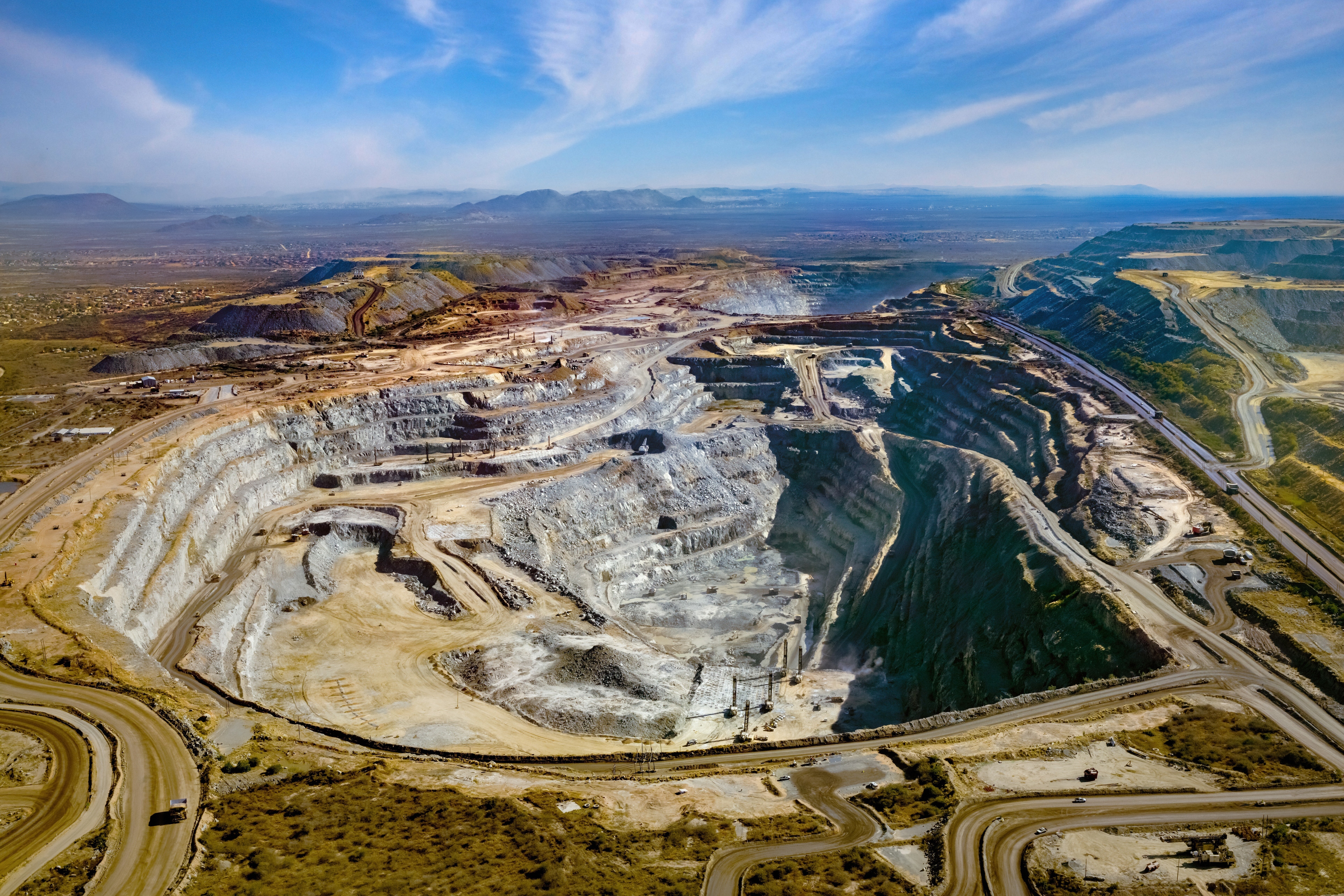
Southern Africa holds around 80% of platinum group metals reserves. Image: Valterra Platinum
- Platinum group metals are more than critical minerals and should be considered as "strategic metals," with attention looking beyond supply risks.
- Electrical and electronics platinum group metals demand grew 7% to 1.1 million ounces in 2025.
- Platinum group metals benefit from several parallel structural themes, including continued autocatalyst demand, energy transition mechanisms and the growth in artificial intelligence and electronics.
Most discussions about critical minerals focus on lithium, copper and rare earths but platinum group metals are unique because they already sit at the intersection of cleaner mobility, energy security, advanced manufacturing and artificial intelligence (AI).
Therefore, beyond supply risk and resource concentration, governments should now pay attention to the strategic relevance of critical minerals.
Strategic metals are defined by the industrial systems they enable and platinum group metals sit at the heart of emerging technology and the new direction of industry, from emissions control and industrial catalysis to hydrogen, advanced electronics, and AI infrastructure.
Southern Africa holds around 80% of platinum group metal reserves and the region has built processing and refining capabilities that allow producers to beneficiate and supply refined metal to global markets. Its multi-decade standing as a platinum group metal resource positions it to support the development of future technologies. This creates a differentiated model from many critical mineral value chains, where resource ownership and processing capability are often separated.
Valterra Platinum has also invested significantly in market development, working alongside customers, manufacturers and technology developers to identify new applications, improve technologies and create future demand.
This approach keeps producers closely connected to evolving customer needs and helps accelerate the commercialization of new platinum group metal uses. The result is a more integrated ecosystem that combines resource development, processing capability and market creation.
For platinum group metals, that relevance continues to expand across mobility, energy and digital infrastructure, creating exposure to multiple long-term industrial growth themes.
”The race to secure supply chains
Economic fragmentation is increasing focus on reliable access to critical minerals.
Industrial policies are targeting resilience, diversification and selective onshoring, while strategic stockpiling and investor interest are rising. Critical minerals have now become strategic assets underpinning economic resilience, industrial competitiveness and national security.
However, each mineral should be assessed on its own merits – policy that treats all critical minerals as having the same risks discourages long-term use or creates unnecessary market distortions.
For platinum group metals, supply is more nuanced than resource scarcity or concentration alone. While the industry has extensive mineral endowment in Southern Africa, it has also developed the technical capability to develop and operate these assets efficiently.
Unlocking this potential requires a constructive understanding of the market and a long-term platinum group metal price outlook that reflects the strategic value of these metals and the strength of future demand.
Southern Africa therefore presents a differentiated supply model: resource depth, beneficiation, refining capacity and importantly, customer-linked market development. Valterra Platinum and the wider industry have worked with customers, manufacturers and technology developers to identify and scale new applications.
This collaborative approach keeps producers well connected to customers and their needs, supporting future demand rather than relying only on existing uses.
The value of any strategic metal ultimately depends on the systems it enables. For platinum group metals, that relevance continues to expand across mobility, energy and digital infrastructure, creating exposure to multiple long-term industrial growth themes.
Platinum group metals in global mobility and industrial transformation
The demand story for platinum group metals is expanding beyond its traditional core. Automotive remains the largest end market but growth is increasingly diversified.
Industrial applications, jewellery and investment continue to contribute, while AI, advanced electronics and hydrogen are emerging as credible long-term demand drivers, not speculative ones.
Platinum group metals remain core to mobility. Battery electric vehicles will continue to grow, but the global vehicle system is likely to remain mixed for decades. Internal combustion engines and hybrids are expected to remain a meaningful part of the global fleet, particularly where affordability, grid readiness and charging infrastructure affect transition speed.
Tightening emissions standards mean platinum group metal-laden autocatalysts will continue to support cleaner mobility, while hydrogen fuel cells offer an additional decarbonization pathway for harder-to-electrify applications.
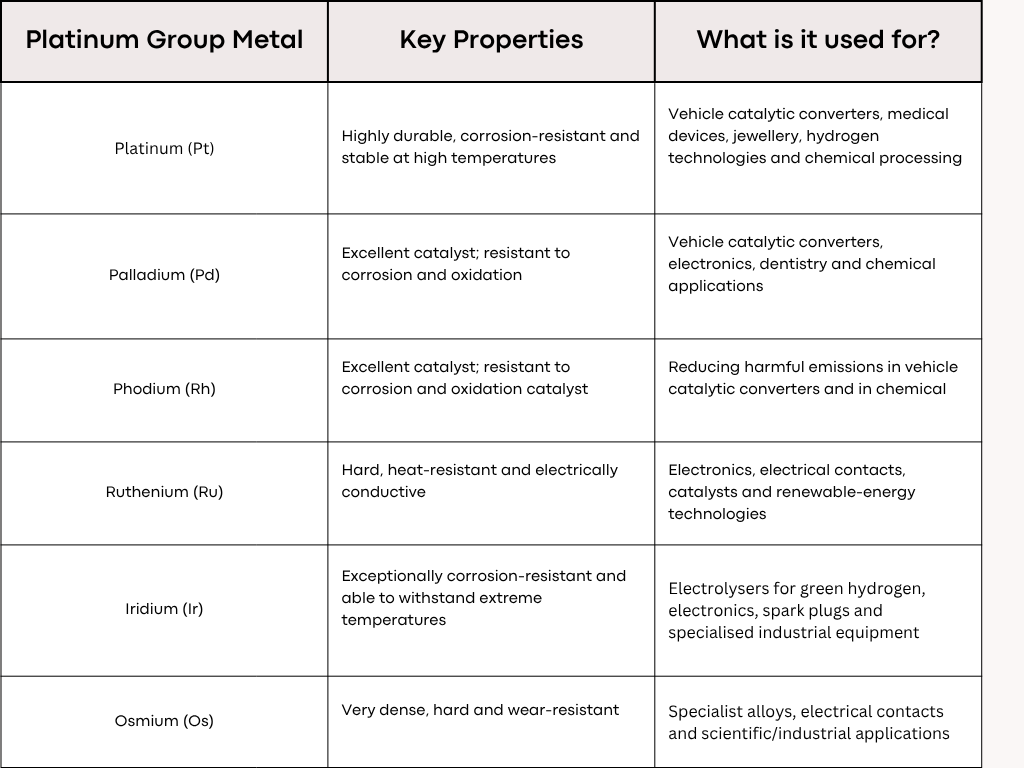
Platinum group metals are also central to secure and sustainable energy systems. Platinum, ruthenium and iridium are key inputs in electrolysers used to produce hydrogen, while platinum plays a vital role in fuel cells that convert hydrogen into electricity.
Future energy systems are likely to be more varied, regionally differentiated and technology-intensive, increasing the value of materials that can support multiple transition routes.
This reflects a broader trend across the industry’s demand base. As the global economy becomes more electrified, digitized and resource-intensive, platinum group metals’ unique and highly valued properties mean these strategic metals have become core enablers of technologies ranging from emissions control and industrial catalysis to advanced electronics, AI infrastructure and future energy systems.
The world is not moving from one resource system to another. It is building a more complex one.
”How AI is creating new demand pathways for platinum group metals
The rapid expansion of AI is reshaping demand for advanced materials. Electrical and electronics platinum group metal demand grew 7% to 1.1 million ounces in 2025 and the applications behind that growth are increasingly structural rather than cyclical.
Platinum and ruthenium are now embedded in hard disk drives supporting data centre storage, in the manufacturing of advanced chips. Iridium is essential to the crucibles used in advanced semiconductor manufacturing; and we expect meaningful additional demand from the glass and fibreglass sector as AI infrastructure build-out accelerates.
Platinum and rhodium alloys are also used in high-performance low dielectric e-glass for circuit boards, data centres and AI infrastructure.
AI is also accelerating innovation in materials discovery, extraction and processing. The collaboration between Dunia Innovations and Valterra Platinum illustrates how AI-enabled materials platforms can accelerate the development of new platinum group metal applications across energy, industrial and digital systems.
Through the World Economic Forum's MINDS programme, of which Dunia is a member, the aim is to support responsible AI adoption that can help address complex industrial challenges while unlocking new applications for strategic materials.
What governments, industry and investors must do next
The strategic importance of platinum group metals is becoming clearer as the critical minerals debate matures. Producer regions in the Global South hold a significant share of the mineral resources required for future energy, industrial and digital systems and their role should extend into value creation, refining, customer partnerships and innovation.
For policymakers, this means moving beyond short-term security concerns to create frameworks that support investment, industrial development and long-term supply resilience.
For industry, the focus is innovation, customer-linked market development and collaborative supply chains. For investors, the opportunity lies in assets and regions positioned at the intersection of resource strength, technology adoption and structural demand growth.
Platinum group metals provide a practical model for this next phase. They combine resource depth, established processing capability, active market development and close collaboration between producers and end users. They also support multiple systems at once: cleaner mobility, hydrogen, AI infrastructure, advanced manufacturing and industrial resilience.
The world is not moving from one resource system to another. It is building a more complex one. Shifting the conversation from critical minerals to strategic metals moves the debate beyond resource access alone and toward the industrial systems that underpin future competitiveness, energy resilience and economic growth.
Platinum group metals demonstrate how resource-rich regions can combine resource development, refining capability, market creation and innovation within a single ecosystem.
Don't miss any update on this topic
Create a free account and access your personalized content collection with our latest publications and analyses.
License and Republishing
World Economic Forum articles may be republished in accordance with the Creative Commons Attribution-NonCommercial-NoDerivatives 4.0 International Public License, and in accordance with our Terms of Use.
The views expressed in this article are those of the author alone and not the World Economic Forum.
Stay up to date:
Mining and Metals


Forum Stories newsletter
Bringing you weekly curated insights and analysis on the global issues that matter.
More on Emerging TechnologiesSee all

Francesco Chiarini and Lauren Wise
October 5, 2026


