Bond sell-off: Why government bond yields soared and why it matters

The US Department of the Treasury responded by announcing increased debt buybacks. Image: REUTERS
- A sell-off in government bonds sent long-term yields around the world to their highest levels in years.
- The surge came as investors confront a range of concerns including persistent inflation and rising government debt.
- Amid the turmoil, the US Treasury announced it would increase debt buybacks, lowering the long-term yields.
A sell-off of government bonds this week shook global bond markets, sending long-term yields to their highest levels in decades.
In the United States, the 30-year US Treasury bond yield hit over 5.3%, the highest rate since 2007. The yield for 10-year US Treasury bonds, a commonly used economic and financial benchmark, rose to above 4.7%. Meanwhile, long-term yields hit multi-year highs in Germany, France, Japan and the United Kingdom.
Government bond yields rise when investors sell bonds, pushing prices lower. And since bond prices and yields move inversely, falling bond prices translate into higher yields, meaning new buyers can earn a higher return relative to the price they pay for the bonds.
So what caused the sell-off – and why does it matter?
‘Cornerstone of the global financial system’
Government bonds, particularly US Treasuries, have long been a mainstay of the international financial system.
As a World Economic Forum report, Deepening Divides: The Cost of a More Fragmented Financial System, noted recently, “US Treasury securities are a cornerstone of the global financial system,” adding that they are typically “nearly as liquid as cash and serve as a safe haven asset that investors and central banks historically turn to during volatile periods.”
Today, however, the global economy is facing major transformations and numerous headwinds that have shaken investor confidence in government bonds.
One of the key concerns for bond investors is inflation, which is particularly important because it reduces the purchasing power of the fixed payments. So when investors believe inflation could remain elevated, they demand a higher yield as compensation.
Last month, the inflation rate in the United States stood at 3.4%, well above the Federal Reserve's 2% target. The inflation rate in the United Kingdom and Germany was 2.9% and 2.8%, respectively.
Inflationary concerns are being intensified by war in the Middle East and disruptions to the global energy supply as higher oil costs cause many consumer prices to increase. In a recent statement, the Bank of England warned that the conflict is “pushing up households’ motor fuel costs and utility bills,” adding that “it is difficult to predict what is going to happen.”
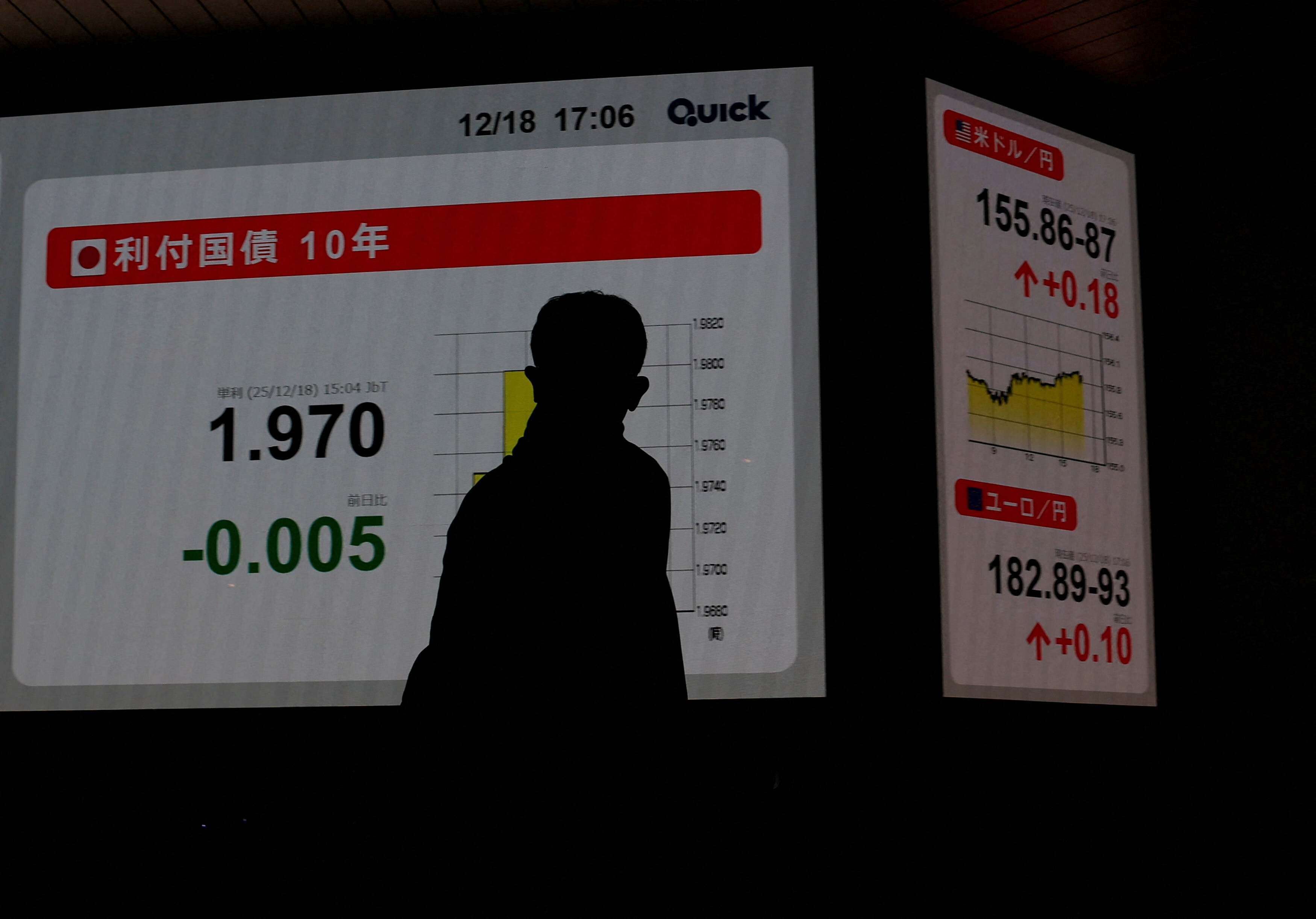
Meanwhile, in Japan, inflation concerns pushed up the yield for 10-year bonds to a three-decade high.
Another investor concern is the high levels of government debt, with developed economies in particular running substantial fiscal deficits. US debt, for instance, hit a staggering $40 trillion this week. Large fiscal deficits can put upward pressure on long-term yields because governments must issue more debt and investors may demand greater returns for fiscal and inflationary risks.
Furthermore, bond markets are being pressured by a surge of heavy borrowing by companies, including businesses seeking capital for artificial intelligence-related projects. In the United States, businesses have issued almost $1.7 trillion in corporate bonds this year so far, an increase of 27% from the year prior.
In May, the World Economic Forum’s Chief Economists’ Outlook noted that “borrowing by governments and companies hit a record in 2025 and is set to rise again in 2026, even as long-duration demand weakens and maturities shorten.”
Mitigating the rise
Higher government bond yields make it more expensive for governments to borrow money. This in turn can result in higher borrowing costs elsewhere in the economy, including for mortgages and business loans.
Amid the turmoil, the US Treasury announced it would at least double the maximum size of its buybacks of long-term government debt, from $2 billion to at least $4 billion. The purchases will run through September to November.
Following the announcement, the 30-year Treasury yield fell to 5.19%.
“This increase in buyback operation sizes reflects Treasury’s desire to provide greater liquidity support in longer-dated nominal sectors where there is consistent strong sponsorship from market participants,” the Treasury said in a statement.
Don't miss any update on this topic
Create a free account and access your personalized content collection with our latest publications and analyses.
License and Republishing
World Economic Forum articles may be republished in accordance with the Creative Commons Attribution-NonCommercial-NoDerivatives 4.0 International Public License, and in accordance with our Terms of Use.
The views expressed in this article are those of the author alone and not the World Economic Forum.

Forum Stories newsletter
Bringing you weekly curated insights and analysis on the global issues that matter.
More on Financial and Monetary SystemsSee all

Mehrad Yaghmai and Judith Ketelslegers
September 21, 2026


