3 shifts in financial design to take hard tech pilots to scale

Hard tech pilots typically fail at the decision layer but a better financing approach and model could resolve this Image: Unsplash+/Getty Images
- More than 70% of companies investing in advanced technologies never move beyond the pilot phase, a phenomenon the Global Lighthouse Network calls "pilot purgatory."
- In capital-intensive sectors, hard tech pilots often fail at the point of commercial agreements, insurance, financing and procurement.
- Structuring capital in alignment with an industry's operators, underwriters and financiers can convert individual pilots into sector-wide public goods.
More than 70% of companies investing in advanced analytics, artificial intelligence (AI) or digital solutions fail to move beyond the pilot phase, stuck in what the World Economic Forum's Global Lighthouse Network calls "pilot purgatory."
That framing contains an under-appreciated insight. In hard tech, what reaches an approved commercial pilot usually works. What fails is the decision to scale it.
Hard tech pilots are designed to answer an engineering question: does this perform as specified? But scale-up depends on financial and institutional questions: who will insure, finance and procure it?
In today's market, the maritime fuel transition offers a stark illustration. The First Movers Coalition and Boston Consulting Group found that over 95% of planned zero-emission fuel projects had not reached final investment decision.
The chemistry is proven; the bankability is not. Engineers finish the pilot with an answer when the financiers do not. This is a design flaw.
3 shifts that can help scale hard tech pilots
1. Underwrite the decision as well as the technology
The parties who can veto industrial adoption rarely appear in a pilot's design:
- Insurers price the risk of novel equipment.
- Asset financiers decide whether it affects collateral value.
- Classification societies and regulators determine whether it can legally operate.
- Procurement teams decide whether the organization can actually buy it.
A pilot that excludes these actors produces evidence they cannot use. Their clocks are also incompatible: a startup's runway is measured in months, procurement cycles in years, and insurers’ actuarial comfort in decades of loss history. Left unmanaged, the fastest clock runs out first.
The correction is to treat the pilot as an underwriting exercise from day one. Before installing hardware, define the evidence each party needs to say yes, then instrument the pilot to produce it on a timeline all can survive.
Stage-gated pilots cost little more than conventional ones but face far less friction at scale, because the decision to scale has been pre-negotiated rather than deferred.
2. Turn working assets into shared laboratory infrastructure
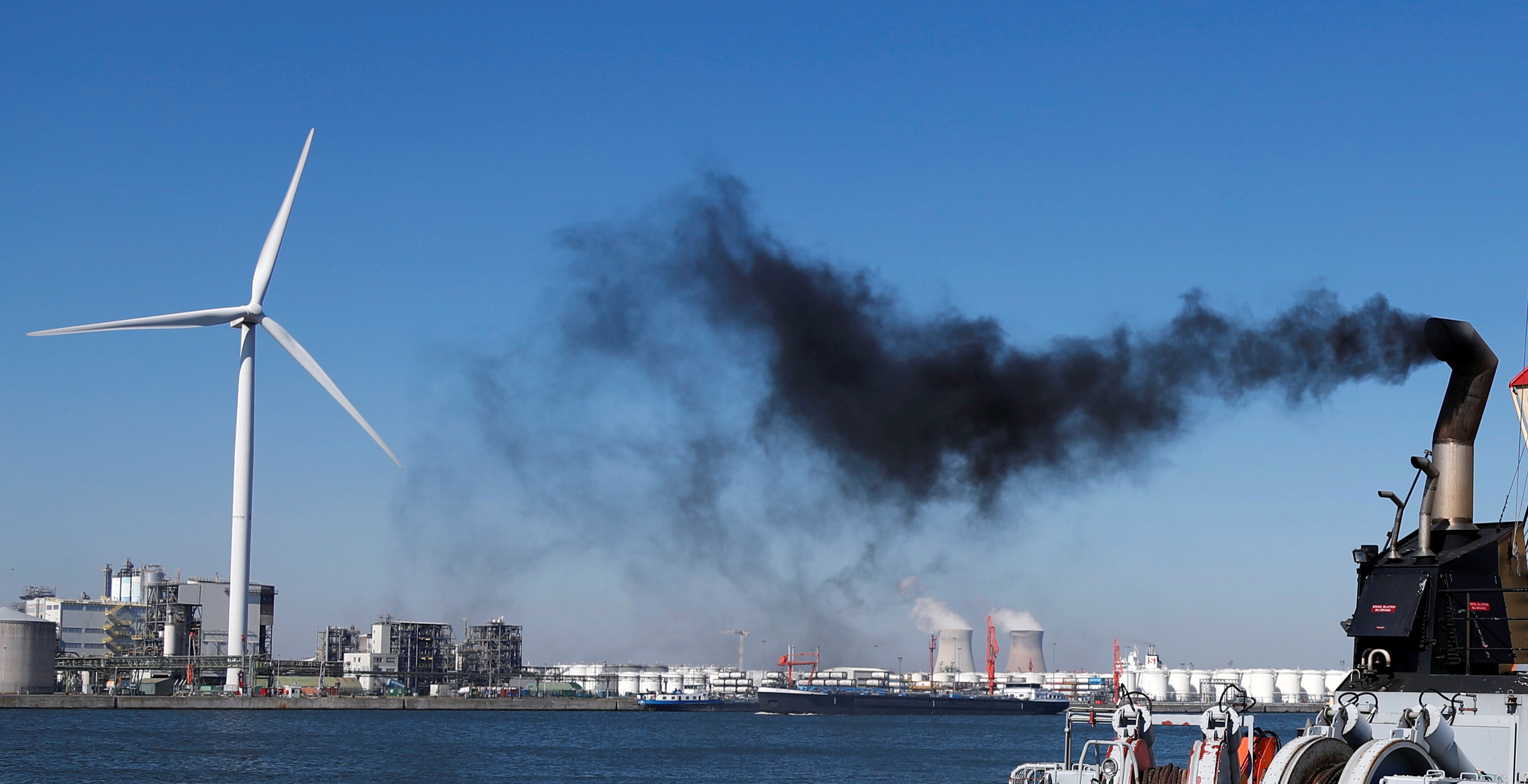
Industrial pilots stall partly because dedicated test infrastructure is scarce, expensive and unrepresentative. The alternative is hiding in plain sight: the industry’s operating asset base. Consider commercial shipping. It carries more than 80% of global traded goods; its emissions are comparable to those of the six largest emitters.
The International Maritime Organization has committed the sector to net zero by or around 2050, turning a fleet built for the last industrial era into a proving ground for the next.
Fifth Wave, a maritime initiative co-led by LomarLabs, treats commercial vessels, ports, and shipyards as laboratories: it trials novel equipment on revenue-earning ships under real operating conditions, with classification societies engaged from the outset, compressing the path from prototype to approval from years to months.
The urgency is real. The Global Maritime Forum has mapped more than 340 zero-emission pilots but each largely runs in isolation and renegotiates access, insurance and evaluation terms from scratch.
The principle extends beyond maritime too. Utilities, logistics networks, mines and hospitals all own some of the most realistic test environments on Earth; they simply lack the contractual and financial machinery to open them safely to early-stage technology.
3. Structure capital so the industry wins when the technology wins
The final elemental shift is capital. The demand side has already been proven at scale: the Forum's First Movers Coalition has aggregated $19 billion in purchasing commitments from 101 companies to pull emerging climate technologies through the market.
The supply side of capital, however, remains largely unaligned. Most venture capital sits outside the industries it funds, creating a coordination problem: dozens of markets independently pilot near-identical solutions, duplicating capital, slowing diffusion and creating a green premium that can run three to four times the incumbent cost, with no one positioned to compress it.
An alternative is to structure funds as joint ventures with the operators, underwriters and financiers of the sector they serve, sharing economics and evidence across the value chain.
Returning to the maritime example, when shipowners participate, pilot berths become easier to secure. When insurers participate, actuarial data from each deployment can de-risk the next.
Each successful deployment then creates value for the wider sector, not just the first buyer. Structured this way, capital becomes a coordination mechanism for industrial transformation. This is the financing complement to the demand signal the First Movers Coalition has already built.
Co-VC: The 3 shifts as one structure
The terms of adoption – the conditions that need to be satisfied for a pilot to become a scaled commercial deployment – are already being drafted in this sequence of events.
This coalition-based approach to investing in pilot-stage companies is a collaborative venture model, or “Co-VC.” The stakeholders that make up a marketplace join together to deploy venture capital on terms that represent, uphold and enforce their respective commercial requirements for pilots.
Each actor bears less risk alone and resilience is shared across every stakeholder now absorbing the compounding shocks of climate, AI, geopolitics and energy.
In each case, adoption is modelled across several plausible futures rather than on a single forecast.
What does Co-VC look like in practice? The fund is co-owned by the industry it serves. Operators hold economics in the vehicle, turning their fleets, plants and routes into pilot infrastructure.
Underwriters, financiers, offtakers and regulators form an advisory board and help define what gets piloted and what constitutes a “yes,” so pilots produce evidence the ultimate decision-makers can use.
Syndication stays open by design: co-investors are welcomed into every position, because the aim is to rally capital into a sector’s transition rather than corner it. Venture supplies the speed and the model; the coalition supplies the market and the scale.
The design is industry-agnostic. In maritime, it lets carriers, insurers and financiers confront a transition estimated at up to $1.9 trillion, a bill no single actor can model or underwrite alone. Apply the same design elsewhere and the compounding logic holds.
In Madrid, for example, where climate-driven heatwaves test the city's liveability, Cool Climate Collective is working with Dark Matter Labs’ xCO initiative to bring blended capital alongside the city's own stakeholders. Imagine, for instance, utilities, insurers, energy asset owners and the stewards of public space jointly piloting heat-resilience technologies that cool the city on an accelerated timeline.
For incumbents, the strategic question has shifted from which technologies will win to who sits at the table where the conditions of winning are set. Sectors that convene those tables early will discover that their hardest problem was never inventing the future. It was agreeing, in advance, on the terms under which they would buy it.
Don't miss any update on this topic
Create a free account and access your personalized content collection with our latest publications and analyses.
License and Republishing
World Economic Forum articles may be republished in accordance with the Creative Commons Attribution-NonCommercial-NoDerivatives 4.0 International Public License, and in accordance with our Terms of Use.
The views expressed in this article are those of the author alone and not the World Economic Forum.
Stay up to date:
Transition Finance
Related topics:

Forum Stories newsletter
Bringing you weekly curated insights and analysis on the global issues that matter.
More on Financial and Monetary SystemsSee all

Cheukai Makari
September 16, 2026


