It’s time for pharmaceutical companies to embrace Africa’s growing healthcare market
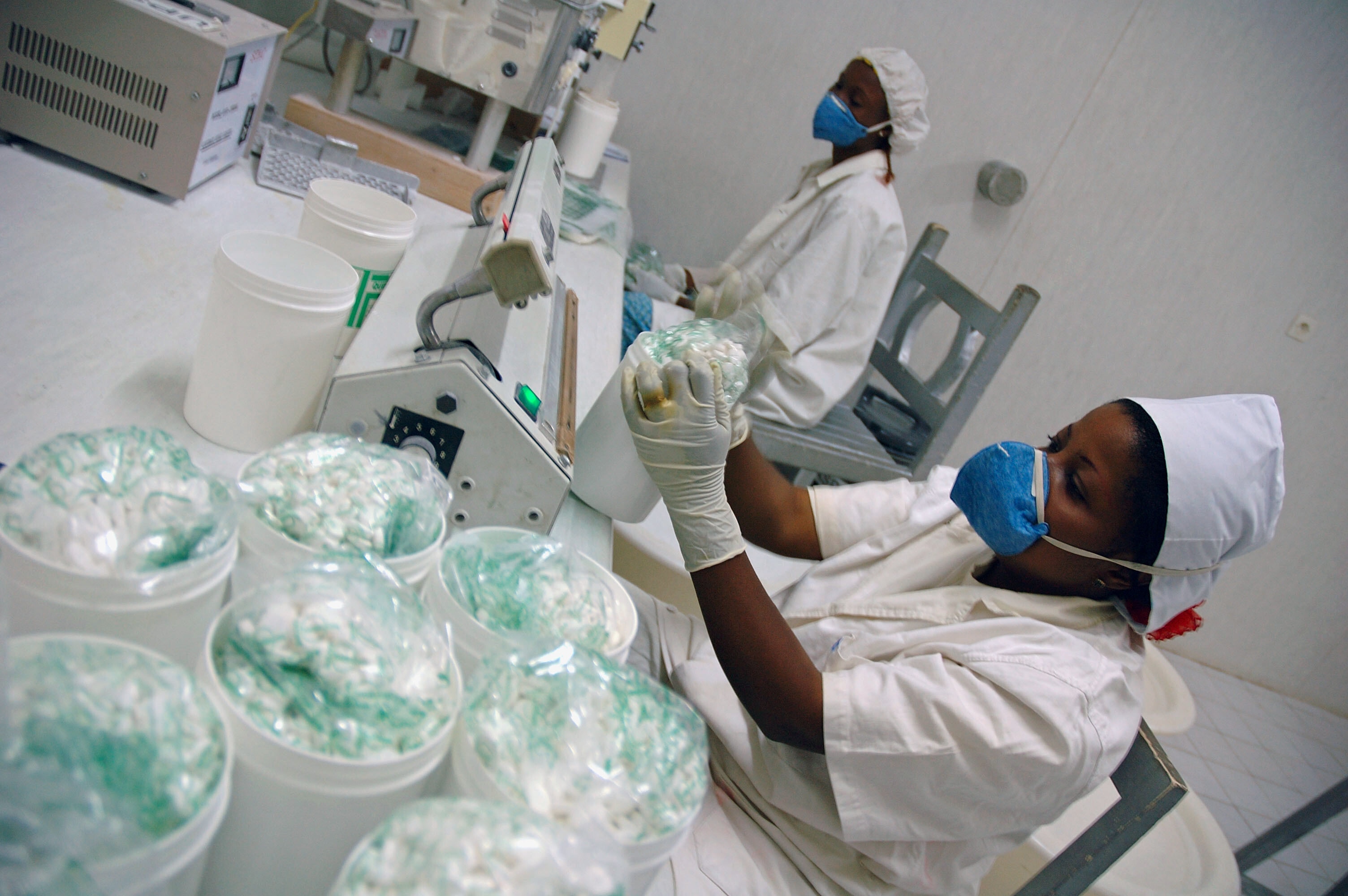
Africa’s pharmaceutical market is projected to exceed $50 billion by 2030, driven by rising demand for medicines. Image: Reuters/Euan Denholm
- Africa’s demand for medicines is growing as populations expand and noncommunicable diseases (NCDs) become more common.
- Generic manufacturers are supplying much of the market, but Africa remains heavily dependent on imported medicines and ingredients.
- Pooled procurement, local production and more predictable funding could improve access while creating opportunities for manufacturers.
Demand for healthcare in Africa is evolving rapidly. Contrary to popular perceptions, the continent’s pharmaceutical markets are far from static.
The need for new kinds of medicines to treat modern-day health conditions is expanding fast, creating a unique opportunity for manufacturers to build a more resilient supply chain for the region – a potential win-win for investors and the hundreds of millions of patients in need of better care.
While the burden of infectious diseases and maternal health conditions has not gone away, a rising tide of noncommunicable diseases – from cancer to diabetes – is transforming the landscape across sub-Saharan Africa.
As a result, the African pharmaceutical market is projected to exceed $50 billion by 2030, driven by rapid population growth and expanding health needs, making it the world’s fastest-growing pharmaceutical region.
A major disease burden transition is underway. Viral, bacterial and parasitic diseases such as HIV, malaria, tuberculosis and Ebola remain high priorities.
However, a surge in health problems linked to unhealthy diets, reduced physical activity and air pollution means noncommunicable diseases are set to overtake communicable, maternal, neonatal and nutritional diseases combined as the leading cause of mortality in sub-Saharan Africa by 2030.
What is driving pharmaceutical manufacturing and medicine supply in Africa?
Meeting this vast and rapidly changing medical need is a major challenge, given that Africa accounts for only 3% of global pharmaceutical manufacturing and over 70% of medicines in Africa are imported.
Yet encouraging signs of progress remain. Regulatory harmonization, domestic purchasing power and local production goals are rapidly accelerating. Ambitious continental targets are driving momentum, with the African Union aiming to produce 60% of necessary health products locally by 2040.
Key regional distribution hubs such as Nigeria, Kenya, Ghana, and South Africa are at the forefront of this transition.
Africa is already making advances in turning policy into action and removing bottlenecks to local manufacturing, with the rollout of the African Medicines Agency (AMA), the Platform for Harmonised African Health Products Manufacturing (PHAHM) and the African Pooled Procurement Mechanism (APPM).
These institutions are helping to streamline approvals and get products onto pharmacy shelves many months faster than before.
Recently, for example, the Africa Centres for Disease Control and Prevention (Africa CDC) launched its first tender for essential Reproductive, Maternal, Newborn and Child Health medicines, covering 10 priority products across as many countries. The initiative is set to improve supply security, boost African manufacturer involvement and deliver cost savings of 30-90%.
The continent is moving away from donor dependency and toward local buying power, regional manufacturing and greater self-reliance.
”
How are generic and biosimilar manufacturers shaping Africa’s pharmaceutical market?
Against this backdrop, generic and biosimilar medicine manufacturers play a crucial role. These companies, which produce around 80% of the world’s pharmaceuticals by volume, already underpin access to many affordable treatments across Africa.
They now have a major new opportunity to fill the market gap created by surging demand for noncommunicable disease treatments. While some multinational pharmaceutical companies have scaled back or exited selected African markets in recent years, generic manufacturers are now the primary source of supply for quality-assured, affordable treatments across the continent.
The pie is growing and local African producers, emerging Asian suppliers and established international generics manufacturers are competing for a larger share.
Sub-Saharan Africa’s economic growth is expected to average 4.4% in 2026-27, increasing the region’s spending power, while expanded national health coverage is creating more predictable market demand for both imported and locally produced medicines.
What are the biggest barriers to Africa’s growing pharmaceutical market?
Still, significant hurdles remain. One issue is a fundamental flaw in global health funding: too much donor and development capital goes into high-level interventions rather than securing supplies of the everyday medicines patients actually need.
Another obstacle is the heavy reliance on foreign supply chains to manufacture finished medicines, which threatens local resilience. Africa still imports over 95% of its active pharmaceutical ingredients, making local production expensive and vulnerable to global supply shocks.
Supply is also worryingly uneven across therapeutic categories. Many companies have crowded into basic oral cardiovascular drugs and high-volume anti-infectives, leaving other areas severely neglected.
Only 1 in 2 people with type 1 diabetes in Africa has reliable access to insulin, while critical shortages continue to worsen for certain supplies such as sterile injectables, specialised antibiotics and paediatric formulations.
How can Africa’s pharmaceutical market become more sustainable?
To ensure a sustainable medicine supply, manufacturers need careful planning, alongside coordinated action among companies, governments and global health partners.
Pharmaceutical suppliers also need to invest in long-term capacity. A new report from the Access to Medicine Foundation sets out eight practical opportunities, including matching companies’ capabilities to gaps in the market and investing in products that are currently underserved.
However, no company can do this alone. At a system level, payers and procurers on both the public and private side need to offer far more predictable demand, so that companies stay in the market.
For governments, the noncommunicable disease challenge is structural. Health financing, donor priorities and procurement systems have often been shaped around infectious diseases, and many have not yet adapted to a growing burden of chronic illness. Closing that gap means realigning donor funding, which remains heavily skewed toward infectious diseases, and raising far more revenue at home.
Health taxes on sugar and tobacco are also an important route to building a sustainable revenue stream that can be reinvested in health services. In Ghana, an increase in tobacco tax from 23% in 2020 to 38% in 2024 more than doubled tax revenue, while South Africa’s Health Promotion Levy excise tax on sugary beverages raised $319 million in its first two years.
Ultimately, companies cannot succeed in isolation – they need predictable demand signals to invest. Aspen Pharmacare's recent decision not to make the HIV prevention injection lenacapavir in South Africa, due to lack of guaranteed demand, illustrates the dilemma that all too often confronts manufacturers.
The African healthcare market is today at a crossroads. With major cuts in international aid, the continent is moving away from donor dependency and toward local buying power, regional manufacturing and greater self-reliance.
Corporate leaders, especially those at generic manufacturers, need to seize the opportunity by expanding into priority noncommunicable disease areas and building long-term manufacturing capabilities. Companies that invest early in regional capacity, technology transfer and underserved therapeutic areas will reap the commercial rewards.
They will also help shape the continent's healthcare future.
Don't miss any update on this topic
Create a free account and access your personalized content collection with our latest publications and analyses.
License and Republishing
World Economic Forum articles may be republished in accordance with the Creative Commons Attribution-NonCommercial-NoDerivatives 4.0 International Public License, and in accordance with our Terms of Use.
The views expressed in this article are those of the author alone and not the World Economic Forum.
Stay up to date:
Africa


Forum Stories newsletter
Bringing you weekly curated insights and analysis on the global issues that matter.
More on Health and Healthcare SystemsSee all

M. A. Muhit and Asif Saleh
September 23, 2026