What Ukraine's businesses can teach us about leading through crisis
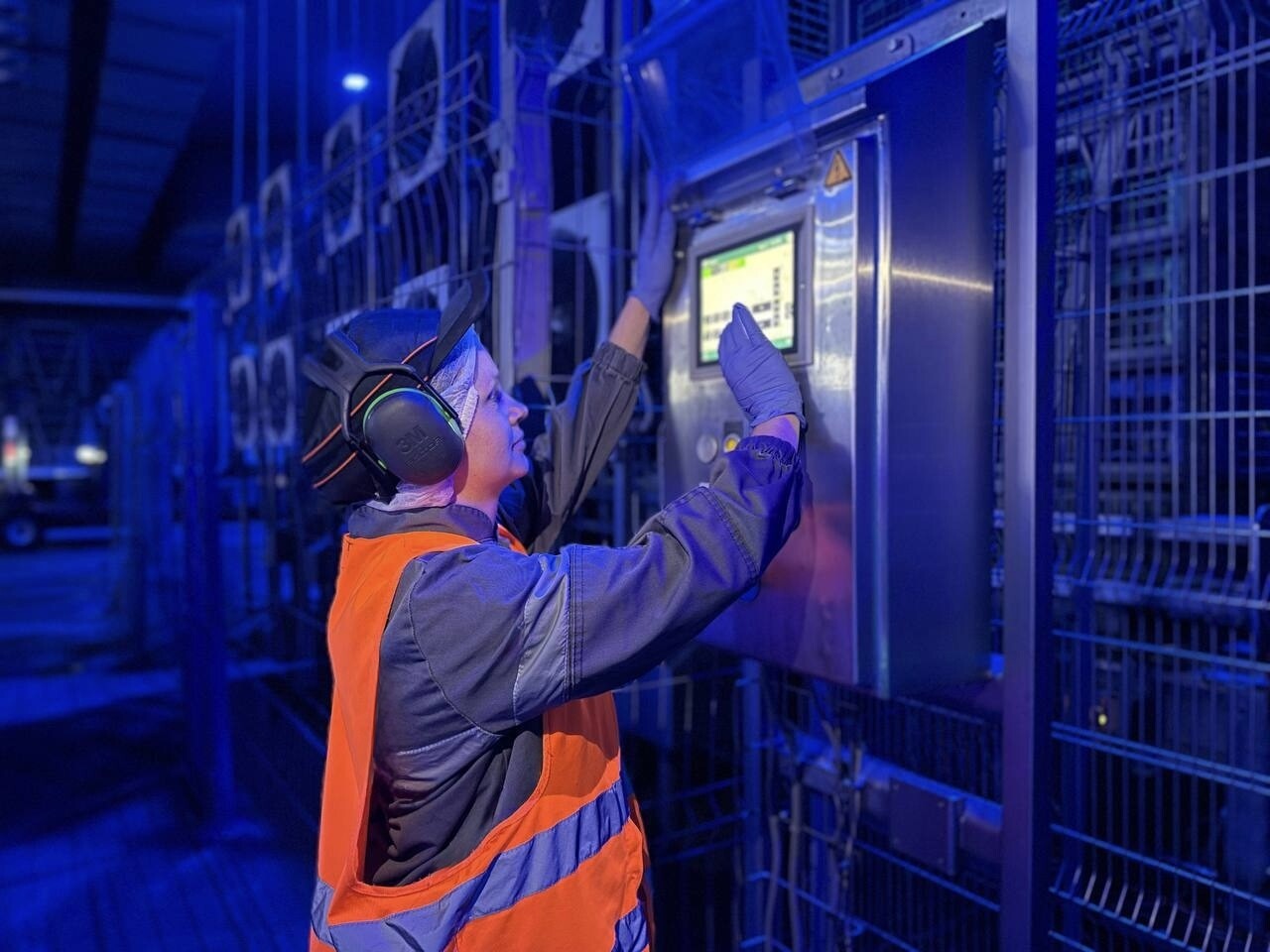
Ukraine's businesses have kept operating despite the most difficult conditions. Leaders around the world can learn from that. Image: MHP
- Despite the war, businesses in Ukraine have continued to deliver their services under extremely difficult conditions.
- Their experiences hold key lessons for leaders all around the world facing disruption in their organizations.
- Ukrainian agri-food giant MHP has continued to feed millions, even as the bombs fall. Here it shares its experience on leadership in times of acute crisis.
Much of modern leadership is built on the ability to anticipate change, assess risks and shape outcomes. But what happens when the forces shaping your business are largely beyond your ability to influence?
Operating a business through Russia’s full-scale war against Ukraine has given us businesses operating in Ukraine a very different perspective. It has shown us that when control over the external environment disappears, leadership must shift from trying to predict every outcome to building the capacity to respond to whatever comes next.
For Ukrainian businesses, the war has been a true trial by fire for resilience. Businesses must maintain operations across Ukraine and international markets despite disruptions to infrastructure, energy, logistics and workforce, while continuing to invest, develop international partnerships and look for opportunities to grow.
Lessons in leadership from businesses on the frontline
This experience has reinforced a simple principle: when control disappears, leadership has to be built on trust, competence and accountability, alignment and strong partnership, and clear communication.
Trust: Allow teams to take crucial decisions
In a highly unpredictable environment, decisions cannot always wait for instructions from the top. The people closest to a problem often have the best information, and sometimes only minutes to act. Leadership therefore means creating enough clarity and trust for people to make responsible decisions themselves.
That requires knowing what is non-negotiable: safety, integrity, people, quality and long-term purpose. Beyond those fundamentals, flexibility becomes a strength rather than a weakness.
Competence and accountability: Real expertise to make decisions
In a volatile environment, resilience depends on more than good plans. It depends on having people who understand their business, can assess changing circumstances and are prepared to make and own difficult decisions.
The more uncertain the environment becomes, the more important it is to have competence close to where decisions are made.
The challenge for business is therefore not simply to prepare for disruption, but to build organizations that can continue functioning when disruption becomes part of the operating environment.
Clear communication: Clarity to act with purpose
To ensure businesses can deliver in times of crisis when leaders cannot promise certainty, they can still provide clarity. Employees do not necessarily need to hear that everything will be fine. They need to understand what the organization knows, what it does not know, what matters most and how decisions will be made.
Wartime leadership has reinforced the idea that leadership is not about controlling what happens around you. It is about creating the conditions in which people can act with purpose when the situation is beyond your control.
Alignment and strong partnerships: Embrace the power of the network
Influence rarely comes from formal authority alone. It comes from understanding different interests, building trust and finding areas where people can move in the same direction. Business leadership is increasingly similar.
During a crisis, a company does not operate in isolation. Its resilience depends on employees, suppliers, customers, governments, communities and international partners. Businesses can lean on strong partnerships when circumstances change, and alignment ensures that different stakeholders can move towards a common goal.
Ukraine and Ukrainian businesses are prioritizing integration into the European economy for this very reason: in an increasingly fragmented world, international partnerships, diversified markets and integrated supply chains are not only sources of opportunity, they are also sources of resilience.
Lessons from one of Ukraine’s top food producers
For agriculture and food production, this has a wider significance: food security depends on the ability to keep production and trade functioning even when parts of the system come under pressure.
As part of a global food system, MHP – one of Ukraine’s largest companies that feeds millions of people in Ukraine and around the world – sees this resilience as more than business continuity: it is also a contribution to food security, helping keep production and supply chains functioning when they are under pressure. That human dimension is why adopting these lessons has been so crucial. In a business as crucial as food and agriculture, what happens inside the organization has meaningful impacts far outside of it, in the lives of everyday people.
MHP’s experience, operating through war while remaining connected to international markets, exporting to more than 80 countries and carrying responsibility for more than 39,000 people, is a practical example of what resilience can look like in action.
The organizations that will be best prepared for an uncertain future will not necessarily be those with the most sophisticated plans. They will be those with the trust to move quickly, the competence and accountability to act, the ability to communicate clearly, and the partnerships to adapt when the world changes around them.
That is a lesson Ukraine is learning through necessity. It is also one that businesses everywhere may increasingly need to learn by choice.
Don't miss any update on this topic
Create a free account and access your personalized content collection with our latest publications and analyses.
License and Republishing
World Economic Forum articles may be republished in accordance with the Creative Commons Attribution-NonCommercial-NoDerivatives 4.0 International Public License, and in accordance with our Terms of Use.
The views expressed in this article are those of the author alone and not the World Economic Forum.
Stay up to date:
Navigating the New World Disorder
Related topics:

Forum Stories newsletter
Bringing you weekly curated insights and analysis on the global issues that matter.
More on LeadershipSee all

Aiman Ezzat and Bart Valkhof
September 15, 2026


