
Biomanufacturing has been a niche climate solution but is rapidly becoming a key part of the global economy, with its rise aided by artificial intelligence (AI) and more affordable renewable energy.
China is prioritizing biomanufacturing as much as AI, focusing on scaling the technology and keeping prices down, with key infrastructure already in place.
Greater global diversity in biomanufacturing will require rethinking the industrial design process, embedding AI from inception, alongside a funding model that enables effective private investment through public policy.
Could the next industrial revolution be on the rise?
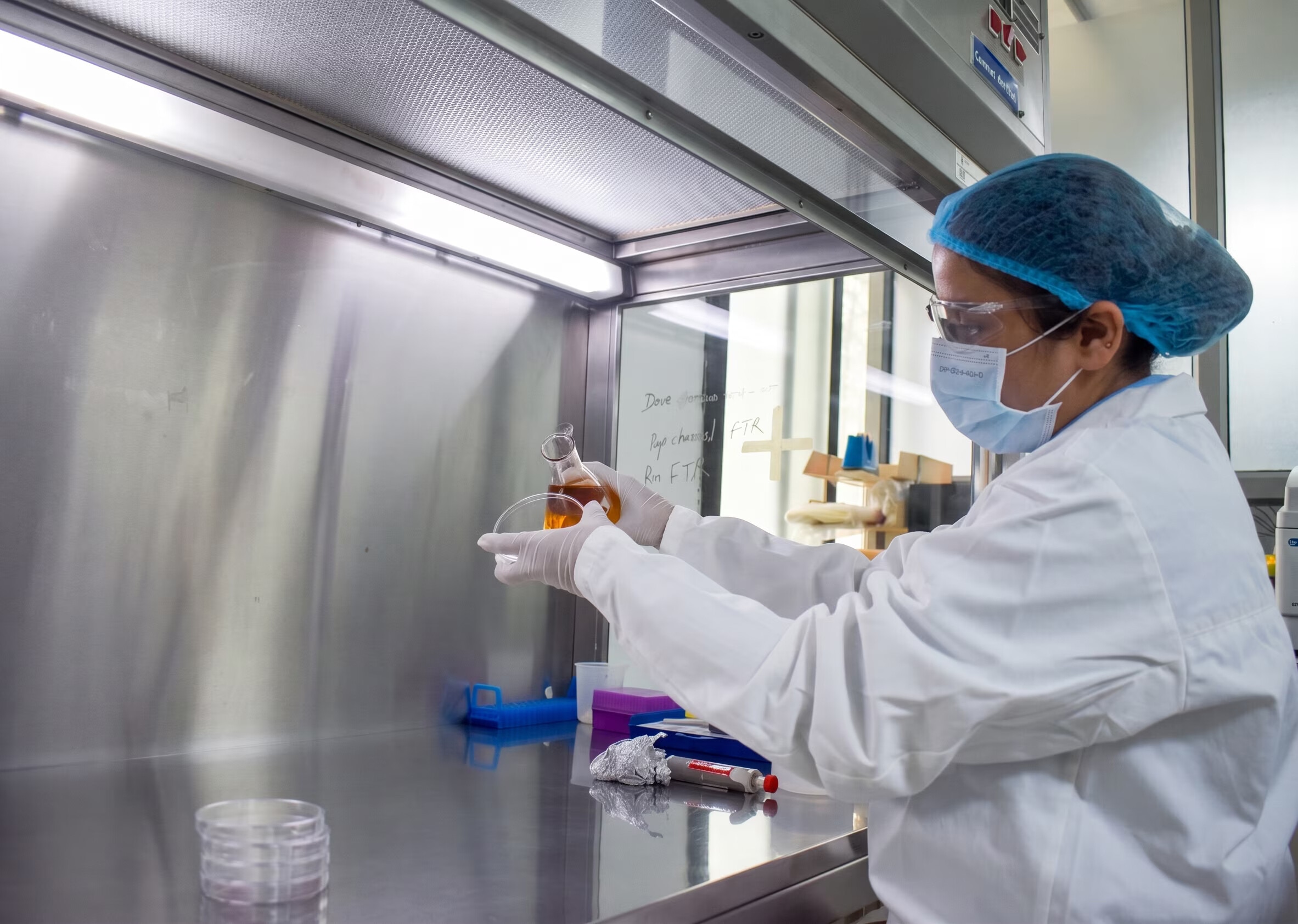
Biomanufacturing is the process of programming living microorganisms to produce the food, fuels, chemicals and materials that today often depend on fossil resources. While it has typically been a niche climate solution, it is now shifting into a foundational layer of the global economy.
The underlying science is not new, but affordable renewable energy and rapid advances in artificial intelligence (AI) are making existing solutions commercially attractive and allowing more cutting-edge innovation to scale to industrial production faster.
It will increasingly be possible to create key molecules in the lab that once had to be drilled, refined or synthesised from oil and gas. Just as the geography of fossil fuels shaped the geopolitics of the last industrial age, the ability to manufacture without them will shape the next.
China has placed biomanufacturing in its 5-year plan
While Europe and the United States have led foundational research for decades, China has now placed biomanufacturing alongside AI at the centre of its industrial strategy.
In the 15th Five-Year Plan, the Chinese Communist Party has laid out a vision for biomanufacturing and its innovation ecosystem. It envisions creating globally competitive companies and leading emerging technologies that will enhance China’s self-reliance and leverage during heightened geopolitical volatility.
Beijing is pouring billions into research and development and already controls more than 70% of global fermentation capacity. It is a familiar playbook: identify a foundational technology, build the scale others lack, drive prices down and convert that dominance into lasting economic and geopolitical leverage.
Solar panels, batteries and electric vehicles have set this pattern. Since US President Trump’s first administration, US companies have been somewhat protected from these policies by higher tariffs and stringent cyber and national security regulations.
European companies are fully exposed to the challenge and increasingly struggle to cope with pressure on profit margins, supply chain volatility, energy prices and dwindling global market shares.
Germany alone is reportedly losing more than 15,000 industrial jobs a month – a large portion of which can be attributed to what is often referred to as the China shock 2.0. Traditional industries are under enormous pressure but transitioning to a new industrial era will be equally difficult because China is already there and moving fast.
Leading on biomanufacturing gives states a leading global position
Where past industrial contests centred on a single sector, biomanufacturing touches food, medicine, energy and materials all at once. The countries and blocs that lead in advanced fermentation can shape critical supply chains and enhance state resilience.
The science exists, the scale is being built now and whoever manufactures at scale fastest will hold leverage. If patterns from solar panels, electric vehicles, batteries, or wind turbines are any indication, the window for meaningful market intervention is shrinking.
In solar photovoltaic modules, Chinese companies have 80% of global manufacturing capacity for polysilicon, wafers, cells and modules; last year China’s market accounted for almost 70% of the world’s wind turbines installed, of which nearly 100% were provided by Chinese turbine makers; over 70% of global electric vehicles are now produced, and more than 50% of the world’s industrial robots are installed in China.
This tendency towards strong geographic concentration is also emerging in biomanufacturing. For the rest of the world, excessive dependence is becoming a risk and a liability, and it will also become increasingly difficult to make a business case for any kind of production outside China without massive subsidies.
If the rest of the world wants more than a bystander role in the future of how things are made, the time to invest is now.
China’s leadership has been investing in creating the enabling conditions for a bioeconomic future.
AI-embedded design and public policies will diversify biomanufacturing capacity
As global diversity in future biomanufacturing capacity is already at a disadvantage, the only way out is to rethink how we build industrial strength.
So far, AI has been applied to enhance existing approaches but not to turn them on their head. Embedding new intelligence into existing production processes and hardware, then building everything else around it, will not be enough to reclaim industrial leadership.
A process revolution is necessary, so AI’s potential is embedded in industrial design, and the infrastructure is built around it. This will allow for an intelligence-based approach in a sector that has struggled with the fact that biology is stochastic and emergent. That means it is messy and unpredictable at the small scale while producing organized, complex behaviour at the larger scale.
If biological processes are to be at the heart of the next industrial revolution, the process should cope with exactly this randomness and self-organization. The good news is that AI now makes this possible.
The bad news is that building a new industrial ecosystem to harness this potential is too costly for private investment alone, especially given the competition already out there.
China’s leadership has been investing in creating the enabling conditions for a bioeconomic future. Beijing is financing infrastructure, boosting fermentation capacity and supporting start-ups and research and innovation at universities; it funds labs, sandboxes and industrial hubs, and has started to provide market incentives.
The market itself will not address the issue, as it tends to gravitate towards fast profits, as in the cosmetics and wellness industries, or towards the highest returns, as in experimental cancer cures and other pioneering pharmaceutical products.
Without comprehensive, fast and foundational support, structural failure will follow, despite marginal success stories for Europe, the United States, Japan, India, Canada, Brazil and many other players. A new industrial order will emerge but the choice is between being a spectator or a shaper.