Extreme heat is breaking critical infrastructure. Can we adapt in time?
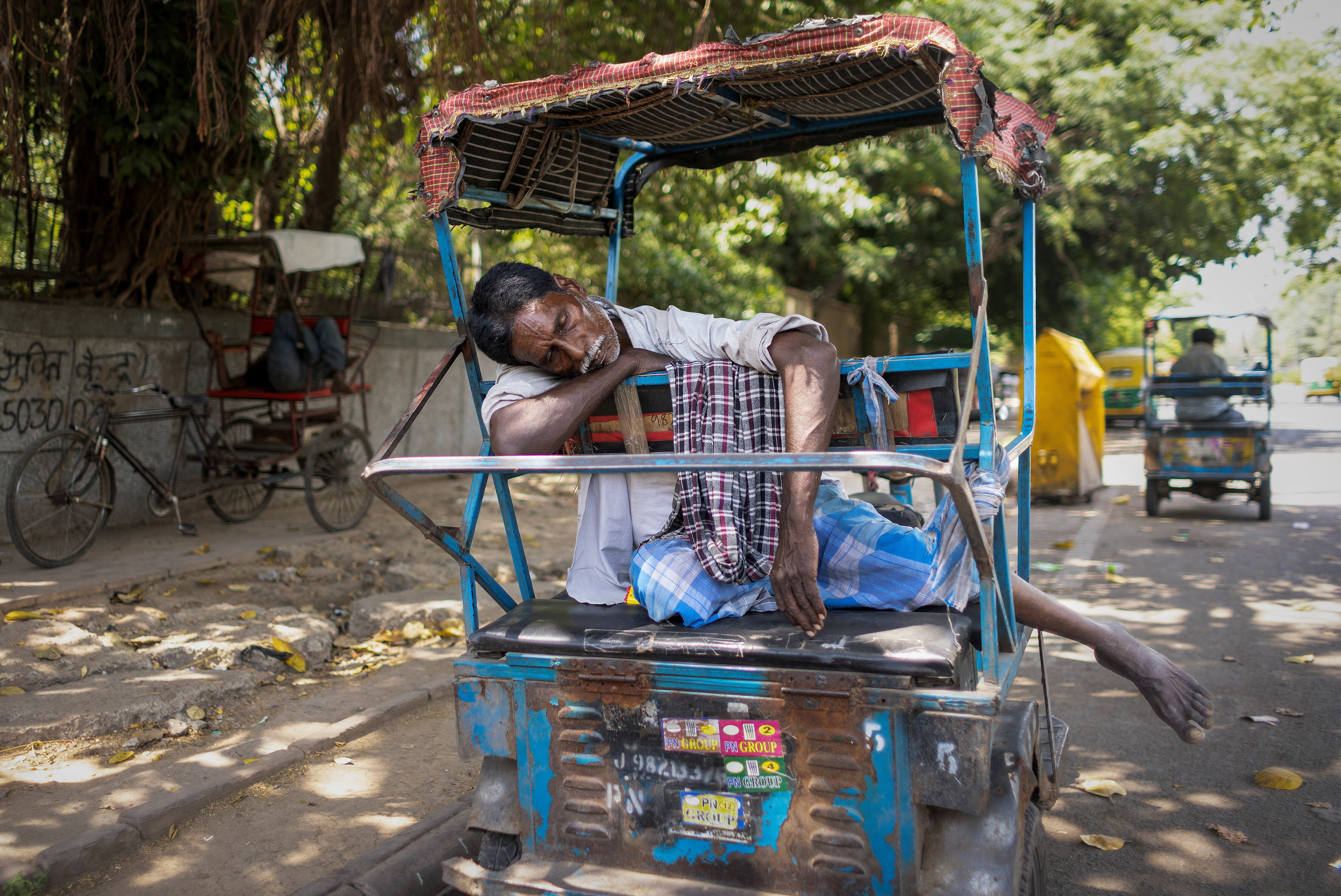
A man sleeps in his cycle rickshaw during a heatwave in New Delhi, India. Image: Reuters/Adnan Abidi
Joy Shumake-Guillemot
Chief, WHO-WMO Climate and Health Joint Programme, World Meteorological Organization (WMO)- From grids to hospitals, the world's critical infrastructure is becoming increasingly outmoded as global temperatures continue to rise.
- Extreme heat compounds risks across systems, causing cascading failures, driving up the economic cost and widening inequality.
- To keep power on and water running through ever‑hotter years, operators and policy-makers must act as one system, coordinated around four key functions.
Over the past months, extreme heat has cost lives, scorched land and threatened operational continuity for essential services and businesses.
In June 2026, during a historic European heatwave, NHS hospitals in England declared critical incidents as equipment failed under extreme heat. Weeks earlier, in northern India, 47°C heat overwhelmed the grid, leaving millions sweltering through power cuts. Meanwhile, extreme heat pushed US grids to record peaks in July, triggering emergency federal orders to shift data centres onto backup power to preserve household supply.
It would be easy to read these as separate emergencies. They are not. They are early signs of the same underlying shift: The infrastructure people and economies rely on was designed for a climate that no longer exists, and the gap between design and reality is increasingly straining our economies and communities.
The heat is now the predictable factor: The past 11 years were the hottest on record, and further warming through at least 2050 is locked in by past emissions. Whether our critical infrastructure can withstand the rising heat will come down to how well we prepare and retrofit it.
Heat stress compounds vulnerabilities across systems
Extreme heat hits every system at once. As demand for cooling, water and electricity peaks, heat weakens the networks that supply them. Supply falls precisely as demand surges; a shortfall in one system cascades across others, surfacing a core vulnerability: system interdependence. Last summer’s heatwaves demonstrated this squeeze: Hungarian power demand went up 23%, just as low Danube levels forced output cuts at its main nuclear plant.
Hospitals, data centres and rail operators know their operational limits and needs during heatwaves, but not those of the grid, transportation and water systems they rely on. Building resilience to heat therefore requires planning across connected infrastructures, not just within them.
Heat reprices the economy and widens inequalities
As physical infrastructure breaks under stress, so does the economy. Heat degrades assets, threatens human health, reduces productivity and raises operating costs. That cost falls hardest on those least able to absorb it. Workers in outdoor or poorly cooled environments are particularly at risk. In India alone, heat drained an estimated $78 billion from the economy in 2024, close to 2% of GDP, with outdoor workers losing nearly a tenth of their annual earnings to lost days and illness.
As heat drains household incomes, business revenues and public budgets simultaneously, it depletes the financial reserves that resilience depends on.
Turning heat into a manageable risk
To manage heat as a permanent operating condition rather than a recurring shock, stakeholders across society’s critical functions must come together as one system that can anticipate, decide, act and invest together. Building that connective layer rests on four functions:
1. Build visibility into system stress
Today, operators can forecast the weather, but not the moment the systems they depend on will fail. Building resilience requires a shared operating picture: meteorological forecasts combined with data on grid load, water availability, demand from both public services and private industry, and the dependencies that link them. The resulting output should show when demand will surge, supply tighten, and when to cut non-essential consumption or activate backups. Some European grid operators and consumers share data on network strain and possible power reduction to prevent blackouts during heatwaves; the same model can be replicated elsewhere.
2. Strengthen extreme heat governance
Most countries have no single body responsible for deciding how power, water, or cooling get allocated once a heatwave pushes demand to its limits. Responsibilities remain scattered, and coordination incentives are often missing. The Extreme Heat Risk Governance Framework and Toolkit developed by UNDRR, WMO and GHHIN offers a practical starting point. It calls for a cross‑sectoral, multi‑level body with a mandate spanning health, water, energy and other relevant sectors, to set priorities, protect vulnerable groups and essential services during heatwaves.
China's utilities adaptation demonstrates the gain: Strategic governance translated into weather-linked operating protocols safeguards essential public-welfare supply even in extreme weather, steadying the shared grid that public and private operators depend on.
3. Act on a shared signal
Once rules are set, sector-specific thresholds can trigger automatic action across systems: reduced non-essential demand, worker protections, adjusted transport and health services, and public communication. Heat-health early warning systems apply this within the health sector, using local thresholds and indicators to trigger pre-agreed actions before reaching critical health risks. The task is to extend that approach across sectors, so a threshold crossed in one triggers a coordinated response in the others.
4. Invest where the chain breaks
Finally, investment must follow interdependence. The dependency maps that reveal system risks can also show where a single failure would cascade furthest – but reinforcing these weak points is rarely any single owner's responsibility to fund. The Forum's work on public-private resilience offers a model for turning common dependence into shared investment: Identify the actors with a shared interest in keeping a system running, make the value of resilience visible to each, and design investment around what each can contribute.
A data centre or private hospital is one such actor. It can secure its own site, but not the grid and water system it depends on. On‑site backup can keep it running temporarily, but not prevent wider blackouts or water shortages that ultimately cut it off. Once that dependency is visible, investing in the resilience-enhancing technologies that keep the system standing becomes an investment in its own continuity. Structured this way, protecting shared points of failure can deliver more resilience per dollar than fragmented investment.
Extreme heat is now an operating condition, and keeping power on, water running and essential services open through it is becoming a precondition for functioning societies and competitive economies. Coordinating data-sharing, governance, contingency planning and investment can turn that condition into a strategic advantage. The choices made in the next year will determine which economies compete on that reliability and which will keep paying to recover from it in the years ahead.
Don't miss any update on this topic
Create a free account and access your personalized content collection with our latest publications and analyses.
License and Republishing
World Economic Forum articles may be republished in accordance with the Creative Commons Attribution-NonCommercial-NoDerivatives 4.0 International Public License, and in accordance with our Terms of Use.
The views expressed in this article are those of the author alone and not the World Economic Forum.
Stay up to date:
Climate and Energy Disruption


Forum Stories newsletter
Bringing you weekly curated insights and analysis on the global issues that matter.