The copper we need may already have been mined. Here's how to get it into global supply chains
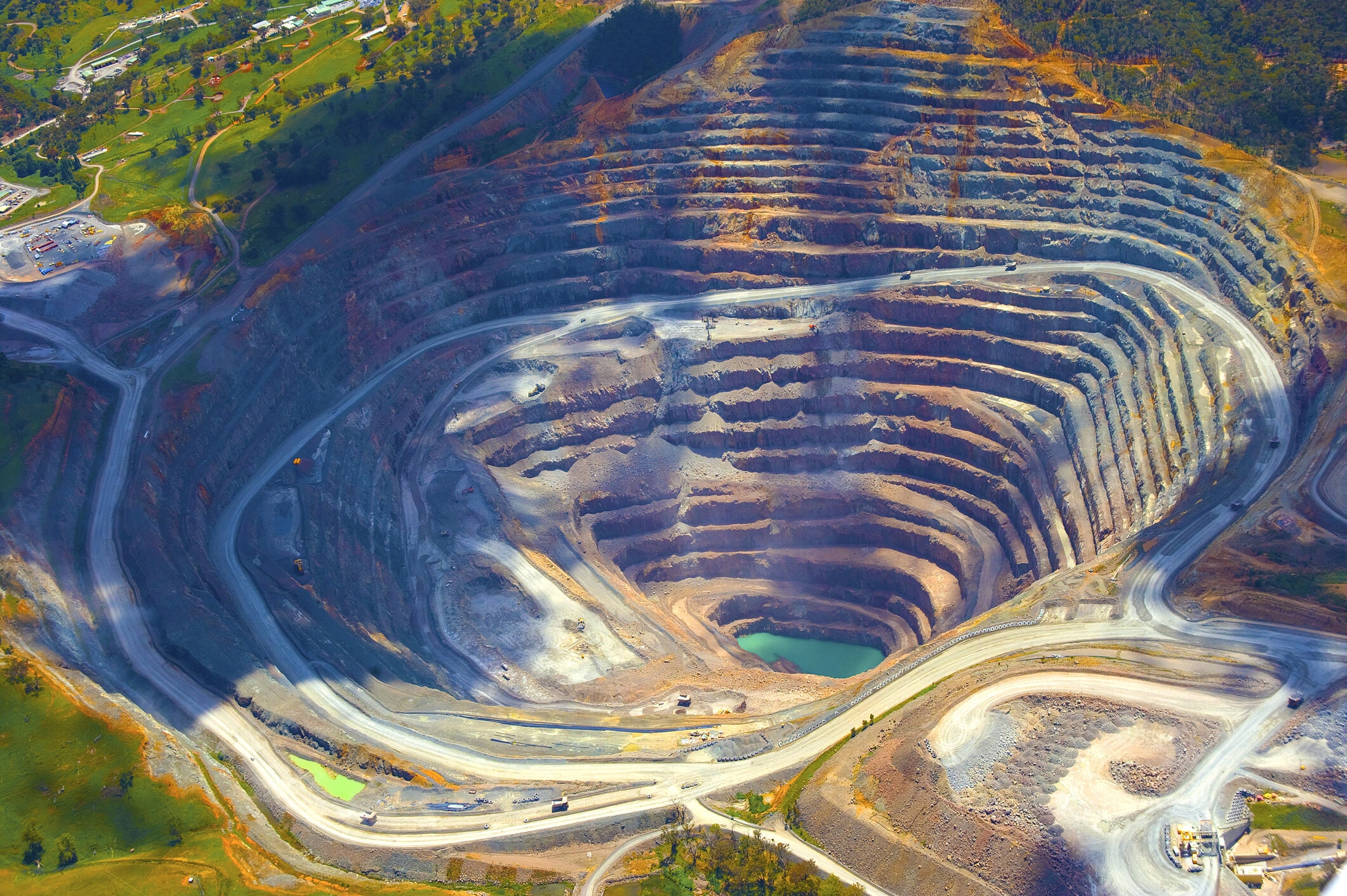
An Australian mine that produces copper and gold. Copper recovery is a viable strategy for boosting global metal supplies. Image: Getty Images/Alfio Manciagli
- Copper is crucial to electrification, playing a key role in powering the grid, electric vehicles, wind turbines and data centres.
- Rising demand can't be met by expanding mines and increasing recycling alone, copper recovery must also play a role.
- Microbes can help access the stranded copper inventory that's already on miners' balance sheets, releasing it into global supply chains.
Every serious conversation about electrification eventually becomes a conversation about copper. It plays a role in powering the grid, electric vehicles, wind turbines, data centres and the device you are using to read this article. Almost every technology driving the energy transition requires more copper.
The International Energy Agency (IEA) projects global copper demand will rise from 26.7 million tonnes in 2024 to 31.3 million tonnes by 2030 under today's policy settings. When discussing that gap, industry dialogue typically defaults to discovery – specifically where the next deposit is located and how quickly the next mine can be permitted and built.
Those are necessary questions, but there is another option. Enormous quantities of copper have already been extracted from the earth. Every day, copper-bearing rock is mined, but vast volumes of the metal never reach the market. It remains trapped in low-grade or complex material because traditional methods cannot recover it economically.
The world has a copper recovery problem.
To meet growing demand, we need to build and expand mines. We also need to recycle much more copper. The IEA's Global Critical Minerals Outlook 2025 projects recycled copper will supply a growing share of demand through 2040 as more end-of-life material becomes available.
Recovery from existing operations could be a third solution. It will not replace new mines or recycling, but it can add supply on a different timeline, using infrastructure that is already operating. It can also turn material that currently sits below an economic threshold into a productive resource.
Why copper is not always recoverable
A copper deposit can exist and still yield zero commercial value. Success hinges on whether an operator can recover the metal safely, reliably and cost-effectively.
That is becoming harder. As ore grades decline, mines must process more rock to produce the same amount of copper. The extractions solutions used may not move evenly through that rock, or the copper may be locked in minerals that resist conventional processing. Some rock is mined but still leaves valuable copper behind. Other rock is never mined because the economics do not work.
This material is often dismissed as waste, but that is a costly misconception because it actually represents stranded inventory. The industry has already expended the capital, energy and operational effort required to locate, mine, crush and move this rock. The metal has already been paid for and is sitting on site, it simply lacks an economic path to recovery.
Leaving millions of tonnes of copper stranded on balance sheets represents an enormous tie-up of capital. Companies are then forced to commit fresh billions into new exploration when high-value assets are already sitting in plain sight.
Developing a new greenfield mine can take well over a decade from initial discovery to commercial production, constrained by permitting, infrastructure development and immense capital commitments. Responsible mine development remains essential, but greenfield timelines cannot solve short-term supply deficits.
I grew up in Alaska. My father was an oil and gas geologist on the North Slope, and many of my friends' parents worked in mining. We spent our weekends fishing, backpacking, and being outside, while our families depended on extractive industries. I learned early on that mining and stewardship are not abstractly opposed ideas. They are a tension people and communities have to live with.
The world's oldest miners are microbes
Microbes have been breaking down rock and mobilizing metals for billions of years. Long before industrial extraction, natural biological processes were dissolving minerals. Today, this process, which is called bioleaching, is a proven commercial method for extracting value from low-grade ores.
A heap leach is a large pile of crushed rock that an acidic solution trickles through, dissolving the copper. In bioleaching, microbes living in that pile drive the chemistry, releasing the metal into the solution so it can be recovered.
While a heap leach may just look like a very large pile of rock, it is actually a living, changing environment. Conditions vary across it, including mineralogy, temperature, acidity, oxygen, permeability and microbial activity. A microbial community that performs well in one area or at one point in time may behave differently elsewhere, which makes continuous measurement important.
Recent advances in microbial analysis, real-time sensing and cloud computing have transformed bioleaching into a viable tool for recovering copper. Operators can continuously measure, model and optimize targeted microbial communities to adapt dynamically to shifting conditions.
A copper mine is not a laboratory
Mining companies are often cautious about new technology – and for good reason. A heap leach can be a multibillion-dollar asset that must operate every day. If a new intervention adds a few points of recovery, that can create significant value. If it disrupts production, the consequences can be far larger.
Innovators must design for industrial realities. Laboratory success is merely a baseline. Biological tools must integrate seamlessly into operational workflows, minimize downside operational risk and provide verifiable proof of performance at scale through controlled deployment and real-time monitoring.
By using continuous sensing and adaptive bio-operations, targeted microbial dosing can be adjusted to prevent chemical imbalances or acid-drainage risks. This can safeguard core heap-leach operations while maximizing yield. The ultimate commercial test is whether this can recover more copper safely, reliably and economically under real mine conditions.
Copper recovery belongs in the supply strategy
The world’s next tonne of copper may come from a new deposit. It may come from an old cable returned to the supply chain. Or it may come from rock that has already been mined and is currently sitting at an operating mine.
Integrating copper recovery into core supply planning shifts how mine operators view their stockpiles. Material once written off as waste becomes recoverable inventory. Investors can measure value by the economic tonnage unlocked, while governments can accelerate validation programmes alongside traditional permitting and recycling initiatives.
Meeting growing global copper demand will require every strategic lever, including new mine discovery, expanded recycling and maximized copper recovery. The first two levers are already in every supply strategy. The third is sitting on site, already paid for, waiting to be counted.
Don't miss any update on this topic
Create a free account and access your personalized content collection with our latest publications and analyses.
License and Republishing
World Economic Forum articles may be republished in accordance with the Creative Commons Attribution-NonCommercial-NoDerivatives 4.0 International Public License, and in accordance with our Terms of Use.
The views expressed in this article are those of the author alone and not the World Economic Forum.
Stay up to date:
Mining and Metals
Related topics:

Forum Stories newsletter
Bringing you weekly curated insights and analysis on the global issues that matter.
More on Energy TransitionSee all

Charlotte Edmond
September 14, 2026


