Global plastics treaty talks commence, and other nature and climate news
This weekly round-up contains the key nature and climate news from the past week. Image: Unsplash/Nick Fewings
- This weekly round-up contains the key nature and climate news from the past week.
- Top nature and climate news: Global plastic treaty talks begin; Brazilian law threatens further Amazon deforestation; US could scrap emissions standards.
1. INC-5.2 plastic treaty talks begin
More than 460 million metric tons of plastic are produced every single year, of which an estimated 20 million end up polluting our environment.
A study recently published in The Lancet estimates the health-related costs of plastic pollution at $1.5 trillion per year.
The UN Environment Assembly’s INC-5.2 conference takes place in Geneva from 5-14 August, with the aim of creating a legally-binding treaty to end plastic pollution.
This treaty has long been in the works, as the timeline below illustrates.
INC-5.2 aims to address previously unresolved issues, including whether the treaty should focus solely on plastic waste reduction or address the entire plastic lifecycle.
Finance will also be a focus, with discussions on a robust framework and means to implement the future treaty.
The World Economic Forum’s Global Risks Report 2025 ranks pollution among the top 10 risks with the most severe expected impact over the next decade. With plastic waste projected to rise further over the coming decades, these negotiations come at a critical moment.
To learn more about the INC-5.2 negotiations and why a global plastics treaty is so important, read our explainer.
2. UN expert warns new Brazil law risks Amazon deforestation
Brazilian lawmakers have passed plans to simplify environmental licences for infrastructure including roads, dams, energy and mines.
UN Special Rapporteur, Astrid Puentes Riaño, told the BBC that this could cause "significant environmental harm and human rights violations", and it represents a "rollback for decades" of protections in Brazil.
The new law will give environmental agencies 12 months - extendable to 24 - to decide whether to grant a licence for companies to proceed with their project plans.
Supporters of this bill argue that it reduces unnecessary bureaucracy, while its opponents argue it risks necessary environmental impact assessments being overlooked.
"Modifications or continuations of projects might mean deforestation in the Amazon without a proper assessment."
President Lula da Silva has until 8 August to either approve or veto the bill.
3. News in brief: Other top nature and climate stories this week
The US has announced a plan to scrap the Endangerment Finding, a 2009 order that allowed the US Environmental Protection Agency to create rules to limit pollution by setting emissions standards. Given that the nation emits the second-largest amount of greenhouse gas emissions every year, this move could have a significant impact on the environment.
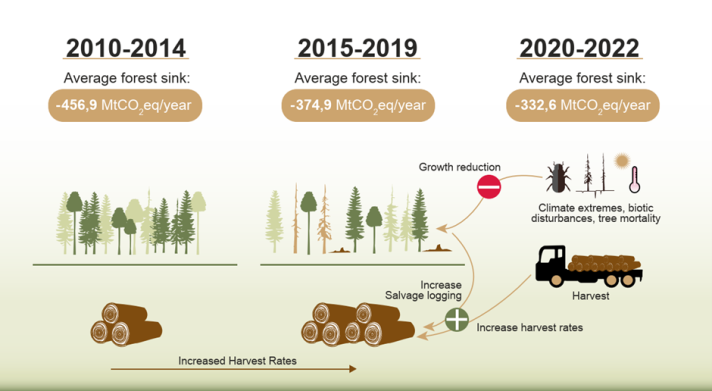
Over in Europe, emissions targets are at risk. Forests' ability to absorb carbon dioxide is being reduced by increased logging, wildfires, drought and pests, a study published in Nature has revealed.
In Beijing, more than 70,000 residents have been evacuated after floods have submerged parts of the city. The video below highlights some of the damage to the Miyun district.
Would you pay a fee to visit a famous area of natural beauty? New Zealand is planning to start charging tourists to visit popular natural sites such as Aoraki Mount Cook or Milford Sound. The charge is expected to be NZ$20-40 ($12-24) per person, which could generate $36.7 million per year for the New Zealand government.
'Fire clouds' or 'pyrocumulus' have formed in the western US at the site of two wildfires. These fire clouds form when air over a fire becomes superheated and rises in large, smoky columns.

Scientists have discovered communities of marine life deep in the northwest Pacific Ocean that, instead of getting their energy from eating organic matter, turn chemicals into energy to sustain themselves. The creatures are reportedly nourished by fluids rich in hydrogen sulfide and methane. These ecosystems were discovered at depths greater than the height of Mount Everest, with the deepest one recorded at 9,533 metres below the ocean surface, Reuters reports.
4. More on the nature and climate crisis from Forum Stories
Extreme heat is the deadliest climate risk of our time, claiming more lives annually than floods, hurricanes, earthquakes and wildfires combined. Despite its impact, extreme heat is referred to as a 'silent killer', as it lacks the visibility of other extreme weather events. The tools for heat resilience exist, however, from creating green corridors in cities to mandating longer breaks during heat hours for vulnerable workers. Learn more about these solutions in this explainer.
Bergen, Norway, is home to one of the world’s biggest underground waste management systems. This incredible system boasts 7.5 kilometres of pipes that use pneumatics to whisk garbage away to a central waste management facility. Watch the video below to explore how it has made Bergen safer and quieter while cutting diesel emissions, air pollution and traffic.
The World Economic Forum held its Global Shapers Annual Summit in July under the theme Next Generation Now: Youth Dialogues. The meeting had a session on Igniting Intergenerational Climate Leadership, which included the Youth Champion for COP30. From the optimism of youth to the power of collective action, here are some of the key takeaways on how cross-generational partnerships can drive innovative climate solutions ahead of COP30.
License and Republishing
World Economic Forum articles may be republished in accordance with the Creative Commons Attribution-NonCommercial-NoDerivatives 4.0 International Public License, and in accordance with our Terms of Use.
The views expressed in this article are those of the author alone and not the World Economic Forum.
Related topics:

Forum Stories newsletter
Bringing you weekly curated insights and analysis on the global issues that matter.
More on Climate Action and Waste Reduction See all

Namit Agarwal
February 25, 2026


