Critical minerals: Why innovation begins beneath the Earth’s surface
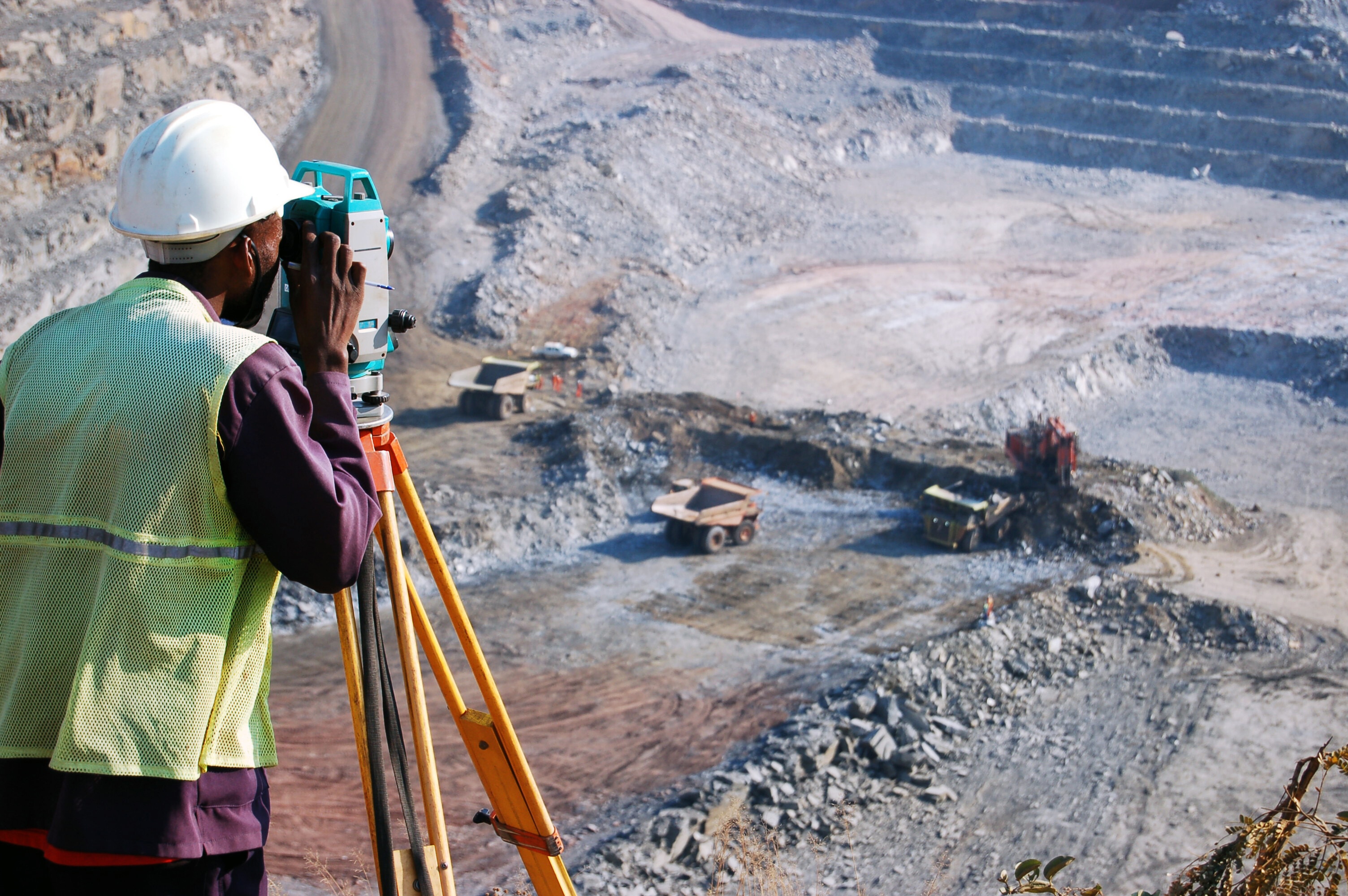
Achieving net zero by 2050 will involve securing an escalating supply of critical minerals, the primary inputs for green technologies Image: iStock/mabus13
- Demand for critical minerals used to produce clean energy technology could be more than 3.4 times current levels by 2040, according to the International Energy Agency.
- The mining industry must collaborate with governments, technology leaders and civil society to find innovative ways to mine critical minerals responsibly.
- Leaders gathering at the World Economic Forum Annual Meeting 2026 will explore how protecting the environment and driving economic growth can go hand in hand.
This decade will be remembered for two revolutions unfolding at once. The first is artificial intelligence (AI), which is transforming productivity, reshaping geopolitics and redefining what economies can achieve.
The second is the energy transition, led by the race to create a diversified energy matrix, decarbonize infrastructure, electrify mobility and build resilient environmental safeguards in a rapidly warming world.
What links these two revolutions is rarely discussed in the same breath – both are mineral-intensive. Every AI data centre depends on copper-heavy power systems. Every electric vehicle (EV) begins with mined metals. Every renewable grid, semiconductor and battery system is anchored in materials mined from the earth.
For all the talk of digital futures and clean technologies, progress today remains profoundly physical. That’s why innovation does not just float in the cloud, it starts beneath the Earth’s surface.
Building a sustainable future with critical minerals
The world is attempting something unprecedented: to digitize, decarbonize and scale new technologies simultaneously. But these transitions are drawing from the same finite resource base.
Clean technologies are significantly more mineral-intensive than the systems they replace. And demand for the critical minerals required for clean energy technologies is projected to rise more than 3.4 times by 2040 under the International Energy Agency’s net-zero pathway.
So, achieving net zero by 2050 will involve securing an escalating supply of the primary inputs for green technologies, including nickel and neodymium for EVs, silicon and silver for photovoltaic solar panels and zinc for wind turbines. This creates a fundamental tension at the heart of the sustainable future we are trying to build.
If the materials that power AI and clean energy are produced in ways that strain ecosystems, fragment supply chains or erode social trust, the credibility of the transition itself is at risk. Today’s leaders know that minerals matter but they must work out whether the current approach to minerals mining and the subsequent impact of their use is aligned with the future we all want.
Mining as an enabler of global innovation
For decades, innovation was defined by software, speed and scale. Today, innovation is becoming physical again. Infrastructure for AI hubs, electrified transport, advanced manufacturing and resilient grids all require materials engineered for performance, durability and efficiency. The carbon intensity, traceability and reliability of minerals now shape the sustainability of entire value chains from data centres to electric vehicles.
This is causing the role of mining to fundamentally change. Mining can no longer be viewed as a distant upstream activity. It is becoming a strategic enabler of global innovation.
Technologies such as AI-enabled exploration, precision extraction, digital monitoring and advanced processing are allowing minerals to be produced with far greater efficiency and less environmental impact. These tools are not just improving operations; they are redefining what responsible resource development looks like. In the age of AI, even mining must become intelligent.
Critical minerals are also now central to economic security and geopolitical stability. But supply chains are concentrated, processing capabilities are uneven and demand is accelerating faster than new capacity can be built.
Diversifying supply chains and sharing innovation across borders will turn mineral dependency into resilience. When countries align on responsible sourcing norms, when companies co-invest in processing and recycling capacity, and when technology is shared to improve traceability and efficiency, supply chains can become more stable, costs can decline and environmental outcomes can improve.
Shared approaches to transparency, traceability and responsible sourcing reduce volatility by increasing predictability. This helps governments to plan and industries to invest with confidence. It also builds trust within communities. This is where multilateral platforms like the World Economic Forum play a vital role by convening governments, industry, technology leaders and civil society to translate dialogue into action – from interoperable ESG frameworks to cross-border pilot projects that strengthen mineral supply chains.
A sustainable tomorrow will depend as much on how we collaborate as how we mine.
Mining critical minerals responsibly
As demand rises, so do expectations. Communities, investors and customers are no longer evaluating mining purely on output. They are judging it on environmental stewardship, social impact and long-term legitimacy.
Trust will become the most valuable currency in the minerals economy. Trust that ecosystems are respected. Trust that communities benefit meaningfully. Trust that materials powering the future are produced in ways consistent with climate goals. In this environment, leadership is not measured by reserves alone, but by credibility.
The world has the minerals it needs to build a cleaner, smarter and more connected future. And so innovation does not begin when a product reaches the market or when an algorithm goes live; it begins when we decide how to engage responsibly with the resources that make innovation possible.
The future may feel digital, but it is being built on what lies beneath our feet.
Don't miss any update on this topic
Create a free account and access your personalized content collection with our latest publications and analyses.
License and Republishing
World Economic Forum articles may be republished in accordance with the Creative Commons Attribution-NonCommercial-NoDerivatives 4.0 International Public License, and in accordance with our Terms of Use.
The views expressed in this article are those of the author alone and not the World Economic Forum.
Stay up to date:
Energy Transition
Related topics:


Forum Stories newsletter
Bringing you weekly curated insights and analysis on the global issues that matter.
More on Energy TransitionSee all

Namit Agarwal
February 25, 2026


