Live from Davos 2026: What to know on Day 1
More about the meetingCurious about what happens at Davos? Here’s what to know
Forum live blog team
Stay up-to-date with Davos 2026 daily live blogs
'Ideas on the Move' in Davos
We’re kicking off a new series of on-the-move video interviews today, catching up with Davos participants as they travel between panel sessions. First up: social media creators Marina Mogilko, better known as Silicon Valley Girl, and Max Klymenko from the Career Ladder.
One quick question, no easy answers: what drives you?
Their responses will be shared shortly across our channels as part of 'Ideas on the Move' - more to come as the week unfolds!

Opening Concert sets the tone for Davos 2026
Davos 2026 opened not with speeches, but with sound filling the Congress Hall.
This was intentional, for it reflects this year’s meeting theme, A Spirit of Dialogue, pointed out Børge Brende, President and CEO, World Economic Forum, in the concert’s welcoming remarks: “Music knows no borders, it speaks no single language. A violin, a trumpet, a clarinet and a drum, they come together in perfect harmony, each unique, each essential, each voice making the whole more beautiful.”
It was a sentiment echoed by André Hoffmann, Vice-Chairman at Roche Holding and Interim Co-Chair of the World Economic Forum, who emphasized that the concert sets the tone for the meeting: “The concert reflects the principles we seek to advance for the week: openness, collaboration, diversity and a responsibility to future generations.”
Larry Fink, Chair and CEO of BlackRock and Interim Co-Chair at the World Economic Forum, who also delivered some brief welcoming remarks, agreed, reflecting on how the many genres of music all coming together in one concert perfectly represent the goals of this year’s Annual Meeting: “To expose people to wider ranges of voices, to a wider range of ideas, maybe even an argument, but one that we have deeper understanding from.”
After these welcoming remarks, the concert kicked off with the Mahler Chamber Orchestra performing alongside acclaimed violinist Renaud Capuçon. On a large LED screen behind the musicians, an AI-generated visual installation responded dynamically to their sounds, the brainchild of artist and technologist Ronen Tanchum.
The combination of raw human talent with cutting-edge technology demonstrated that tradition and innovation don’t have to be in conflict, and can in fact help us reach new heights — a theme that will no doubt come up over the coming week, as leaders in Davos discuss how to scale new technologies like AI responsibly.
The second half of the concert featured multi-Grammy and Academy Award winner Jon Batiste. Known for a style that flows seamlessly across genres, Batiste’s performance was a vivid masterclass in cultural hybridity — and had participants in the room up on their feet and dancing along.
Watch the concert in full below — and if you like what you saw, be sure to tune in later this week, when Jon Batiste joins other cultural leaders to discuss the healing power of sound and words.
A Davos 2026 Monday morning media scan
The contours of this year’s Annual Meeting are taking shape and media coverage is zeroing in on its potential to serve as the proverbial saucer that cools the tea. There’s also a handy lingo decoder.
A place for cooler heads to prevail – a reporter who’s covered the Annual Meeting for nearly two decades notes that amid the tumult this year it provides “an even rarer occasion for face-to-face diplomacy.” (CNBC)
“It is a good thing that reinvention has long been a specialty of Davos.” Taking the long view of Davos as a place for adapting to shifting global realities. (Financial Times)
“Creating a chance for conversation.” Many of the European and US policymakers tasked with finding a resolution to recent trans-Atlantic flareups just happen to be headed to the Swiss Alps this week. (New York Times)
What does the phrase “We are truly entering the era of minilateralism” really mean? Here’s one take, anyway. (Financial Times)*
*(Read more about minilateralism and why it truly matters here).
Data and insights on Day 1 of Davos 2026
After years of significant investment and high expectations, leaders are now focused on how AI delivers measurable value and what is required to translate early experimentation into sustained enterprise-level, industrial and societal transformation.
And learn about AI paradoxes and why AI adoption may not play out as we expect in this article.
This impact report highlights how First Movers Coalition (FMC) members are delivering on their net-zero commitments within a complex global market.
More about the First Movers Coalition for Food:
And why this year's Davos is colour coded:
Global supply chains face a new operating reality – one defined by persistent volatility and disruptions embedded in the global economy. Leaders face a defining challenge: how can supply chains be designed to remain resilient, competitive and investable when uncertainty is not temporary, but structural?
How First Movers Coalition (FMC) members are delivering on their net-zero commitments within a complex global market.
Radio Davos Daily: your morning audio download on the day ahead
As well as this live blog, you can stay on top of what's happening here by following the Forum's Radio Davos podcast.
Every morning from 19 January: give us a few minutes and we'll give you an audio rundown of the coming highlights.
Each episode will feature a special guest looking ahead to the days's action. Today, Bloomberg TV's Francine Lacqua joined Radio Davos host Robin Pomeroy
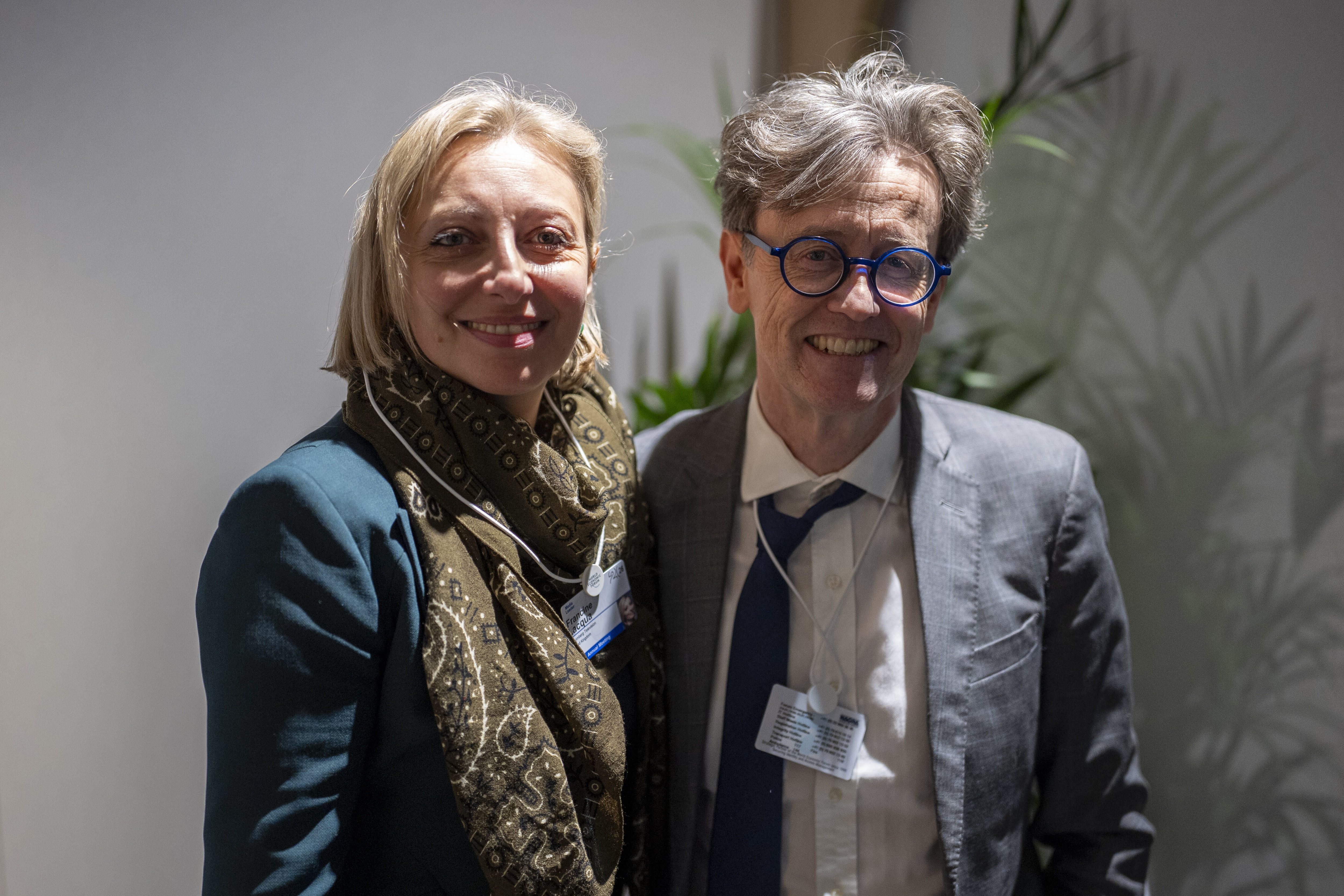
The Daily will be available here, wherever you get podcasts, and on the Forum Live app.
The prevailing media mood as Davos 2026 begins
Media coverage as the first participants start gathering in the Alps is a mix of high expectations and a strong sense that much of the agenda will look very different this year – even as some glaring challenges carry over from the past.
Attendees will have access to an AI agent. “I have to have my narrative in my pocket,” says Salesforce CEO Marc Benioff. (DealBook)
Do “dry Davos” and make sure you always have fresh socks handy; FT writers offer tips for the Annual Meeting. (Financial Times)
Chief economists weigh in on the eve of the gathering with a relatively brighter outlook – roughly half may see weakened conditions ahead but that’s far less than in the previous edition, as the Forum’s Head of Economic Growth and Transformation explains. (CNBC Africa)
Russia’s war with Ukraine, prospects for global trade and markets, the risks of a Middle East flare-up caused by the recent uprising in Iran, and one “high-ranking guest” in particular. Here’s one roundup of likely discussion topics and highlights. (New York Times)
Essential podcasts to frame the conversations
What is top of mind for leaders this week as they meet in Davos?
Watch or listen to the latest episodes of Radio Davos and Agenda Dialogues.
The latest Chief Economists’ Outlook is a revealing pulse-check of the global economy based on a survey of leading chief economists from a variety of organizations.
Christian Keller, Head of Economics Research at Barclays Investment Bank, joins to flesh out the key parts of the latest outlook – and helps us understand why tariffs haven’t proven to be quite the disaster economists feared (yet), and why people are saying that even if this is an AI bubble, it might in some ways be a good one.
Global cooperation is proving resilient even as multilateralism continues to face strong headwinds. This is the full audio from a media briefing presenting the Global Cooperation Barometer, with Sheba Crocker, World Economic Forum Managing Director, Børge Brende, the Forum's President and CEO, and Bob Sternfels, Global Managing Partner at McKinsey & Company.
The Global Risks Report, the World Economic Forum's annual snapshot of the biggest risks facing the world in the near, medium and long terms, shows geopolitical and economic risks on the rise in the new 'age of competition'. Gayle Markovitz is joined by a co-host, Forum Managing Director Saadia Zahidi and two expert guests, Peter Giger, Group Chief Risk Officer at Zurich Insurance, and Andrew George, President, Specialty at Marsh Risk.
The Global Cybersecurity Outlook 2026 is an essential report on the state of cyber threats facing the world, and what can be done to tackle them.
Akshay Joshi, head of the World Economic Forum's Centre for Cybersecurity joins as co-host as we speak to Interpol Director for Cybercrime Neal Jetton, and Robert Lee, CEO and co-founder of Dragos, a company that specializes in protecting 'OT' - the operational technology that companies rely on.
Essential pre-reads
Here's a recap of some of the key insights launched ahead of Davos to frame the conversations over the course of the week.
Welcome to Davos 2026
As Davos 2026 kicks off, the World Economic Forum's live blog team is on the ground, bringing you the inside track on the events as they happen. Keep an eye on this page for updates, summaries, analysis and insights in real time.
This year sees a record 400 top political leaders, including close to 65 heads of state and government, nearly 850 of the world’s top CEOs and chairs, and almost 100 leading unicorns and technology pioneers convening for one of the highest-level gatherings in the Annual Meeting’s history.
Speaking of which, here's a recap of the history of the Annual Meeting and check out our 'Davos in Preview' collection of the top stories, achievements over the years and things to know as we prep for the week ahead.
Stay up-to-date with Davos 2026 daily live blogs
License and Republishing
World Economic Forum articles may be republished in accordance with the Creative Commons Attribution-NonCommercial-NoDerivatives 4.0 International Public License, and in accordance with our Terms of Use.
The views expressed in this article are those of the author alone and not the World Economic Forum.

Forum Stories newsletter
Bringing you weekly curated insights and analysis on the global issues that matter.
More on Forum in FocusSee all

Kaya Bülbül and Kate Whiting
January 30, 2026


Social psychologist Jonathan Haidt on finding happiness in an AI age
If artificial intelligence truly frees humans from rote work – and we maximize our Earthly potential -- could we finally crack happiness?
Maybe not, says Jonathan Haidt.
Haidt is the social psychologist, business professor and bestselling author of The Anxious Generation, a book that explored how a digital age has driven not just fragmentation but anxiety and depression in young people. In an interview today in our Forum Podcast booth, he explained how artificial intelligence could drive us all further apart, fueling division and isolation in the process.
What can we do? Haidt suggests we focus on what research says really drives happiness: That’s not material goods but human connection and a sense of purpose and belonging.
Look for the full interview with Jonathan Haidt on our Meet The Leader podcast in the weeks following Davos. Follow Meet The Leader here
All this week we'll be highlighting compelling insights taken from interviews conducted by our Forum editors and producers on the ground in Davos. Check back on this live blog for more sneak peeks at upcoming episodes and a glimpse at how leaders in science, business, technology are tackling the biggest challenges of our day. Watch last year's Radio Davos interview with Jonathan Haidt here below: