How location, cost cuts and policy can help clean fuels compete with fossil fuels
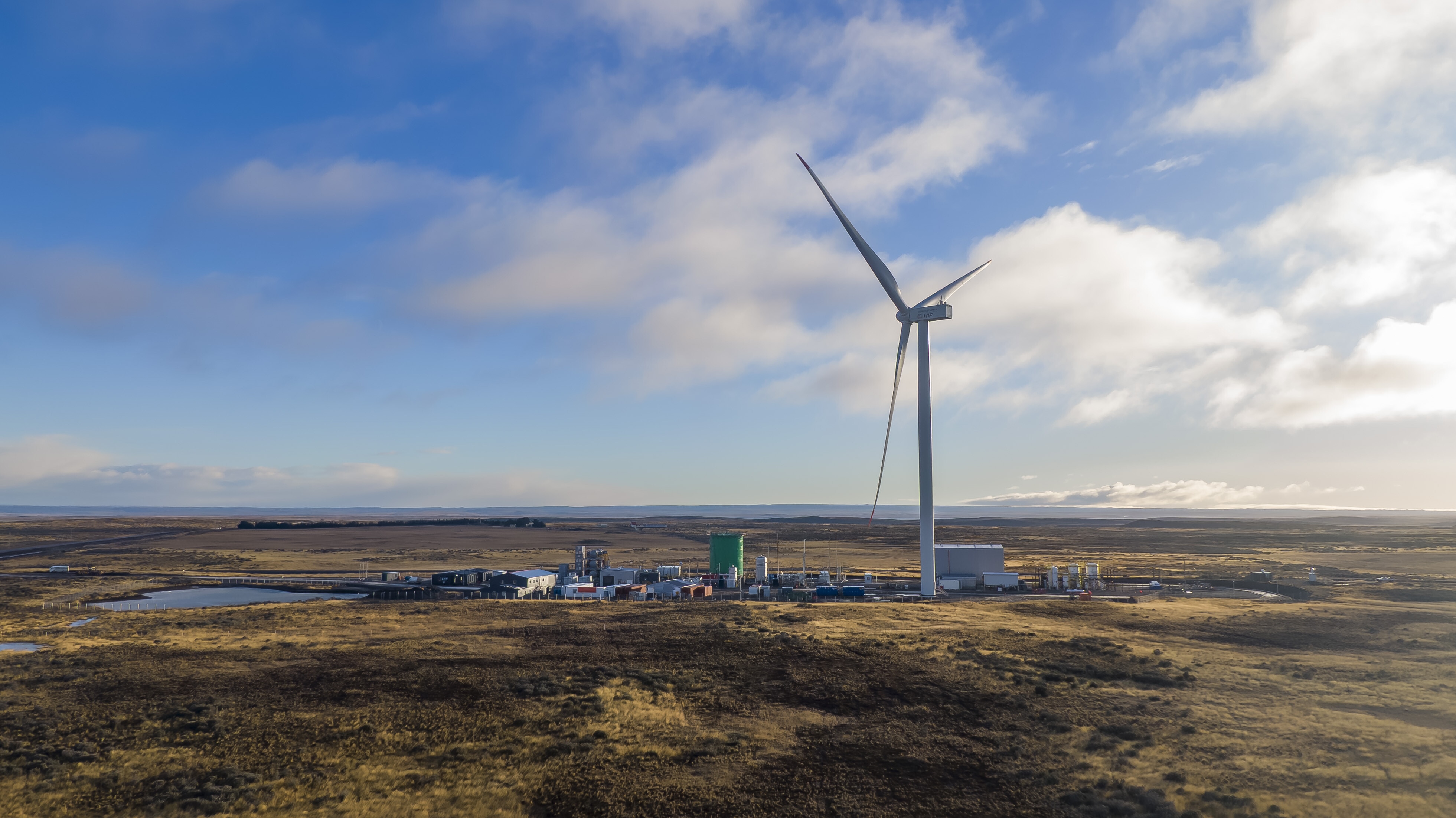
The HIF Haru Oni facility in southern Chile has been producing e-fuels since 2022 using renewable energy and biogenic CO2. Image: HIF Global
- E-fuels are clean fuels that can be used in existing engines and infrastructure, with emissions that are more than 80% lower than those of fossil fuels.
- Location, cost reduction and policy collaboration can all help to scale e-fuel production and use across many different industries.
- Leaders gathering at the World Economic Forum Annual Meeting 2026 will discuss how to scale clean fuels and drive economic growth.
At the COP30 climate change conference in November 2025, more than 20 countries committed to Belem 4x – a pledge to quadruple the use of sustainable fuels by 2035 from a 2024 baseline. Sustainable fuels, also called clean fuels or low-carbon molecules, include liquid biofuels, biogases, low-emission hydrogen and hydrogen-based fuels like e-fuels.
Currently, liquid fuels provide half to two-thirds of global primary energy demand. But alternatives to fossil fuels are quite limited in sectors like aviation, shipping, industry and heavy road transport. Greater use of sustainable fuels by these industries could reduce emissions and bolster global energy security by diversifying fuel supply and reducing import dependence. This would require scaling clean fuels, however.
One clean fuel option that is ripe for scaling is e-fuel. Produced by combining green hydrogen with recycled or direct air captured CO₂, e-fuels are chemically equivalent to hydrocarbons, but their emissions can be more than 80% lower than those of fossil fuels.
Known as "drop-in" fuels, e-fuels can be used in existing engines and transported and stored using existing infrastructure. That’s particularly important for long-lived and older infrastructure and for consumer choice.
E-fuel can store and transport renewable energy in molecular form, allowing it to reach markets that cannot rely on direct electrification. This means it could be useful in countries with abundant but remote renewable resources, such as Uruguay, Chile, Brazil, Morocco, Canada, the US and Australia. In such locations, at-scale e-fuel projects would complement electrification, rather than replace it.
According to the International Energy Agency (IEA), only 1% of clean fuels are hydrogen and hydrogen-derivative-based fuels like e-fuels. In other words, e-fuels are still nascent. Location, cost reduction and policy collaboration will all play a key role in scaling e-fuels.
E-fuel production is technically proven
Several e-fuel demonstration facilities have already shown that clean molecule production is technically viable. One example is the HIF Haru Oni e-fuel facility in southern Chile. It has been operating for three years, producing green hydrogen and synthesizing it with recycled CO₂ to make e-methanol, e-gasoline and e-liquid gas. Fuels from the site have already shown early promise in several environments.
Porsche has tested Haru Oni’s e-fuels at various global events, for example, including the Porsche Mobil 1 Supercup and the Arosa ClassicCar races. The Chilean Navy has also powered a motorboat used by its Hydrographic and Oceanographic Service with e-fuel, while expedition company Antarctica21 has fuelled its Zodiac boats with e-gasoline to promote sustainable tourism.

More recently, the Port of Açu in Brazil launched a green shipping corridor with the Port of Antwerp-Bruges in Belgium, just before COP30. This could become one of the world’s first large-scale e-fuel export routes by 2030.
These early collaborations show synthetic fuels can meet demanding technical and operational requirements, which should encourage other sectors to consider low-carbon fuels as well.
How to scale e-fuel use
Cost is still the main challenge for scaling e-fuel use across multiple industries. Producing e-fuels remains more expensive than fossil fuel refining, primarily due to the cost of renewable electricity, electrolysis and CO₂ capture.
But other clean energy technologies, such as solar, have overcome similar challenges. In those cases, deployment policy, standardization and mass manufacturing efficiencies delivered steep cost reductions. Clean molecules could follow a comparable trajectory as e-fuel technologies mature, deployment increases and modularization drives efficiencies.
In fact, the industry is already working to overcome the production cost challenge. Over the last 36 months, electrolyzer plant standardization and pre-engineering innovations have been developed that promise steep cost reductions, as well as lower project construction costs due to modularization. Tapping into existing industrial clusters can also help capture infrastructure efficiencies and large quantity equipment orders through economies of scale.
The next frontier of cost reduction is expected to come from competition and efficiency breakthroughs in CO₂ capture, and more coordinated co-development with host countries seeking development of new industries.
Policy that is simple, certain and creates investible opportunities will help e-fuels – and all clean fuels – to achieve scale. Globally, interoperable policy that prioritizes least-cost production is essential, including harmonized standards, lifecycle-based rules and demand-creation mechanisms. This will help reduce uncertainty for investors and producers and enable viable long-term offtake agreements.
A recent World Economic Forum report, Fuelling the Future: How Business, Finance, and Policy Can Accelerate the Clean Fuels Market, highlights how performance-based policies, public-private cooperation and demand signals from industry can work together to accelerate investment and deployment across clean fuels.
Building on e-fuel progress to date
The progress made so far to scale e-fuel production and use offers important insights for its continued development. E-fuels can be produced with existing technology, they can be used in current engines and distribution systems, and early users have shown they can perform reliably. The next step is to translate demonstration experience into investments capable of delivering meaningful production volumes.
Reducing emissions in hard-to-abate sectors is one of the most challenging parts of the global net-zero challenge. Clean molecules such as e-fuels provide a practical option to accelerate emissions reductions in areas where few alternatives exist. The technical foundations are in place, early lessons have been learned and momentum is building. Now the focus must shift to scaling e-fuel solutions.
Don't miss any update on this topic
Create a free account and access your personalized content collection with our latest publications and analyses.
License and Republishing
World Economic Forum articles may be republished in accordance with the Creative Commons Attribution-NonCommercial-NoDerivatives 4.0 International Public License, and in accordance with our Terms of Use.
The views expressed in this article are those of the author alone and not the World Economic Forum.
Stay up to date:
Renewable Energy
Related topics:


Forum Stories newsletter
Bringing you weekly curated insights and analysis on the global issues that matter.
More on Energy TransitionSee all

Namit Agarwal
February 25, 2026


