What gorillas with digital wallets can teach us about financing nature
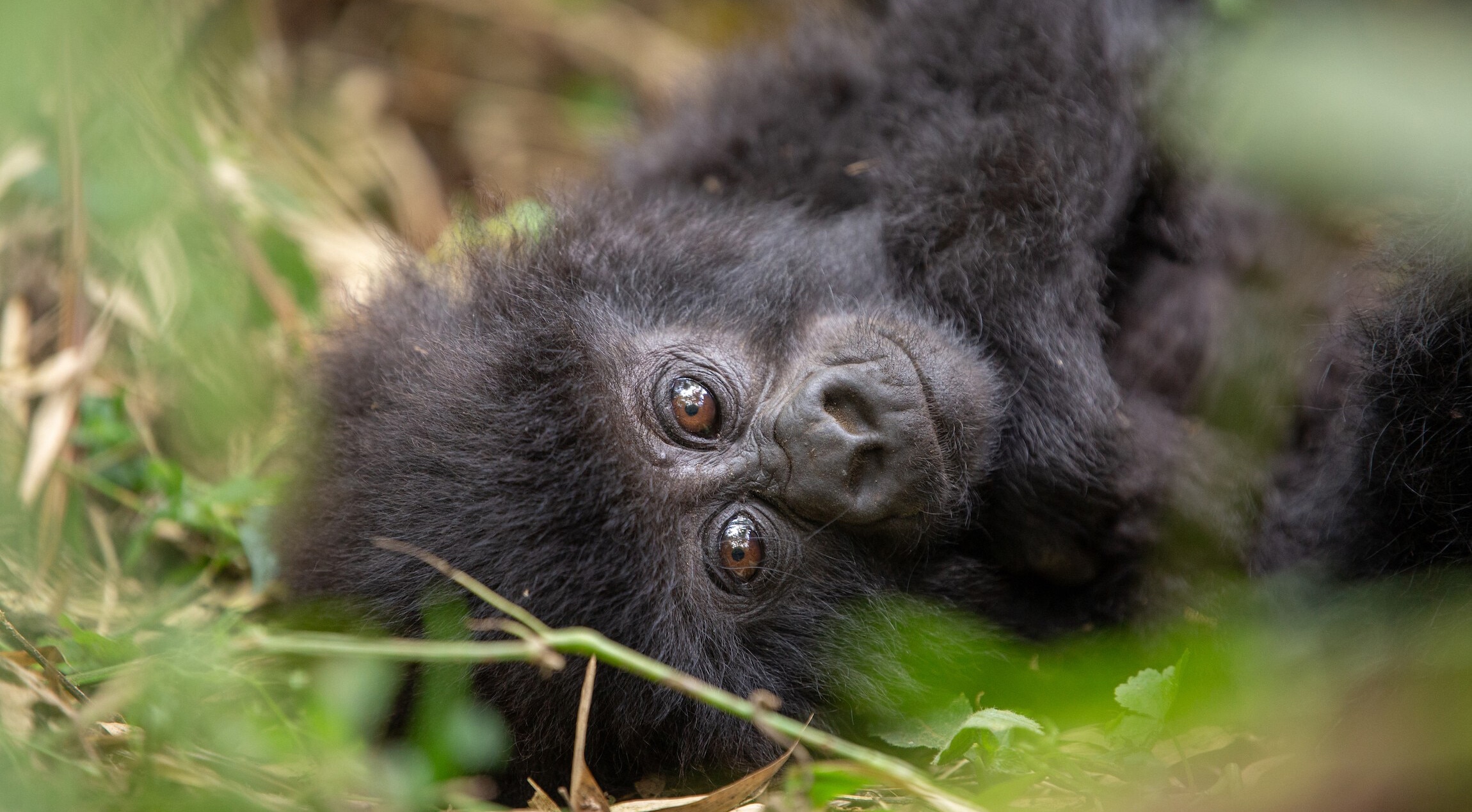
A project in Rwanda is tackling the biodiversity finance gap by giving gorillas digital wallets. Image: Jonathan Ledgard
- Nature conservation is chronically underfunded, with a global biodiversity finance gap of up to $700 billion annually.
- New models such as performance-based payments seek to align economic incentives with conservation outcomes.
- A pilot in Rwanda shows how digital technologies can connect real-time conservation actions directly to funding flows.
On a misty August morning in Rwanda’s Volcanoes National Park, a group of mountain gorillas were each assigned their own digital wallet. What may sound unconventional was part of an early pilot linking individual animals to digital identities and accounts tied to their protection.
The idea is simple: rangers and local communities receive direct payments when they take actions that protect the gorillas. When a ranger, for instance, removes a snare, it can trigger a payment. In effect, the gorillas shift from passive beneficiaries of conservation to active participants in a financial system designed to support their survival.
The experiment signals a broader shift in how nature is financed. As biodiversity loss accelerates and funding gaps persist, mechanisms that directly reward conservation outcomes are likely to become increasingly important.
Global ecosystems are under strain
The global biodiversity crisis is both ecological and financial. Ecosystems underpin food systems, climate stability and economic resilience, but the capital required to protect these ecosystems remains insufficient. Estimates suggest a biodiversity finance gap of up to $700 billion annually.
According to the United Nations’ State of Finance for Nature 2026 report, closing this gap must not rely on public funding alone, as government budgets face increasing pressure and shifting policy priorities in a changing geopolitical context.
In many regions, the burden of conservation falls on those living closest to wildlife. Crops are damaged, livestock is lost and land use options are constrained. Meanwhile, financial benefits are uncertain and often depend on volatile revenue streams such as tourism. This vulnerability became clear during the COVID-19 pandemic, when global travel collapsed and conservation revenues fell sharply.
New approaches to nature finance measure outcomes
In response, new approaches to conservation finance are emerging, with mechanisms such as wildlife credits, analogous to carbon credits, and performance-based payments aiming to reward measurable outcomes rather than activities.
But a persistent barrier has been verification: how can conservation outcomes be measured reliably and connected to funding in near real time?
Advances in digital technologies are beginning to close this gap. Digital financial systems now make it possible to connect verified outcomes directly to transactions.
At the same time, tools such as artificial intelligence (AI)-enabled camera traps and initiatives like WildDrone, a research network coordinated by the University of Southern Denmark, are improving how conservation data is collected and validated.
Together, these kinds of technologies make it possible to verify conservation outcomes in near real time and directly reward them.
Testing a new conservation model in Rwanda
In August 2024, this idea was explored through an early-stage proof-of-concept pilot in Rwanda, led by Tehanu in collaboration with the Rwandan government and conservation partners.
The pilot was implemented with the Kwitonda group of mountain gorillas in Volcanoes National Park. Each individual gorilla was assigned a digital identity based on biometric recognition, using distinctive nose-print patterns captured through a network of 73 motion-activated camera traps, combined with decades of ranger observations.
These identities were linked to blockchain-based wallets preloaded with Rwandan francs, forming the basis for a system in which conservation actions could trigger financial flows. A custom language model, trained on several hundred peer-reviewed ecological studies and further validated through interviews with rangers, veterinarians and local communities, was used to infer priority needs. These included interventions such as snare removal, habitat protection and access to veterinary care.
When a ranger carried out a verified action, such as removing a snare that was within the gorillas’ range, the activity was logged and reviewed. A human trustee then authorized a payment from the species-linked wallet, which was disbursed in near real time, via Rwanda’s MTN mobile money system.
This creates a closed feedback loop: actions that directly improve the safety and wellbeing of the gorillas, such as reducing injury risks or preserving critical habitat, are immediately rewarded. Over time, this can shift incentives towards more proactive and preventive conservation efforts.
Beyond its immediate application, the pilot signals a rethinking of how nature can be represented within economic systems.
Giving nature a form of economic representation
This approach reflects a broader framework proposed by Jonathan Ledgard, often described as “interspecies money”. The concept moves beyond treating non-human species as passive recipients of funding, instead giving them a form of economic representation through digital proxies.
Recent work by Tehanu, in collaboration with Rwanda’s Ministry of Finance and the Rwanda Development Board, estimates the in-situ value of a single mountain gorilla at approximately $3.55 million.
Rwanda’s population of around 440 individuals represents a total value of roughly $1.55 billion, equivalent to about 10% of the country’s annual GDP. The figure reflects aesthetic, hedging, impact and economic value. It is not intended to commodify the animals, but to justify their representation within the market economy.
Within this framing, digital wallets are not symbolic, but part of a wider attempt to make ecological value visible and actionable within financial systems. Conservation actions generate measurable outcomes, which trigger payments from species-linked accounts. Funding flows can therefore respond dynamically to ecological conditions rather than being allocated solely through top-down processes.
New approaches reshape how conservation is financed
If scaled, such approaches could fundamentally reshape how conservation is financed.
They could channel funding more directly to frontline actors, improve transparency for donors and investors, and help unlock new sources of capital by making conservation outcomes measurable and investable. They may also complement emerging financial instruments such as outcome-based bonds or blended finance structures.
But significant challenges remain. Designing effective incentive systems in complex ecological and social contexts is difficult, and poorly structured payments risk creating unintended consequences. Important governance questions also need to be addressed. Who determines what a species “needs”? Who manages the systems acting on their behalf? And how are benefits distributed among communities?
Existing models, including wildlife credits, remain limited in scale. The challenge now is not only to test these approaches, but to scale them in ways that can attract sustained investment beyond donor funding.
A glimpse of a different model for funding nature
Together, these developments point to an important transition. Conservation is moving from a model based primarily on external funding towards a model increasingly grounded in economic incentives and measurable outcomes.
As AI becomes more embedded in financial systems, there is an opportunity to ensure these systems reflect not only human priorities, but ecological ones as well. This signals a deeper shift: from treating nature as a passive recipient to representing it within the systems that allocate capital.
Giving a group of gorillas a digital wallet may seem unusual. But in a world where funding remains a central barrier to biodiversity protection, granting nature its own purse could prove essential to ensuring its survival.
Don't miss any update on this topic
Create a free account and access your personalized content collection with our latest publications and analyses.
License and Republishing
World Economic Forum articles may be republished in accordance with the Creative Commons Attribution-NonCommercial-NoDerivatives 4.0 International Public License, and in accordance with our Terms of Use.
The views expressed in this article are those of the author alone and not the World Economic Forum.
Stay up to date:
Nature and Biodiversity


Forum Stories newsletter
Bringing you weekly curated insights and analysis on the global issues that matter.
More on Nature and BiodiversitySee all

Andrea Willige
September 10, 2026