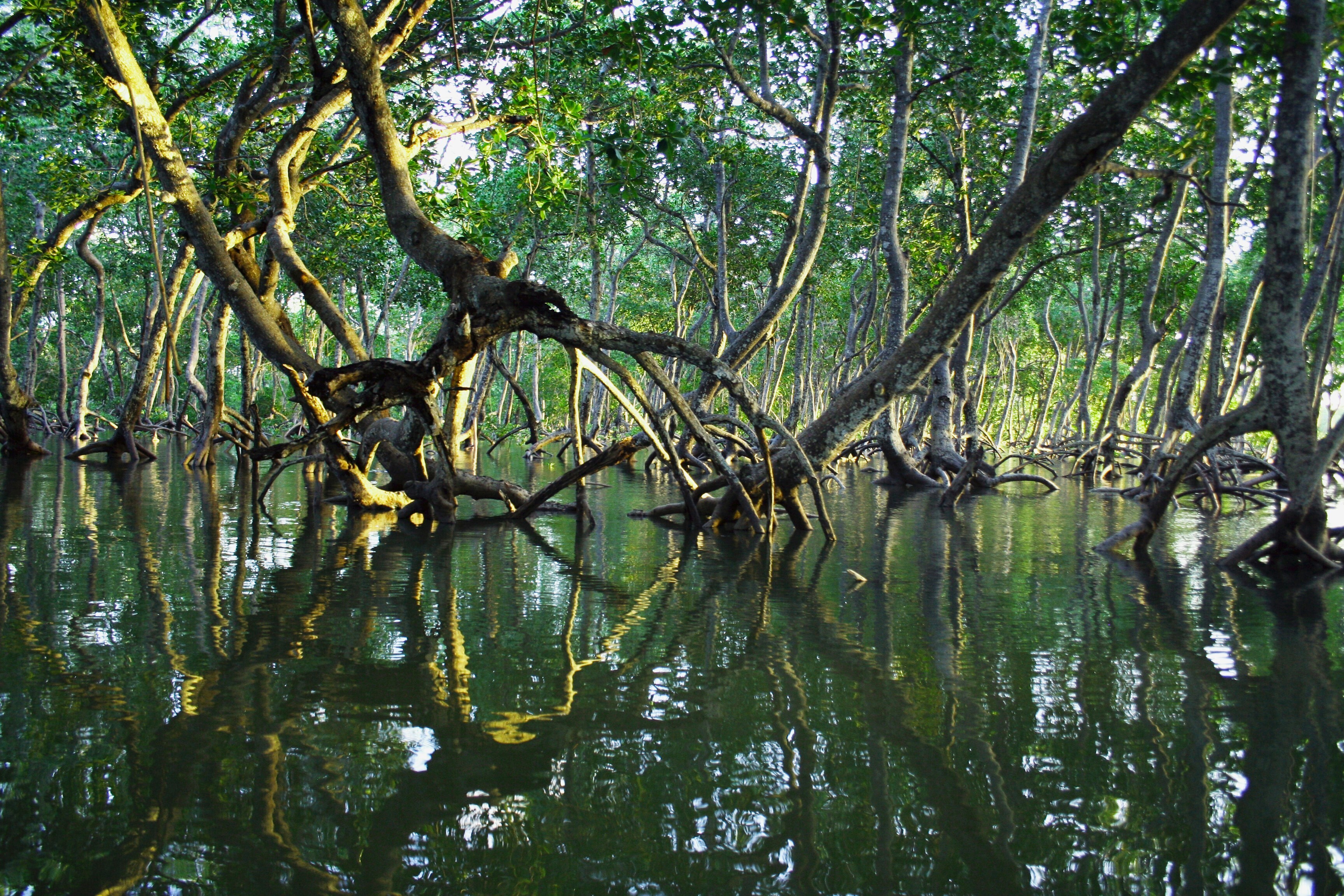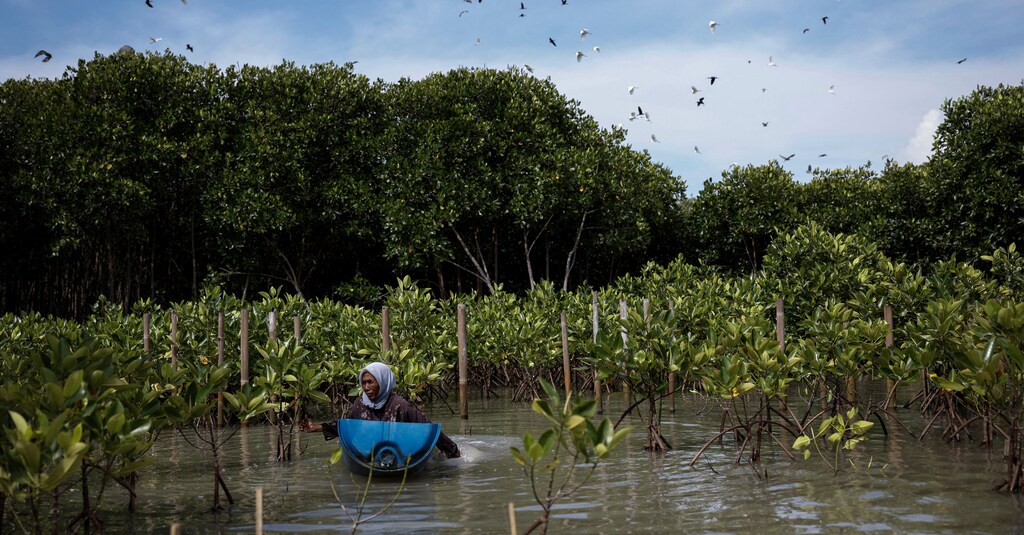
Blue carbon ecosystems such as mangroves are some of the most powerful natural climate solutions in the world.
But despite their environmental, social and economic value, they are vastly underfunded thanks to a blue finance gap.
To close this gap, the Blue Carbon Action Partnership is supporting six ventures producing investable coastal solutions.
Blue carbon ecosystems, including mangroves, seagrasses and tidal wetlands, are some of the most powerful natural climate solutions available today.
They support coastal resilience, can store up to five times more carbon per acre than tropical rainforests, and their large-scale conservation and restoration could remove about 3% of greenhouse gas emissions each year.
Blue carbon ecosystems also underpin coastal economies and food systems. For example, doubling blue food production in Africa alone could reduce the per capita protein gap by about 25%, create 3 million jobs and add $17 billion to global gross domestic product (GDP).
Yet despite their environmental, social and economic value, they remain vastly underfunded. Closing this blue finance gap requires investable solutions that connect ecosystem restoration with viable business models and community benefits.
Barriers to mobilizing capital for blue carbon ecosystems
A key barrier to mobilizing capital in blue carbon ecosystems is the lack of early-stage financing for organizations operating at the intersection of coastal livelihoods, ecosystems and supply chains.
These ventures are often too early-stage for commercial investment, without proven revenue streams and risk profiles that meet investor thresholds; but they also fall beyond the scope of traditional grant funding, requiring larger and longer-term capital to build these revenue-generating models.
To help close this gap, the Blue Carbon Action Partnership (BCAP) is working with public, private and civil society partners to unlock these pathways. BCAP has developed small grants to support a cohort of ventures at a critical stage of development, helping strengthen their readiness for follow-on investment.
These grants are aligned with national blue carbon priorities in Indonesia, the Philippines, and Viet Nam and are anchored in national blue carbon action partnerships (NBCAPs) – country-led, multistakeholder platforms that support the development and implementation of roadmaps to strengthen enabling conditions, improve project readiness, and unlock finance at scale.
Ventures were identified through a targeted call for solutions, with applications reviewed by experts across science, finance and community development and shortlisted by an investor-led selection group.
The final cohort was selected for its alignment with national priorities for blue carbon ecosystems and ability to deliver measurable impact to ecosystems, strengthen local economies and demonstrate a clear path to follow-on investment.
Six ventures supported by the Blue Carbon Action Partnership
Here are six innovations turning promising ideas into scalable, investable coastal solutions:
JALA
Indonesia-based JALA is transforming shrimp aquaculture into a lower-carbon sector through data-driven technology. The company has pioneered climate-adaptive shrimp farming, using life cycle assessment (LCA) to measure pond-level carbon emissions and define the mangrove restoration needed to balance emissions, enabling the development of verified low-carbon shrimp in coastal ecosystems.
By embedding International Organization for Standardization-conformant LCAs into its platform, JALA helps farmers improve performance while opening pathways for small- and medium-scale farmers to access green finance and emerging carbon markets.
Rongbient
Rongbient, based in Viet Nam, introduces seaweed-based bio-filtration and fermented feed in shrimp farming systems. In conventional models, wastewater discharge and disease create ecological and financial challenges.
Rongbient’s seaweed cultivation systems can be deployed in existing low-value shrimp farms as a “co-culture” model. This cultivation system allows the seaweed to act as a natural biofilter to improve shrimp health, improve surrounding mangrove ecosystems, and create an additional income stream for shrimp farmers from harvested biomass.
Birufinery
Birufinery is building a more resilient and scalable seaweed economy by combining biotech innovation with a vertical production model.
Also based in Indonesia, the company produces seaweed-based biostimulants that improve community crop yields and fertilizer efficiency while partnering with coastal farmers to strengthen seaweed farming practices, protecting marine degradation in mangrove ecosystems, and supporting a stable, sustainable supply chain.
Coast 4C
In the Philippines, Coast 4C is demonstrating how seaweed farming is tied directly to coastal ecosystem conservation and community resilience.
It works to advance regenerative seaweed farming by supporting smallholder farmers with inputs, training, finance and market access, while ensuring reliable, high-quality supply for buyers and integrating production into community-based marine protected areas to strengthen livelihoods and coastal ecosystems like mangroves and seagrasses.
Mangrove Crab Labs
Mangrove Crab Labs is restoring degraded coastal ecosystems by combining mangrove rehabilitation with sustainable mud crab farming.
Across Indonesia, abandoned aquaculture ponds have led to mangrove loss and reduced biodiversity. Mangrove Crab Labs reverses this trend by replanting mangroves across available restored sites and introducing crab farming as an additional source of income.
This method reduces pressure on wild crab populations and creates stable livelihood opportunities for local community members.
C3 Philippines
C3 Philippines is helping turn mangrove restoration into a viable investment opportunity.
Its model restores mangrove ecosystems by developing community-led rehabilitation projects to support small-to-medium coastal community enterprises by combining scientific assessment, stakeholder engagement and verified impact data to attract investment.
Closing the blue carbon finance gap
The Blue Carbon Action Partnership is hosted by the World Economic Forum. Supported by the UK’s Climate and Ocean Adaptation and Sustainable Transition (COAST) Programme, it brings together governments, non-governmental organizations, communities, scientists, philanthropies and the private sector to drive coordinated action by aligning actors and investment around shared priorities.
These six ventures supported by BCAP demonstrate how closing the early-stage financing gap can translate national priorities into coastal-community led, commercially vialbe solutions.
Together, they are key examples of how blue carbon ecosystems can become scalable catalysts of climate action, resilient livelihoods, and sustainable coastal development.