What could a dedicated international panel to tackle inequality achieve?
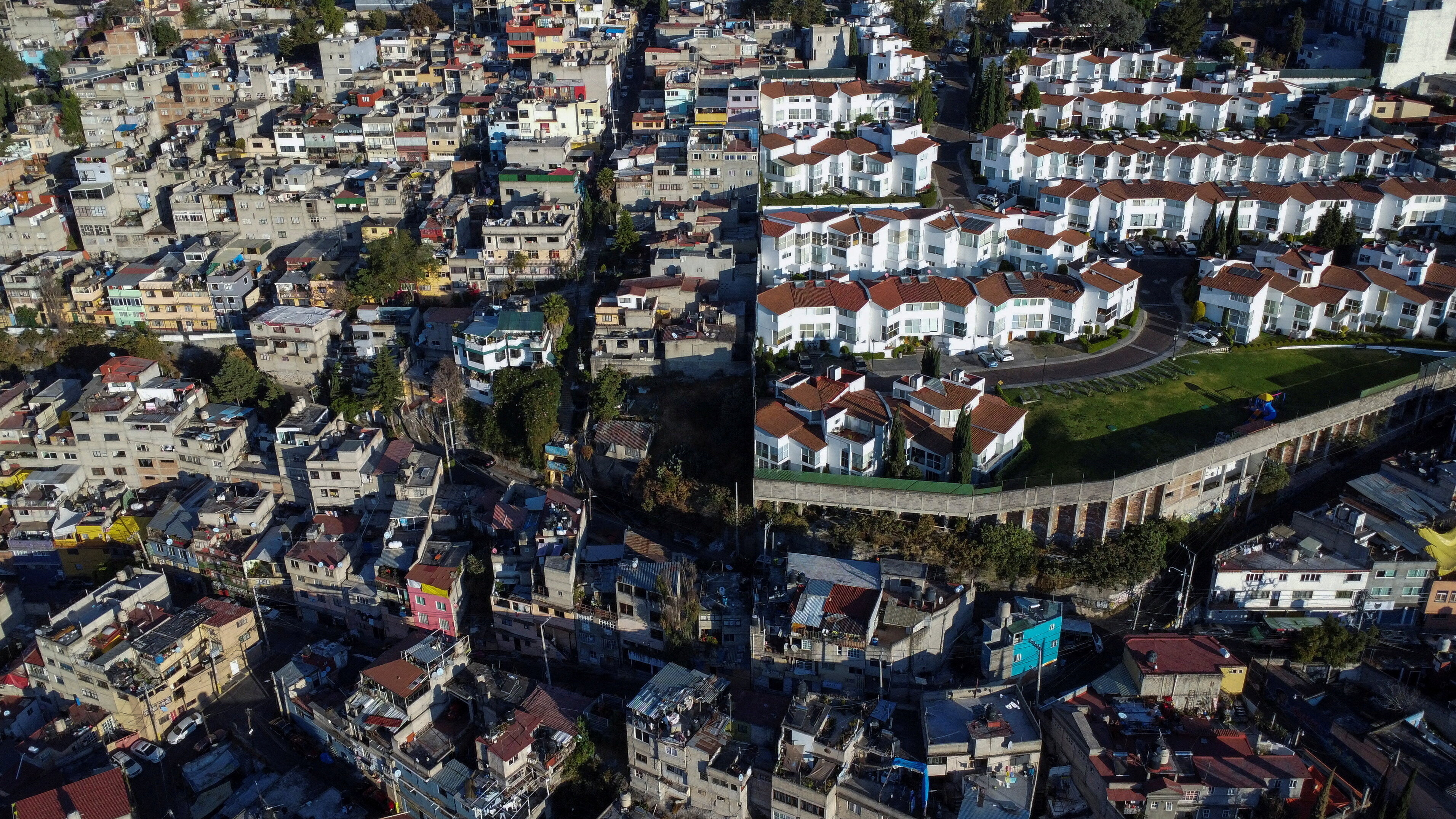
Inequality within and between economies is a global problem. An IPCC-style panel; may be able to help. Image: REUTERS/Raquel Cunha TPX IMAGES OF THE DAY
- A G20 report has called for a global expert panel on inequality based on the Intergovernmental Panel on Climate Change.
- Lessons from climate governance suggest knowledge and data alone won’t be enough.
- Any 'IPCC for Inequality' must be structured differently – not least because of the political nature of the inequality challenge.
Over the past four decades, intensifying wealth concentration has further widened economic divides within and between countries. These disparities are not just economic in nature; they threaten the foundations of democracies, social progress, productivity and poverty reduction, and even climate action. Inequality is now a systemic global risk.
This stark and timely warning comes from a recent report by the G20 Extraordinary Committee led by Nobel laureate Joseph Stiglitz. Among its policy recommendations, one garnered particular attention: the creation of a permanent global expert panel - the International Panel on Inequality (IPI). Inspired in part by the success of the Intergovernmental Panel on Climate Change (the IPCC), it aims to elevate inequality to an issue of global importance, akin to climate change.
Research on inequality is currently abundant but fragmented, spread across multiple institutions such as the World Bank, UN agencies and academia. The panel would help consolidate evidence, track trends and structure policy debate. The proposal has quickly gained traction, with the support of over 500 experts and growing interest among policymakers.
In March, the founding committee of the proposed IPI met in Geneva to drive plans forward on its establishment. As discussions progress, the focus has shifted from the necessity of such a body to the specifics of its governance, structure and composition.
The window for success is narrow: the current geopolitical landscape and plethora of competing concerns call for an astute and accurate definition of the function, form and processes involved.
Why do we need an 'IPCC for inequality'?
While the IPCC provides a recognizable example, overstating the model as a basis for the IPI might be a pitfall. The IPCC is a well-known scientific body in the multilateral space – it has shaped a global understanding of climate change and underpinned negotiations and major policy milestones. Yet, despite decades of increasingly robust scientific evidence, global emissions continue to rise. This is not a failure of the IPCC in itself; it does not make, enforce or even recommend specific policies, but it highlights a fundamental limitation: better evidence does not automatically translate into political action.
Several factors help explain this gap. Climate impacts and political windows move faster than reporting cycles. Many of the most affected regions remain underrepresented in research. Government negotiation can dilute urgency, as consensus favours cautious language. Political and economic interests constrain action, even where evidence is strong.
There is also a fundamental difference between climate change and inequality. Climate change, for all its complexity, is based on natural phenomena; inequality has no equivalent immutable natural law. It is fundamentally political, and the parallel with climate change is therefore limited.
More political, and more contested
The debate around inequality is arguably even more politically charged than that of climate change. It sits at the heart of global power politics, entangled in contestations over colonialism, taxation and redistribution. Even measuring inequality is a contentious issue.
The IPCC is plagued by accusations from a growing number of countries and scientists in the Global South of systemic bias. An IPI could not afford perceptions of reflecting inequities in the geopolitical and scientific landscapes if it is to be effective. Building a panel that is broadly accepted as being fair, equitable and trustworthy will be a foundational challenge.
For all these reasons, expectations of what an IPI can achieve should be realistic. Rather than producing a single, authoritative consensus, such a body would more likely generate a plural and contested form of agreement. Its value would lie less in resolving disagreements than in making them explicit; in structuring evidence-based discussions and highlighting the scale and trends related to inequality and clear broadly held assumptions.
Inequalities beyond income
The G20 report recognizes inequality “in all its dimensions”, but this deserves greater emphasis. Income and wealth disparities, a major focus of the report, are only part of the picture. They translate into inequalities in health, education, housing, environmental exposure, political voice and access to justice. Gender must also be explicitly recognised as a structural dimension of inequality, not a secondary concern. An IPI that fails to incorporate gender economic frameworks risks reproducing the same blind spots it seeks to correct.
It is more accurate to speak of inequalities in the plural, which therefore requires moving beyond economics alone into a truly interdisciplinary and even transdisciplinary exercise. A global panel should incorporate perspectives from fields such as sociology, anthropology, history, human geography and behavioural science. The social and human sciences are comparatively underrepresented in policy-making – a persistent issue we try to tackle through the International Science Council expert group which we co-chair.
Furthermore, an IPI must not reproduce Northern-centric knowledge frameworks, which risks reproducing existing imbalances. Alternative models to the IPCC could provide inspiration. The Intergovernmental Science-Policy Platform on Biodiversity and Ecosystem Services, for instance, seeks to integrate Indigenous and local knowledge alongside scientific research and experiments with participatory approaches, such as citizen assemblies and deliberative processes.
Can the International Panel on Inequality provide a new model?
The report notes that inequality is not a peripheral or isolated issue, but a central problem of global governance. By linking inequality with other systemic global challenges, the framing has fundamentally shifted. Addressing it requires not just better policies, but new forms of cooperation and new ways of producing and sharing knowledge. The IPI could provide an opportunity to reimagine how we can improve the science-policy interface for global issues in a way that matches the urgency and complexity of the problem while navigating contested and inequitable political and scientific terrains.
An International Panel on Inequality will not solve inequality. But it could change how we understand and engage with it at the local, national and multilateral levels.. That would be no small feat.
Don't miss any update on this topic
Create a free account and access your personalized content collection with our latest publications and analyses.
License and Republishing
World Economic Forum articles may be republished in accordance with the Creative Commons Attribution-NonCommercial-NoDerivatives 4.0 International Public License, and in accordance with our Terms of Use.
The views expressed in this article are those of the author alone and not the World Economic Forum.
Stay up to date:
Inequality
Related topics:


Forum Stories newsletter
Bringing you weekly curated insights and analysis on the global issues that matter.
More on Global CooperationSee all

Ariel Kastner, Miriam Schive, Sannan Pervaiz and Jessica Margolis
October 2, 2026