Opinion: Why energy regulation helps, not hinders, business
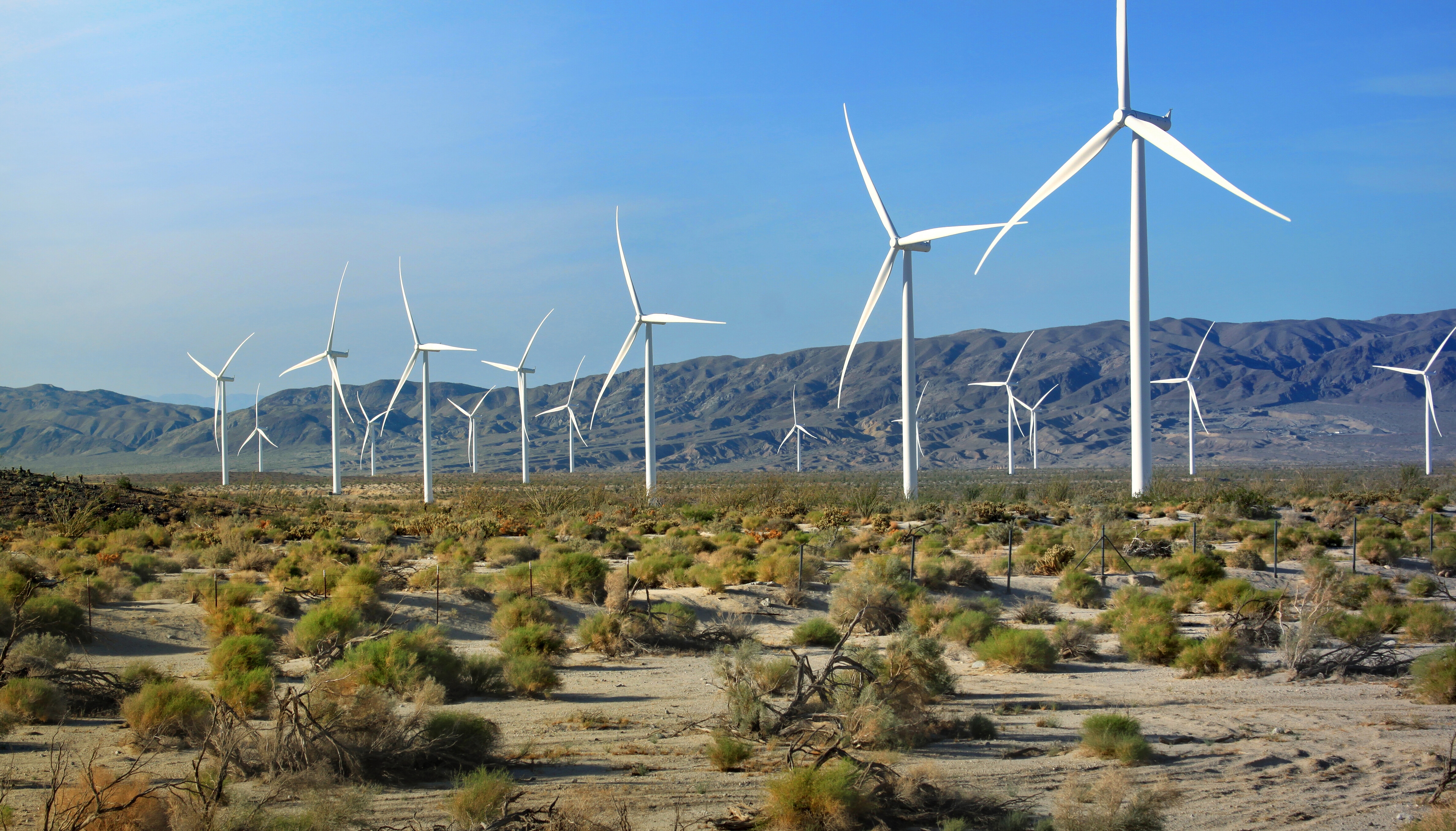
The science behind the energy transition remains consistent, where regulations and geopolitics do not. Image: Getty Images/iStockphoto
- Rather than liberating business and consumers, the current push to deregulate the US energy market will push costs elsewhere.
- Other countries will lead the energy transition, with geopolitical pressures and economic good sense driving reduced dependency on fossil fuels.
- Environmental regulation is vital infrastructure for the transition, setting the rules that provide clarity and focus for the market.
Back in February, the US Environmental Protection Agency (EPA) revoked the 2009 finding connecting greenhouse gases to public health and welfare; the main legal basis for regulating emissions.
In contrast, the EU has adopted its Clean Energy Investment Strategy, promising over €75 billion of European Investment Bank financing within three years. China, meanwhile, announced its 15th Five-Year Plan, doubling down on clean technologies to maintain its global dominance in solar PV, wind turbine and EV battery manufacturing.
The American denial of science is indefensible. The US transport sector alone emits as much as the entire Russian economy. Rolling back standards in this way could add billions of tonnes of emissions by mid-century. The World Economic Forum’s Global Risks Report 2026 finds five of the 10 most severe global risks in the next 10 years to be environmental, including the top three.
As someone who has spent a career translating science first into policy and now into capital allocation, the political theatre is a sideline here. It’s more important to understand what environmental deregulation means for markets, industrial strategy, policy-makers, investors and founders.
Though regulations can be rewritten, physics cannot be changed with a gavel. Risk doesn’t disappear, it migrates. Though the EPA’s website claims the ruling will deliver Americans over $1.3 trillion in cost savings, in reality the risk will be redistributed elsewhere in the economy.
Insurance companies’ data models will have to “price in” enhanced climate risk, leading to higher premiums, more policy exclusions and limited coverage in exposed regions. Pushed by climate-related disaster exposure, US home-insurance premiums rose 70% between 2019 and 2025.
Credit markets will then follow. As insurance premiums spike, mortgages secured against those assets become riskier. Then the assets themselves lose value.
Publicly owned infrastructure such as grids, ports, industrial plants and transport corridors will be increasingly exposed to heat, flooding and wildfire. Their capital requirements will shoot up as a result. For a sense of scale, a University of Chicago report predicts $1 trillion in weather- and climate-related damages between 2026 and 2030 in the US.
These kinds of damages will eventually be felt by consumers through costs and taxes. Environmental regulation cannot be disentangled quickly and is more integrated into capitalism than ever.
On the other side of the Atlantic, Europe’s climate policy will now further diverge from the US. Deregulation isn’t going to stop the green transition; it will just reshape who builds it.
The International Energy Agency notes that two-thirds of every dollar spent on energy globally is now flowing into clean technologies; not because of ideology, but because the economics now favour it. By controlling batteries, magnets and power electronics at scale, China has secured the industrial foundation of the Electric Era – and that advantage compounds. Countries like India, itself at risk of losing up to 10% of its national income due to the climate crisis, could see an opportunity to fill the vacuum the US leaves behind.
This geopolitical dimension is important because if the last few years have taught us anything, it’s that climate now intersects with national security and economic sovereignty like never before. The disruption to tanker traffic in the Strait of Hormuz following military strikes on Iran, temporarily cutting 20% of global daily oil supply and spiking global gas prices within days, demonstrated that fossil fuel dependency is not an energy strategy, but a compounding geopolitical liability.
Batteries, grid systems, semiconductors, critical minerals, advanced manufacturing and clean energy infrastructure now sit at the centre of geopolitical competition, and are no longer niche sectors. It is energy security that prevents blackouts, grid resilience that can protect against cyberthreats, and industrial autonomy that shields nations from resource coercion. Control over these systems increasingly defines sovereignty.
As geopolitics shape the energy transition, this EPA ruling shows us that regulation is market infrastructure, not a growth-sapping nuisance. Regulation is the plumbing of capitalism: the hidden infrastructure that allows capital to flow, contracts to be enforced and risk to be shared. Corporate forms, limited liability, insolvency law and securities markets didn’t fall from the sky. They were regulatory inventions. Without this legal scaffolding, venture capital, public listings and cross-border capital flows simply wouldn’t exist.
It’s the same for environmental standards. They set the rails for investment, create demand certainty, and shape the direction of innovation across entire industries.
Reducing the concept of regulation to “red tape” is a misunderstanding. Markets don’t operate without rules; they operate through them. Constraints like emission standards have been shown to sharpen focus, encourage long-term problem-solving and anchor innovation trajectories. Vehicle efficiency standards and emissions rules function as industrial policy. They drive battery innovation, power electronics, lightweight materials, and software-defined vehicle architecture. This is not a heartstrings argument for environmental policy; it’s one about capital.
The EPA announcement has begun to make American companies turn inward. The short-term compliance relief from this latest ruling will erode export competitiveness. US manufacturers that slow domestic innovation will still need to meet international standards to compete in Europe and Asia. And so the economic isolationism increases.
There is much to be excited about when it comes to global clean industrial policy. It remains central to many national growth strategies worldwide as the economics make more and more sense, including for many US states. It is only more essential now amid deregulation. This is the time for us to continue investing in what matters. While geopolitics, capital flows, stock valuations and regulatory frameworks all seem to be in flux, science is not.
Don't miss any update on this topic
Create a free account and access your personalized content collection with our latest publications and analyses.
License and Republishing
World Economic Forum articles may be republished in accordance with the Creative Commons Attribution-NonCommercial-NoDerivatives 4.0 International Public License, and in accordance with our Terms of Use.
The views expressed in this article are those of the author alone and not the World Economic Forum.
Stay up to date:
Energy Transition Index
Related topics:


Forum Stories newsletter
Bringing you weekly curated insights and analysis on the global issues that matter.
More on Energy TransitionSee all

Prajeev Rasiah
September 23, 2026


