Conflict in the Middle East is impacting aviation – here’s how sustainable aviation fuels can help

The case for scaling sustainable aviation fuels gains traction amid crisis in the Strait of Hormuz Image: REUTERS/Kim Hong-Ji
- Geopolitical disruptions in the Middle East have exposed the vulnerability of global aviation fuel supply chains, highlighting the need for greater fuel diversification and resilience.
- While the current crisis has strained airline finances and operations, it has also strengthened the strategic case for scaling sustainable aviation fuels as a tool for both energy security and decarbonization.
- Building more local and diversified aviation fuel production systems will be essential to maintaining reliable air travel while advancing long-term sustainability goals.
When the Iran war broke out at the end of February, air traffic across the Middle East largely halted. Flight operations at Dubai Airports – the world’s busiest international passenger hub – and at major transit hubs in Qatar, Oman, Bahrain and Saudi Arabia were severely disrupted amid safety risks and ongoing attacks.
Thousands of passengers were stranded, unable to continue their journeys or return home. Now, three months into the conflict, flight activity has cautiously returned to near-normal levels. While cancellations, diversions and delays have diminished, the war’s effects are expected to reverberate across global aviation for some time.
While early disruption stemmed primarily from airspace safety concerns, fuel supply risks soon emerged as a second major pressure on aviation operations. A key reason is the Strait of Hormuz's importance to global fuel markets. Over 20 million barrels of oil – around 20% of global liquid fuel consumption – pass through the strait each day in normal times.
This includes around 5 million barrels of refined oil products, including kerosene and jet fuel. A large share of these products heads to Asia, while the Gulf region accounted for around 8% of crude oil imports into the United States in 2025 and approximately 10-15% of European Union imports.

Beyond immediate disruptions, the conflict is also reshaping the economics and security case for sustainable aviation fuels.
How disruption in the Strait of Hormuz impacts conventional jet fuel
Disruptions, attacks and heightened risks in the Strait of Hormuz have important consequences for both global kerosene availability and price. Several airlines and airports initially issued warnings about jet fuel stocks at key hubs ahead of the summer peak travel season in Europe and North America.
California has recorded a three-year low in jet fuel reserves, while regions heavily dependent on imports, such as Europe, have been particularly exposed to fears of shortages and travel disruption.
These fears have contributed to a reduction in advance bookings and have now prompted multiple airlines as well as the EU to reassure travellers that jet fuel availability is not an issue, although jet fuel prices may be.
While kerosene price spikes are common and many airlines hedge fuel purchases to manage volatility, the surge in this instance has been unusually steep. Jet fuel peaked at $220 per barrel in March 2026, well above spikes seen in Summer 2022 following the rebound from the COVID-19 pandemic.

Kerosene is one of the largest cost components of an air ticket and sudden increases are difficult to absorb without affecting passenger demand and airline operations. Recent analysis suggests that, on average, long-haul flight tickets increased by around €90 as a result of the crisis.
To limit losses on already marginal routes, multiple airlines announced flight cancellations across the globe.
Tens of thousands of connections were scrapped with airlines prioritizing more profitable routes, particularly between Europe and Asia-Pacific destinations, as some passengers may want to avoid potentially disrupted transit through the Middle East.
Increased baggage fees and stricter enforcement of weight limits have also been reported, further raising costs for passengers.
The aviation sector can pivot amid disrupted jet fuel supply
Could a future where a high proportion of jet fuel does not rely on shipments through the Strait of Hormuz be realistic? Potentially, through the development of alternative jet fuel production pathways.
Producing jet fuel from agricultural residues, municipal waste and used cooking oil can support more circular local economies while reducing reliance on long and vulnerable supply chains.
Jet fuel produced in these ways, typically referred to as sustainable aviation fuels (SAF), is chemically compatible with conventional kerosene and increasingly seen as a strategic tool to diversify fuel supply and improve domestic energy security.
In addition to strengthening resilience, SAF can also deliver lifecycle carbon savings compared with conventional fossil fuels, reinforcing its role in long-term aviation decarbonization strategies.
The impact of the Iran war on SAF scaling in the short term is mixed but it is highlighting the urgent need to scale alternative and cleaner fuel production capabilities right now. Historically, security concerns rather than environmental goals have often driven technological innovation across our economies. This may be true for both civilian and military aviation.
With just over 80 refineries remaining in Europe after decades of consolidation, reliance on complex international supply chains can create vulnerabilities affecting both commercial travel and defence readiness.
The Strait of Hormuz crisis could signal a shift to sustainable aviation fuels
Clean fuels offer an opportunity to reduce dependence on fragile supply networks, and interest in SAF as a resilience measure is likely to increase under current geopolitical pressures.
At the same time, elevated jet fuel prices have temporarily narrowed the price gap between conventional kerosene and SAF. This has made the premium associated with SAF potentially easier for airlines to absorb in the short term.
However, uncertainty remains. Sudden fuel price fluctuations may discourage airlines from signing long-term SAF offtake agreements, particularly during periods of financial strain.
As SAF must currently be blended with conventional jet fuel, increasing its share in fuel mixes offers a partial pathway to reducing kerosene dependence within existing technical and safety limits. Yet until SAF can be used in planes on its own, the possibility of cleaner fuels still relies on conventional jet fuel supply chains today.
Meanwhile, airlines' restructuring operations and anticipating financial losses for 2026 may deprioritize sustainability investments. Limited hedging positions and rising operational costs could further reduce airlines’ willingness to pass green costs onto passengers.
SAF is already available today. Expanding production is contingent on greater demand and further public-private sector investment. Overcoming some short- and long-term scalability constraints, such as sustainable feedstock availability, will also be essential. As discussed in the Global Aviation Sustainability Outlook 2026, feedstock flows themselves have been affected by earlier tariff changes and ongoing shipping instability.
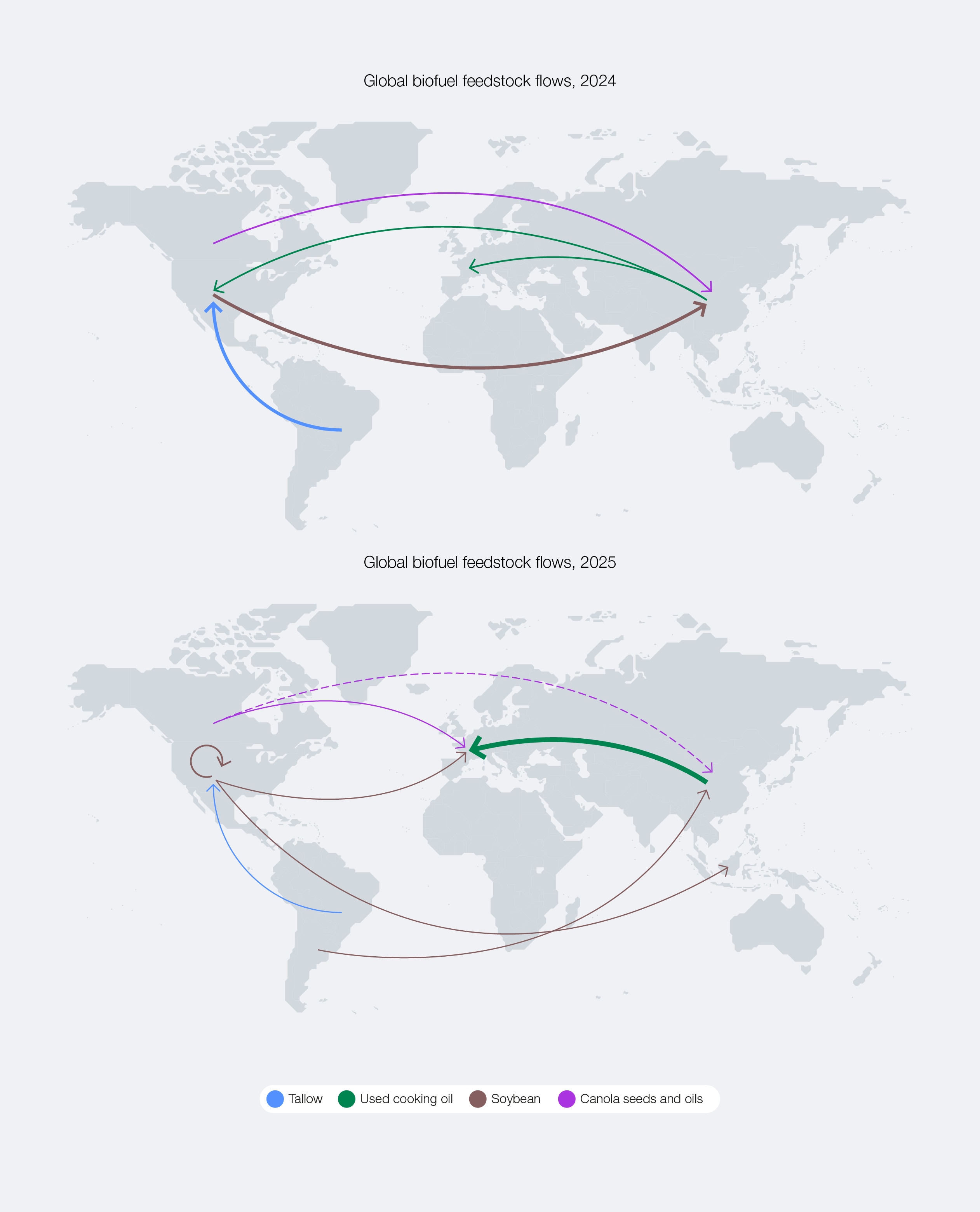
Greater investment in SAF from industry and government today can help overcome some of these challenges and mitigate future jet fuel shocks.
Overall, while the Iran war may not spur greater SAF production and use in the immediate term, it has highlighted multiple criticalities in jet fuel supply chains that investment in greater SAF production capacity could help address.
Notwithstanding the financial and logistic disruptions both conventional and clean fuels are facing right now, industry and policymakers are responding to this alarm bell and the momentum that SAF is seeing, if maintained, can truly plant the seeds of home-grown fuels for aviation for the years to come.
Don't miss any update on this topic
Create a free account and access your personalized content collection with our latest publications and analyses.
License and Republishing
World Economic Forum articles may be republished in accordance with the Creative Commons Attribution-NonCommercial-NoDerivatives 4.0 International Public License, and in accordance with our Terms of Use.
The views expressed in this article are those of the author alone and not the World Economic Forum.
Stay up to date:
Middle East and North Africa


Forum Stories newsletter
Bringing you weekly curated insights and analysis on the global issues that matter.
More on Energy TransitionSee all

Ganesh Dileep and Arunabha Ghosh
October 15, 2026


