Why the ocean economy is a macroeconomic foundation that requires strategic investment
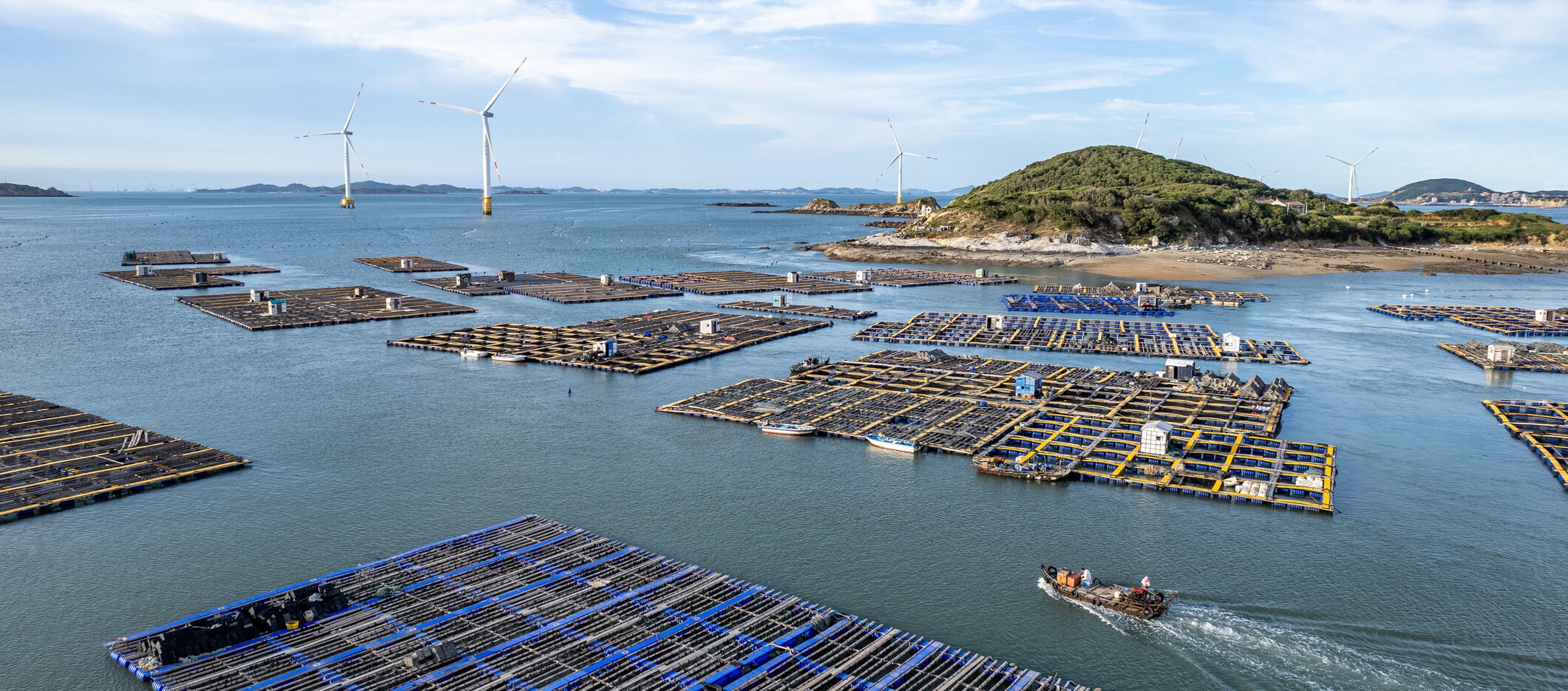
The ocean must be seen as a macroeconomic issue. Image: Getty Images
- The ocean underpins much of global trade, provides food for billions, regulates climate stability and protects coastal infrastructure.
- Treating it just as an environmental issue underestimates its macroeconomic significance and ignoring it as an asset class risks mispricing exposure.
- Strategic investments in sustainable and nature-positive ocean economy sectors can both strengthen portfolios and insulate them from risk.
The ocean underpins roughly 90% of global trade by volume, provides 20% of daily protein consumption for more than 3 billion people, regulates climate stability and protects coastal infrastructure through healthy ecosystems such as reefs and mangroves.
It is not a niche environmental subject, but rather a macroeconomic foundation. Yet from a capital markets perspective, it remains both underpriced and under-allocated.
This creates a dual dynamic: material risk is already embedded across portfolios (though not always priced in), while structural growth opportunities remain largely untapped.
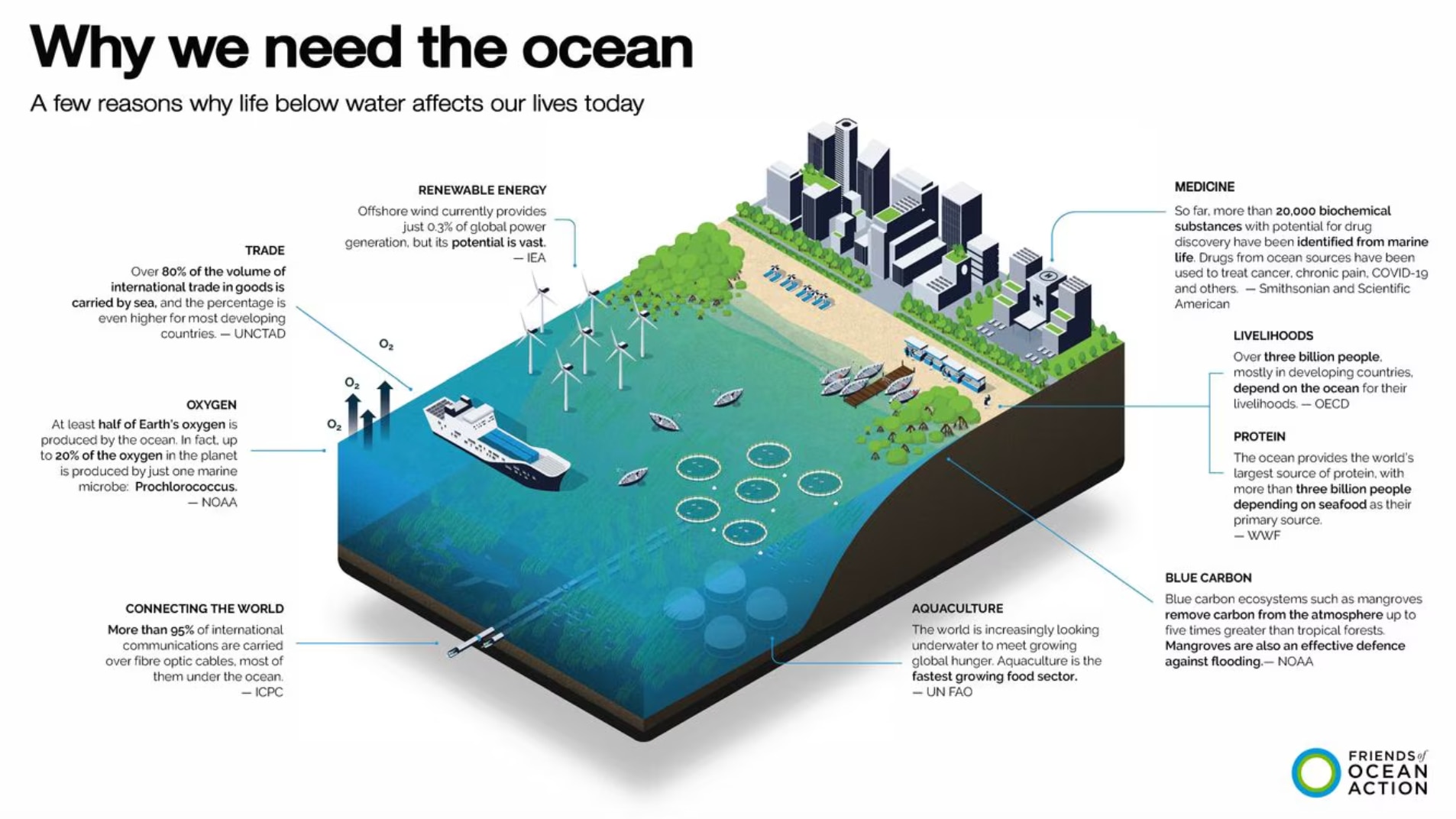
Ocean risk impacts nearly all geographies and industries
Ocean-related risk is pervasive and systemic. From supply chain disruption and sovereign credit stress to insurance volatility and food price shocks, ocean degradation propagates through equities, fixed income, infrastructure and private markets, even for investors with no obvious coastal or marine exposure.
Ocean-related risk typically enters portfolios through physical disruption and systemic spillovers. What makes it distinctive is how widely it propagates across industries, sometimes without project developers and capital providers even realizing it.
A significant share of populations, infrastructure and supply chains are exposed to physical ocean risk, with about 680 million people currently living in low-elevation coastal zones, a figure projected to exceed 1 billion by 2050. Indeed, it is estimated that up to $4 trillion of global coastal infrastructure will be at risk due to declining ocean health and climate change over the next decade, according to WWF’s 2021 report, Navigating Ocean Risk: Value at Risk in the Global Blue Economy.
Similarly, when a major port shuts down due to storms or flooding, it sets off a series of consequences across its supply chain. In 2021, major floods across Germany, Belgium and the Netherlands disrupted waterways and cost €10 billion ($11.8 billion) in damages, with €2.55 billion (£2.9 billion) in insured losses alone.
The damage didn’t stop at physical infrastructure either – it affected retail inventories and revenues as exports stalled, shifted commodity prices, created substantial losses in the insurance and reinsurance markets, and incurred reconstruction costs for governments, affecting sovereign debt.
Key sectors like automotive manufacturing and construction were forced to halt production due to material shortages, demonstrating how interconnected disruptions can impact entire industries.
As a result, even portfolios with no obvious coastal exposure inherit risk through logistics dependency, insurance markets and sovereign credit.
Industries that depend heavily on global supply chains – electronics, chemicals, apparel, automotive and food – are indirectly exposed even without owning a single maritime asset. This can be a huge issue when large logistics shocks occur.
Ocean system degradation also creates cascading macroeconomic impacts:
- Fisheries productivity shifts affect global food prices
- Coral reef loss increases storm damage, weakening tourism-dependent economies and sovereign credit profiles
- Ocean warming drives weather volatility that impacts agriculture and energy demand
- Declining marine carbon sinks raise long-term decarbonization costs across the economy
These costs are already being absorbed by insurers, governments and households. Investors therefore face implicit, often not apparent liabilities that may not yet be fully priced into assets.
The case for growth and returns from the ocean economy
The ocean economy is not only a source of risk; it is one of the most significant underdeveloped growth areas within the sustainability transition.
Today, ocean-based industries generate more than $3 trillion in annual economic value, outpacing the broader global economic growth by 1.3 times over the past two decades. Meanwhile, projections suggest the sector could grow to $5.1 trillion by 2050, according to the Organisation for Economic Co-operation and Development (OECD).
Beyond established industries, a second wave of ocean innovation is gaining momentum across four areas: the blue bioeconomy, ocean-based energy, pollution-mitigating technologies, and restoration and nature markets.
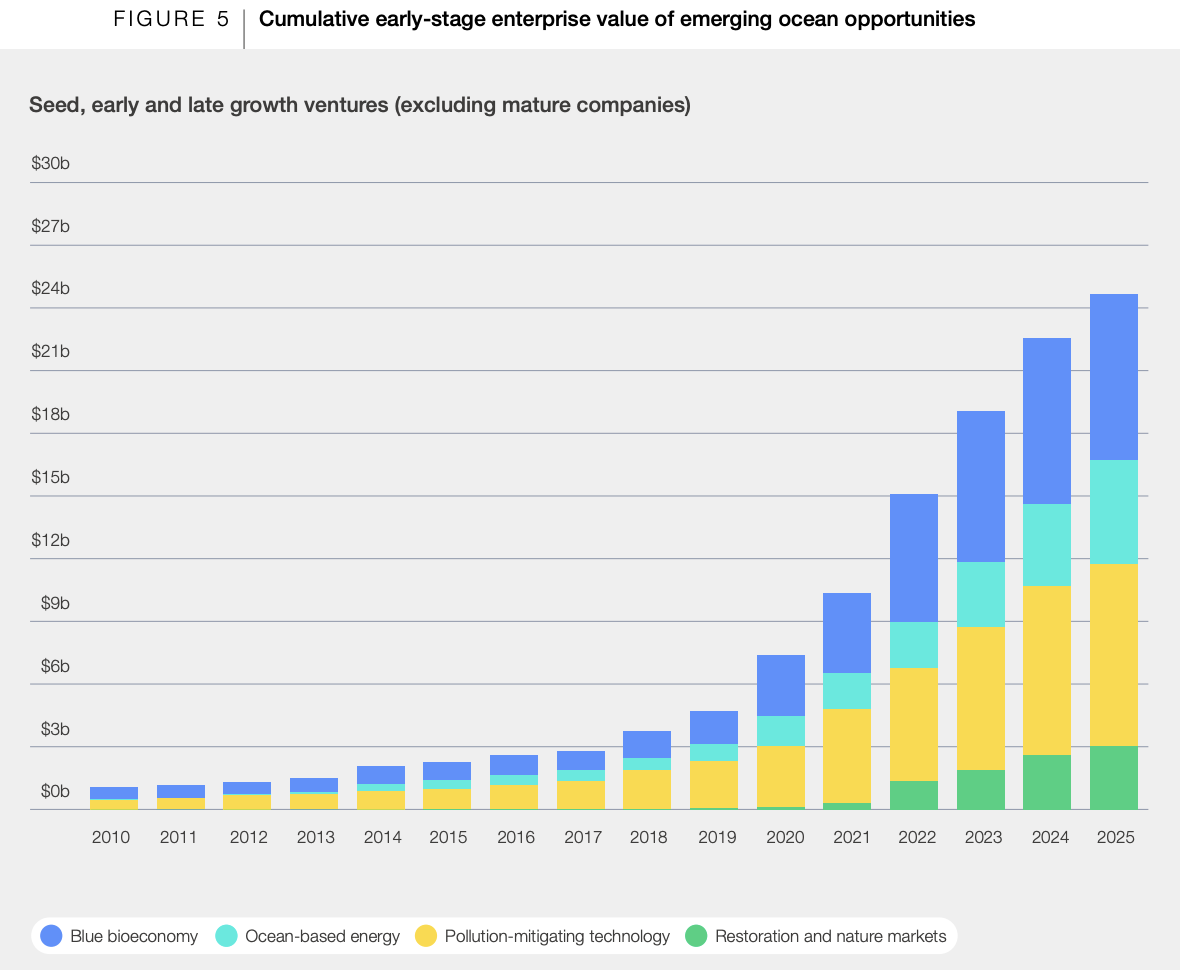
Between 2010 and 2025, early-stage enterprise value across ventures in these sectors increased from $1.1 billion to $24.7 billion, as outlined in the World Economic Forum and McKinsey & Co briefing paper, The Ocean Economy Imperative: Defining Value, Managing Risk and Mobilizing Investment – reflecting a rapidly expanding pipeline moving towards commercialization. This analysis does not comprehensively cover marine carbon dioxide removal ventures, which have attracted a total of $209 million by 2025, with the majority of funding directed toward technology-based initiatives.
Ocean related start-ups overall currently represent roughly $120 billion in enterprise value, but could plausibly scale towards $1.3 trillion based on historical climate-technology valuation multiples as markets mature.
Have you read?
Not only does investing in these incumbent and emerging ocean sectors do more than simply capture structural upside, it also potentially reduces the aforementioned risks already embedded in portfolios.
Capital allocation towards ocean natural capital and companies that aim to reduce or reverse ocean harm is also a method to mitigate longer-term deterioration of ocean health, which in turn would exacerbate the frequency and intensity of related shocks.
Actionable steps to secure the ocean economy
Capital providers cannot afford to ignore the ocean economy. Three next steps are immediately actionable:
1. Map ocean exposure across asset classes
Ocean exposure cuts across equities, fixed income, infrastructure and private markets. Maritime transport, coastal real estate, tourism, fisheries, offshore energy and sovereign debt all carry varying degrees of ocean-linked risk.
Stress-testing portfolios against coastal physical risk and maritime transition pathways provides visibility into potential mispricing.
2. Incorporate risk-transfer and resilience instruments
Parametric insurance, catastrophe bonds and resilience-linked financing structures can reduce tail risk in exposed assets. Where natural infrastructure provides measurable protection, integrating ecosystem restoration into capital planning may lower long-term volatility.
The objective is not eliminating exposure, but improving its risk-adjusted profile, while recognizing the imperative to phase out activities that are not possible to transition from the way they contribute to existing and escalating risks.
3. Allocate to growth platforms
Investors seeking durable yield and transition alignment could evaluate offshore energy platforms, maritime decarbonization infrastructure, sustainable aquaculture and coastal resilience funds.
Many of these sectors remain underfollowed relative to their macro relevance. As regulatory clarity improves and data deepens, first-mover advantages may narrow.
Why the ocean economy is a macroeconomic issue
The ocean economy does not sit neatly within a single category or thematic sleeve, which is why it is so often overlooked.
Treating it solely as an environmental issue underestimates its macroeconomic significance and ignoring it as an asset class risks mispricing exposure that is already present.
However, strategic investments in sustainable and nature-positive ocean economy sectors could both strengthen portfolios and insulate them from risk in the long term. Now is the time to act.
The World Economic Forum’s initiative Accelerating Critical Transformation (ACT) Ocean supports companies, investors and industry leaders to identify concrete actions to conserve and restore ocean health while creating long-term economic and social value.
Don't miss any update on this topic
Create a free account and access your personalized content collection with our latest publications and analyses.
License and Republishing
World Economic Forum articles may be republished in accordance with the Creative Commons Attribution-NonCommercial-NoDerivatives 4.0 International Public License, and in accordance with our Terms of Use.
The views expressed in this article are those of the author alone and not the World Economic Forum.
Stay up to date:
Ocean
Related topics:


Forum Stories newsletter
Bringing you weekly curated insights and analysis on the global issues that matter.
More on Economic GrowthSee all

Ramya Krishnaswamy and Tony Simpson
October 1, 2026


