A ‘chasm’ between upbeat markets and anxious people, and other economic news to know
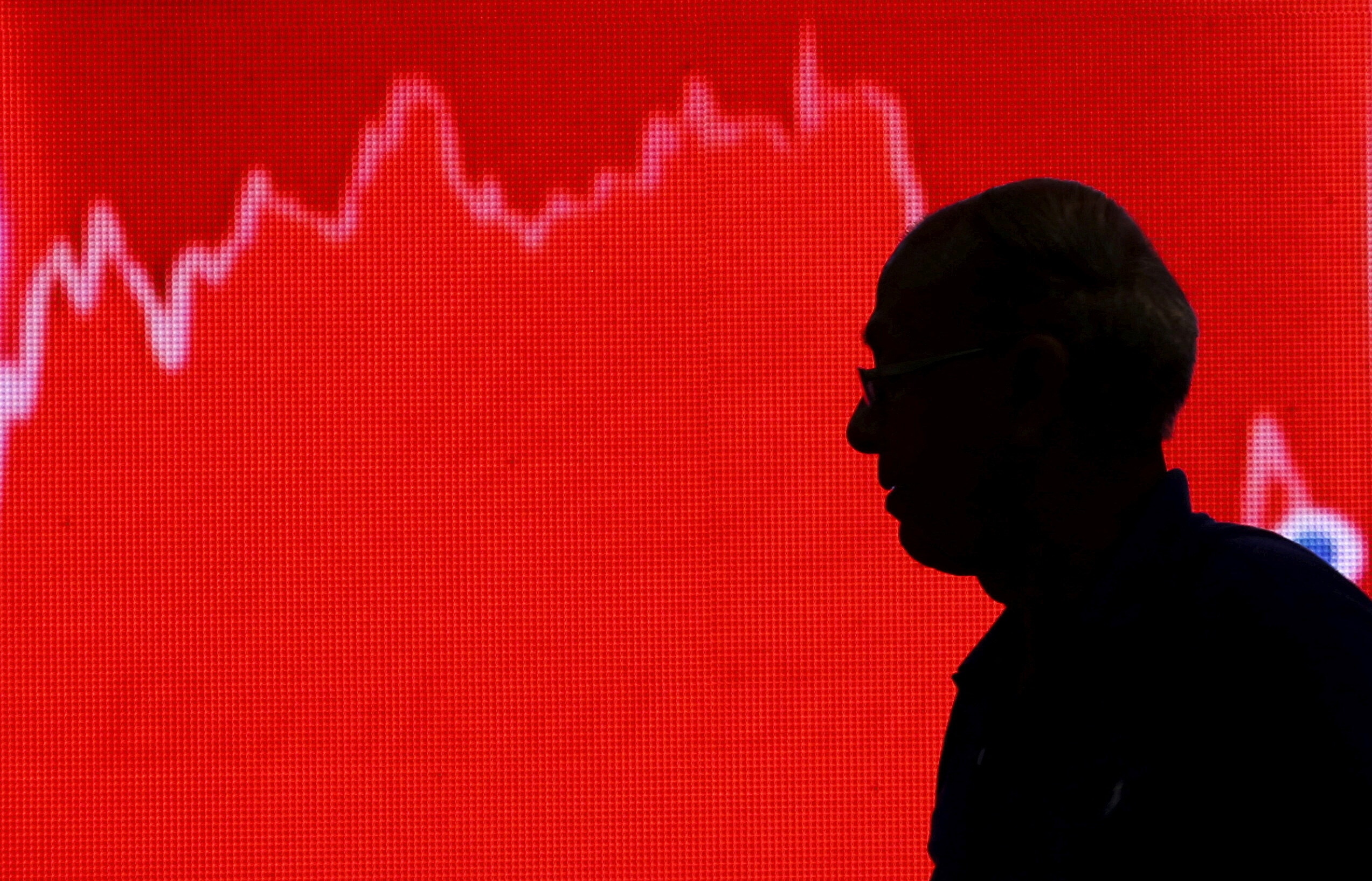
The AI boom is a bright spot for the global economy; it's also aggravated a disparity between profits and wages. Image: REUTERS/Danish Siddiqui
- This regular roundup of noteworthy news and analysis on the global economy focuses on a troubling gap between market exuberance and worried wage earners, China’s new phase of self-reliance, and the spectre of ‘skimpflation.’
Georges Bernanos wasn’t having it.
The Paris-born writer’s 1947 treatise France Against the Robots railed against the alienating effects of technology and a burgeoning “civilization of machines.” This was at a time when most peoples’ direct experience with automation was still limited to a factory assembly line or a push-button elevator.
Turns out, Bernanos had plenty to be alarmed about. But what if the same inexorable trend dictating that future landmark treatises be punched-up versions of bot-generated texts is also just about the only thing keeping the economy afloat?
That’s an exaggeration. But it’s true that the artificial intelligence boom (or “investment cycle” if you like) does seem to be the go-to answer to the question: what’s sustaining growth in a world reeling from the one-two punch of tariffs and war-induced supply shock? A resilient private sector keeps powering forward, the news cycle tells us. Much of its focus, to the delight of investors, is AI.
AI was one of the few bright spots in the most recent Chief Economists’ Outlook published last week. The pace of anticipated adoption that it reported is being received as good news. It’s been a few years now since OpenAI made ChatGPT available to the general public. In that time, the Nasdaq Global Artificial Intelligence and Big Data Index, a measure of AI exuberance, has more than tripled in value.
Have you read?
There’s a downside to this for wage earners. It’s maybe a more mundane fate than what Bernanos envisioned, but it still has a bite: the AI boom is further compressing labour’s already dwindling share of economic output. That divergence between profits and worker pay has opened what's been described as a “chasm” separating upbeat stock markets from increasingly anxious people. It’s a formula not generally viewed as a great for stability.
If this is really the technological progress we need to keep economies moving forward, careful attention should probably be paid to the way it distributes benefits – to help make it as enduring as possible.
Hormuz blues
What about Iran’s economy? There’s a lot of coverage of the global economic consequences of the Iran war and closure of the Strait of Hormuz, but the impacts within this country of 93 million people also merit attention; this piece in The Wall Street Journal describes the cost of food staples like Lighvan cheese soaring, dwindling foreign-currency reserves, and pleas to cut back on water and electricity use.
How they learned to stop worrying about raising rates. Not so long ago there were expectations in the US and elsewhere for interest-rate cuts that could grease the economy’s wheels. This report from the New York Times explains how American central bank officials have come to terms with the notion that supply shock-related inflation means rates may actually have to be raised to get things under control.
Heard of inflation? Try a taste of ‘skimpflation.’ Most likely it will leave you wanting. It’s not just quantity; this piece in The Conversation explores other ways in which companies may keep prices steady amid war-induced inflation by skimping on quality, ingredients, and service.

China’s era?
“Beijing is doubling down.” This recently published Rhodium Group report lays out details of China’s “industrial policy of everything,” a vast orchestration of state intervention that’s entering a new phase. This “more systemic and pervasive” domestic effort is inevitably having global impacts.
“The uneasy privilege of witnessing China’s rise earlier than most.” For many people China’s technological advance seemed like a sudden leap forward, but this piece in Project Syndicate argues that for scientists it’s played out more like a long march – based on careful planning and statecraft, fundamental research, and strong institutions.
The downside of winning an “educational arms race.” Falling fertility rates is a widely shared issue, according to this economist interviewed in The Atlantic. One of the primary causes in countries like China: people staying in school longer, getting married or forming relationships later, and knowing their kids may require even longer schooling stints.
Other news in brief
The trillion-dollar club is expanding. AI pixie dust is creating more companies valued at $1 trillion or more; South Korea now has two. (Reuters)
Quietly, they de-Brexit. Much has changed since Britons voted to part ways with the EU, and in response the country is re-forming ties. (The Economist)
The economic experiment that upended reality. How implementing higher minimum wages in US cities did not actually lead to disaster. (The Atlantic)
Shape that narrative. The stories we tell ourselves about the economy can be more important than any policy. (LSE Business Review)
Poland’s economy is thriving. But the sharp decline in what the country spends on science and higher education is causing some consternation. (Nature)
If you think you understand bonds, you don’t. And you are in very good company. (Financial Times)
Don't miss any update on this topic
Create a free account and access your personalized content collection with our latest publications and analyses.
License and Republishing
World Economic Forum articles may be republished in accordance with the Creative Commons Attribution-NonCommercial-NoDerivatives 4.0 International Public License, and in accordance with our Terms of Use.
The views expressed in this article are those of the author alone and not the World Economic Forum.
Related topics:

Forum Stories newsletter
Bringing you weekly curated insights and analysis on the global issues that matter.
More on Economic GrowthSee all

Irene Varoli and Nicola Mackow
August 31, 2026


