The global trade system is too reliant on just-in-time logistics and concentrated supply routes.
This means that supply disruptions, such as the recent effective closure of the Strait of Hormuz, have far-reaching impacts on global trade.
Building more hubs to diversify global trade networks could create permanent economic value and strengthen supply chain resilience.
In an interconnected world, what happens in one region can send shockwaves across the entire global economy.
In March 2026, International Energy Association Executive Director Fatih Birol described the recent effective closure of the Strait of Hormuz as “the largest supply disruption in the history of the global oil market.” As tanker crossings collapsed to near zero, around one-third of the world’s seaborne crude and one-fifth of its liquefied natural gas (LNG) supplies were cut off or forced to re-route.
These disruptions could have far-reaching impacts – from power outages in Pakistan, to rising food prices in the UK and rapid inflation in Colombia.
The ongoing crisis has brought into sharp focus the fragility of a global trade system that’s too reliant on just-in-time logistics and concentrated supply routes. While efficient, this system is based on an assumption of stable conditions. And it’s slow to adapt when those conditions deteriorate.
Recent geopolitical shocks are now forcing businesses to recalibrate the balance between efficiency, redundancy and continuity. Global supply chains need more nodes to build lasting resilience, as a result, and the countries that have invested in the infrastructure to fulfil that role will play an increasingly important part in global trade.
Complementary regional hubs for trade
As geopolitical fragmentation accelerates, countries and infrastructure hubs around the world, such as Oman, are becoming increasingly important in diversifying global logistics, energy, finance and data flows. They complement existing trade hubs, adding extra capacity into the system so that logistics, energy, finance and data flows can continue functioning even when primary routes are disrupted or compromised.
This infrastructure cannot be hastily built in response to a crisis, however. It requires deliberate investment and diplomacy.
So, in addition to being used to increase resilience during crises, these complementary infrastructure systems should be integrated into existing supply chains to create economic value in normal times.
This will make global trade models economically sustainable in the long term.
Oman’s targeted infrastructure investment
Oman has emerged as a crucial alternative to the choke point of the Strait of Hormuz, but this did not happen overnight. The infrastructure already existed through long-term investments in ports, logistics, industrial zones, airports, road connectivity and digital infrastructure. The crisis simply revealed and activated the strategic value of that effort.
During the current conflict in the Middle East, Oman port authorities at Duqm, Sohar and Salalah had the capacity to receive hundreds of additional vessels and the capability to organise their transit through Omani waters. Muscat International Airport also witnessed a surge in passenger traffic from Gulf travellers using the Omani capital as a transit hub. Despite the higher volumes, operations remained smooth and flights continued on schedule without reported disruptions.

Years of investment into Oman’s logistics infrastructure are increasingly translating into tangible regional trade flows. Dubai recently released the first figures from its “green corridor” with Oman, launched in March 2026 to facilitate cargo diverted to Omani airports and ports. Customs declarations surged from United Arab Emirates Dirham (AED) 1 billion (US$ 272 million) to over AED 8 billion (US$ 2.2 billion).
The United Arab Emirates city of Sharjah also launched a logistics corridor, linking the emirate with Omani ports through land border crossings to strengthen supply chain resilience. Saudi Arabia’s Empty Quarter highway through the Rub' al Khali desert expands cross-border connectivity too, creating significant opportunities around logistics, industrial zones and regional supply chain integration.
None of this emerged in the aftermath of recent geopolitical shocks. These multimodal logistics networks were utilizing capacity that was deliberately built in in the past to meet a heightened level of demand in the future.
A position built on diplomatic principles
Establishing complementary trade routes requires more than infrastructure.
Oman’s position is built on a decades-long commitment to balanced foreign policy diplomacy and peace-making that have become core pillars of the country’s identity. Most recently, Muscat has hosted multiple rounds of talks between the US and Iran, and has avoided being drawn into regional conflicts.
While fulfilling this role has brought benefits to the country – with a surge in oil exports and stock market capitalisation in March and April 2026 – it has not been fully insulated from recent economic shocks. Like many countries, Oman has seen soaring inflation, fruit and vegetable prices rising by more than 8% and disruption to its tourism and hospitality industries. Nor is the country immune from surging risk premiums now placed on all countries in the region, adding to the cost of doing business.
A new model for global trade
Oman is part of a wider forward-looking regional network of infrastructure. GCC countries have been diversifying trade routes and building resilience since before the current conflict.
Saudi Arabia has diverted around 70% of its oil exports through an existing pipeline to the Red Sea, while the Hafeet Rail project linking the UAE to Oman is already 40% complete. The recent conflict has injected these efforts with a renewed sense of urgency.
But this goes beyond logistics. The conflict has also revealed the strategic importance of data centre infrastructure, for example. These issues, combined with bridge-building foreign policy, are crucial to a more resilient, AI-powered global economy.
From the Gulf to the globe
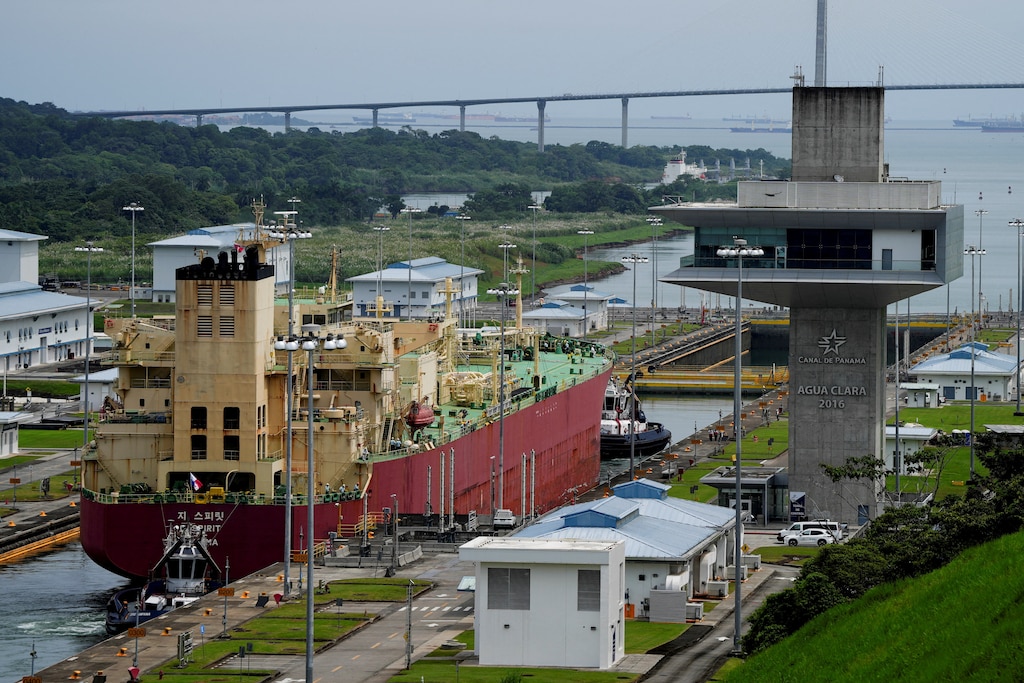
The vulnerabilities exposed by the Hormuz disruption are not unique to the Gulf. From the Panama Canal to the Taiwan Strait, global trade remains concentrated through a small number of critical passages, each representing a potential source of economic disruption.
Building complementary hubs that diversify logistics and trade networks can create permanent economic value while strengthening the resilience of both regional and global supply chains. The objective is not to replace existing global hubs, but to reduce systemic concentration risk through more diversified and interconnected global trade architecture.
The concept extends beyond shipping lanes to data infrastructure, financial continuity and energy systems – all of which are closely interconnected in today’s economy. This capacity must be built before future disruption, not in the midst of it.