Why Asia's energy crisis makes the case for global collaboration
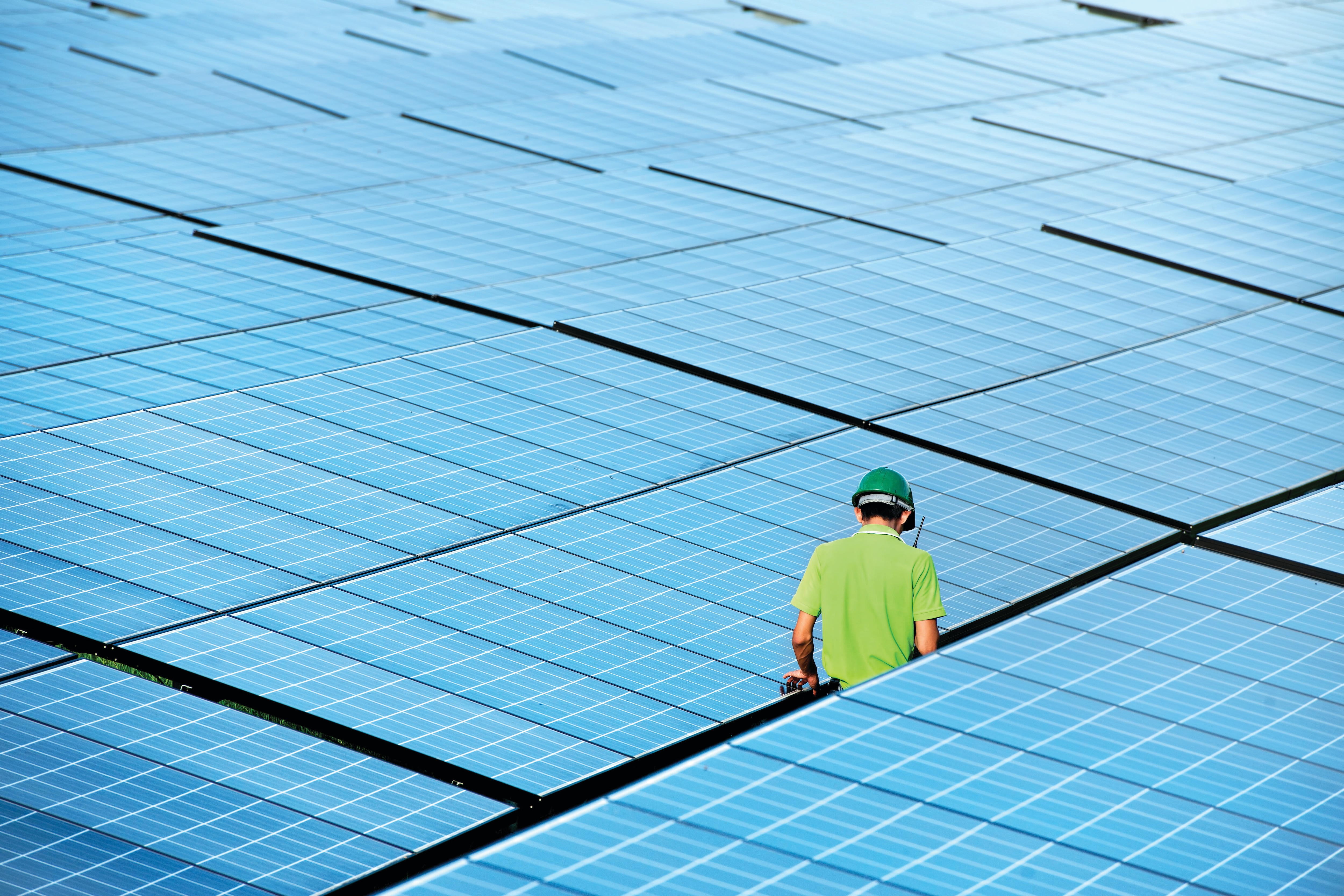
The ongoing Middle East crisis has created an Asian energy crisis that could be solved through global collaboration. Image: Shutterstock
- The Middle East conflict has caused the most significant energy supply shock in decades for Asia, and resulted in a cascade of secondary crises.
- Given Asia's position in global supply chains, tech development and the energy transition, its recovery is a shared global interest.
- Scaling promising ideas for impact is a key focus at the World Economic Forum’s Annual Meeting of the New Champions, also known as 'Summer Davos', in China from 23–25 June 2026.
Asia is the engine of the world’s economic future. The region drives 60% of global growth, accounts for more than half of global manufacturing output, and has become a leading centre of innovation and technology development.
Since conflict erupted in the Middle East earlier this year, however, that engine has come under strain. Asia is now being confronted with its most significant energy supply shock in decades.
This is adding an estimated $3.36 billion to the energy import bill every month for ASEAN alone and has resulted in a suite of cascading secondary crises. Many of the region’s governments now face complex trade-offs between long-term strategic priorities and short-term political necessities.
While oil prices and fuel supply uncertainty have dominated headlines, fertilizers are just as consequential for Asia. Any sustained disruption to commodity supply chains could leave the region’s import-dependent economies facing higher prices and persistent fertilizer shortages. This will have significant implications for the agricultural sector, food inflation and livelihoods.
South Asia sits at the centre of this vulnerability because of its deep dependence on energy and fertilizer imports from the Middle East. Within weeks of the conflict's escalation, India, for example, reportedly agreed to urea imports at prices significantly above pre-conflict levels. Higher fertilizer and energy costs also added to broader concerns surrounding inflationary pressures, rupee depreciation and a rising import bill across regional economies.
Trade disruptions through the Strait of Hormuz have also affected other Asian nations that depend on feedstocks from the Middle East. Japan, South Korea and Indonesia rely heavily on imported naphtha, a key input for plastic production.
As these costs rise, pressure is filtering through to packaging, consumer goods and broader manufacturing supply chains. Sulfur shortages are also creating challenges for Indonesia’s nickel processing capacity and impacting stainless steel and electric vehicle (EV) battery production.
This crisis underscores a recurring pattern in Asia’s response to energy and commodities shocks and points to the need for Asian countries to rethink their energy systems.
Long-term strategies versus short-term necessities
Governments in Asia have moved quickly to stabilize domestic markets with fuel and fertilizer subsidies, demand-management measures and, in some cases, temporary recourse to coal. These steps were necessary for immediate cushioning, but they are inherently reactive.
There is, instead, a need for a more durable recalibration of energy and food systems, through diversification of supply sources and an accelerated shift to renewables. While the recent US-Iran memorandum of understanding may alleviate near-term market concerns, for Asia, structural vulnerabilities remain and demand urgent policy action. Uncertainty should be viewed as a persistent feature rather than a temporary condition.
Indeed, where longer-term adjustments have developed or are emerging, countries are moving towards a strategic focus on energy diversification. Pakistan’s expansion of solar capacity has provided partial insulation from the ongoing imported fuel volatility. The Philippines is now scaling renewable deployment through increased solar equipment imports. India is betting more heavily on nuclear energy and continuing to strengthen its access to critical minerals.
But the current energy shock is no longer a regional issue. Asia's growing centrality to the global economy means disruptions increasingly ripple through global markets.
Why Asia's crisis is a global crisis
From industrial inputs and intermediate goods to consumer products and advanced technologies, businesses around the world depend on production networks that are anchored in Asia. This means increased production costs and delayed exports can quickly translate into broader supply chain disruptions.
South Korea's energy mix, for example, is heavily dominated by fossil fuels imported from the Middle East. This makes its semiconductor industry – which is crucial to global chip production – acutely vulnerable to the crisis. Any disruption can impact global supply chains for electronics, automobiles and industrial computing, exacerbating already elevated prices driven by the artificial intelligence (AI) boom.
Asia is also one of the world's most important environments for the development, testing and commercialization of new technologies. China has played a crucial role in bringing clean energy and EV technologies to commercial maturity, Japan has defined robotics and across technologies Asia is leading the world in deploying integrated innovation models that convert early-stage innovation into scaled solutions.
But nowhere do the region’s key roles in manufacturing and innovation interact more clearly than in the energy transition itself. Asia plays a central role in producing and improving many of the technologies needed for the global energy transition, helping accelerate adoption and reduce costs worldwide.
If the current crisis diverts capital away from transition investments or infrastructure development, it could result in slower emissions reductions and delayed commercialization of crucial transition technologies globally.
Recovery through global collaboration
The ability of Asian economies to navigate and recover from the current energy shock and the cascading crises emerging from it will depend not only on national preparedness, but also on stronger international cooperation.
Regional platforms backed by multilateral development institutions are critical. For example, the ASEAN Power Grid, which is supported by the Asian Development Bank, is one of the world's most ambitious regional energy integration initiatives. It could accelerate renewable energy deployment, strengthen resilience and demonstrate the value of sustained global collaboration in building more interconnected power systems.
The World Bank-supported Regional Electricity Market Interconnectivity and Trade (REMIT) initiative in Central Asia also seeks to expand electricity trade, strengthen transmission networks and facilitate renewable energy integration.
New financing and resilience mechanisms are also emerging to build long-term energy resilience. Japan's $10 billion Partnership on Wide Energy and Resources Resilience Asia (POWERR Asia) reflects a growing recognition that energy security, supply chain resilience and the clean energy transition must be pursued together.
Shared responsibilities and opportunities
Given Asia's role in global supply chains, technology development and the energy transition, its recovery from the current energy supply crunch is a shared global interest.
While multilateral development banks have an important role to play in de-risking capital flows, for international stakeholders and private financiers the scale of investment required to modernize energy systems and accelerate industrial transformation presents significant opportunities for long-term value creation.
Deeper engagement among governments, businesses, research institutions and civil society can strengthen technology partnerships, innovation ecosystems and supply chain resilience across key sectors.
The current energy shock has revealed how deeply interconnected fuel markets, food systems, manufacturing, innovation and, ultimately, economic resilience have become. The choices made within Asia, and the willingness of international partners to engage with those choices, will shape the region's future, but also the resilience and prosperity of the global systems that increasingly depend on it.
The Forum is spotlighting how innovation moves from breakthrough to scale to impact ahead of 'Summer Davos' in China, 23–25 June 2026. Follow the latest.
Don't miss any update on this topic
Create a free account and access your personalized content collection with our latest publications and analyses.
License and Republishing
World Economic Forum articles may be republished in accordance with the Creative Commons Attribution-NonCommercial-NoDerivatives 4.0 International Public License, and in accordance with our Terms of Use.
The views expressed in this article are those of the author alone and not the World Economic Forum.
Stay up to date:
Middle East and North Africa
Related topics:


Forum Stories newsletter
Bringing you weekly curated insights and analysis on the global issues that matter.


