Why China is evolving from building assets to investing in people
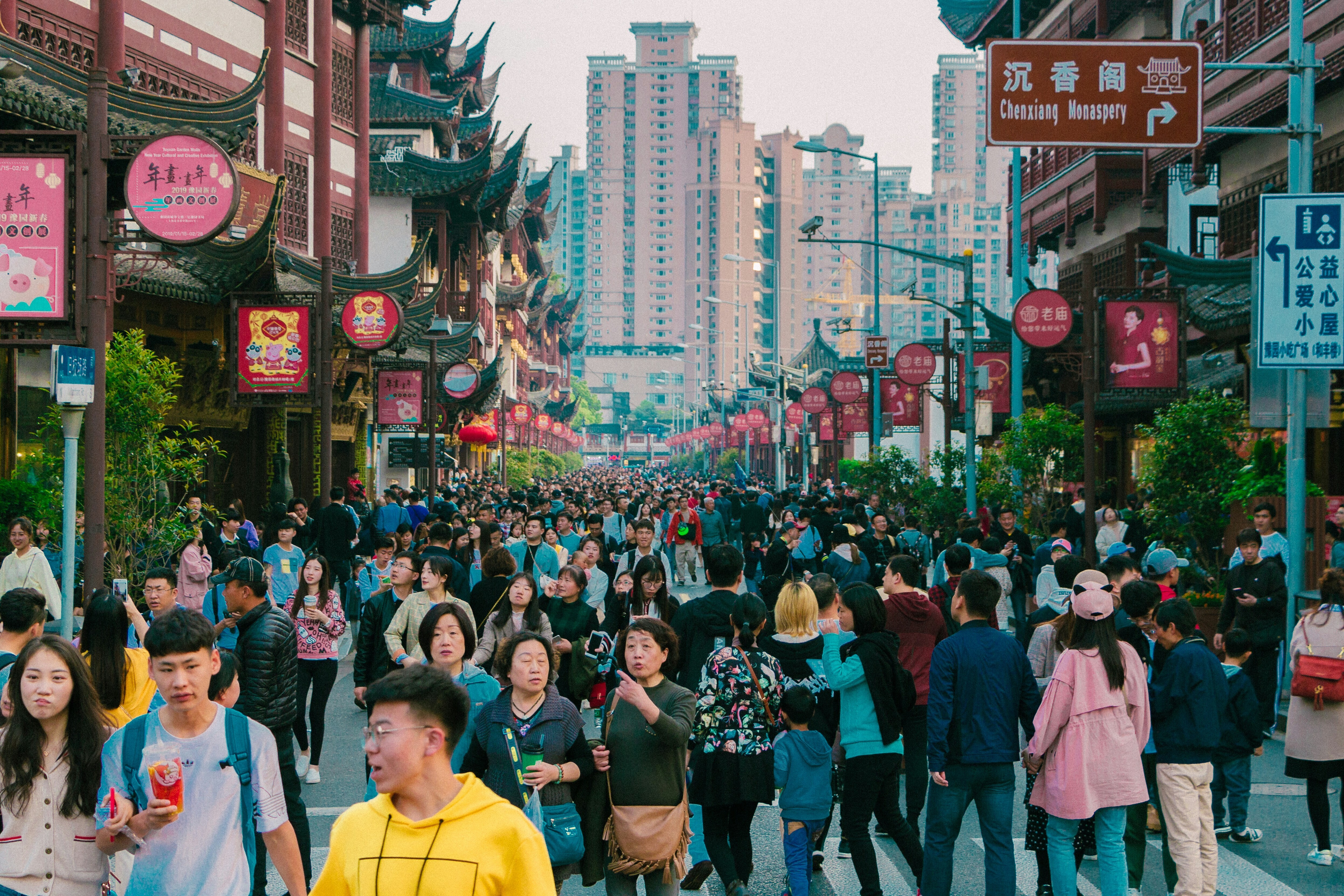
In the current global economic environment, many countries are investing in people, not just physical assets. Image: Unsplash/JavierQuiroga
Yuan Zhang
Specialist, Economy, Trade and Jobs Content and Programming, Greater China, World Economic Forum- Some countries, including China, are responding to recent global economic shifts by pivoting from building physical assets to investing in people as well.
- This will drive growth by unlocking human potential to boost productivity, build consumption, enable industrial upgrades and build labour market resilience.
- Scaling promising ideas for impact will be a key focus at the World Economic Forum’s Annual Meeting of the New Champions, also known as "Summer Davos", in China from 23–25 June 2026.
Against a global backdrop of slowing productivity growth, accelerating technological change and shifting demographic structures, how a country chooses to generate growth will redefine its long-term competitiveness.
Growth models driven solely by investments in physical capital – infrastructure, industrial capacity, real estate – tend to experience diminishing marginal returns over time. As industrialization and urbanization mature, the contribution of physical investment to productivity, employment and consumption can gradually weaken.
At this stage, economies often face a choice. They can continue with traditional investment paths but risk falling into cycles of overcapacity, debt accumulation and stalled upgrading. On the other hand, shifting moderately toward investing in people, through education, healthcare and skills development, can build a stronger foundation for long-term growth.
This is because human capital drives growth by boosting productivity, unlocking consumption, enabling industrial upgrades and building labour market resilience. China is currently enacting this shift, which will have implications domestically, but also for the rest of the world.
Why 'investing in people' is going global
Three structural pressures are reshaping economies worldwide.
First, productivity growth has slowed across advanced and emerging economies alike. Physical capital alone can no longer deliver the gains it once did. Instead, the quality of a country's workforce – education level, skills, health and adaptability – is becoming the main differentiator between stagnant and dynamic economies.
Second, technological change is increasingly shaping future jobs, as the World Economic Forum's Future of Jobs Report shows. Artificial intelligence (AI), automation and digitalization are compressing the shelf life of vocational skills. Lifelong learning is shifting from an ideal to a necessity.
Third, consumption is being held back by uncertainty. High precautionary savings, weak services spending and subdued income expectations are common bottlenecks in many countries. Stronger public services and social protection can help unlock that trapped demand.
In response to these conditions, a growing number of economies are expanding investment in education, healthcare, skills training and social protection. China’s 15th Five-Year Plan (2026-2030), for example, sets out a dual strategy focused on investment in "both physical assets and people".
How human capital supports sustainable growth
Investments in people can affect the economy in four significant ways:
1. Productivity enhancement
A workforce with higher skills, better health and greater adaptability can absorb new technologies more effectively, complement physical capital and drive innovation. Since the 16th century, economies that successfully escaped the middle‑income trap, such as the US, Germany, Singapore and South Korea, became education hubs first and technology hubs later, suggesting a deep causal link between human capital accumulation and innovative capacity.
2. Consumption release
More stable expectations, stronger social protections and higher‑quality employment can help to reduce precautionary saving and create demand for consumption of services such as e-sports and cultural and tourism activities. This mechanism is especially critical for economies facing weak domestic demand.
3. Industrial upgrades
The continued expansion of advanced manufacturing, the digital economy and modern services depends heavily on a well‑structured supply of highly skilled talent. Sustained people investment provides a stable talent base for industrial transformation and reduces recruitment and training frictions for firms.
4. Labour market resilience
In times of technological disruption and industrial change, systematic vocational training and reemployment support workers’ ability to move across sectors and roles. This reduces structural unemployment and maintains macroeconomic and social stability.
These mechanisms are not unique to any particular system but can be seen across different economies at different stages of development.
Transitioning to a new growth model
Any long-term transition faces practical constraints.
Demographic pressures are real. Rapid ageing reduces labour supply while increasing demands on pensions and healthcare. Fiscal trade-offs are also unavoidable. With growth slowing and local debt under pressure, it can be difficult to prioritize human capital spending without creating new challenges such as inequity.
Supply-demand mismatches persist as well. Vocational education quality, training relevance and business-school collaboration must all be prioritized. And external uncertainty – from global trade conditions to technology controls – can influence how quickly human capital investment translates into growth.
All of these constraints will ensure that any country's transition from investing in physical assets to investing in people is gradual.
How can businesses invest in people?
For companies operating in or with China and other countries undergoing this structural shift, there are practical implications.
Old growth models based on low labour costs are disappearing. Competitive advantage will increasingly come from local talent quality, skills matching and ecosystem integration. Joint talent development with local educational institutions will become standard practice.
Companies must also treat skills investment as a long-term productivity input. Employee training and upskilling should not be seen as discretionary cost items to be cut in a downturn, but productivity investments that stabilize teams and build operational resilience. Many economies now offer tax deductions for corporate training expenditure – a lever firms should actively use.
It will also be important to orient product portfolios toward human development. Demand related to digitalization, health, elderly care, childcare, education and career advancement is expanding structurally. Companies that review their product lines against these use cases will be better positioned for long-term growth.
Finally, concrete actions in employee wellbeing, career development and local community talent cultivation should align with host-country priorities and provide a sustainable growth engine. This will help to generate both economic and social value.
From ‘skills gaps’ to ‘skills first’
China’s new emphasis on investing in people reflects a broader shift toward growth driven by stronger skills, higher productivity and demand that emerges from rising incomes, innovation and economic activity within the country.
Launched in 2020, World Economic Forum’s Reskilling Revolution initiative is designed to address this change. Built on the insights of The Future of Jobs Report, it focuses on three core goals: defining the skills of the future, transforming learning models and bridging the gap between learning and economic opportunity. It aims to reach 1 billion people by 2030, unlocking an estimated $2.93 trillion in value for the global economy.
The pathway this initiative champions – moving from “skills gaps” to a “skills first” approach – aligns closely with China’s own structural transition. Both point to the same core insight that the future of growth is no longer about how much we build, but how much we learn.
The Forum is spotlighting how innovation moves from breakthrough to scale to impact ahead of 'Summer Davos' in China, 22–25 June 2026. Follow the latest.
Don't miss any update on this topic
Create a free account and access your personalized content collection with our latest publications and analyses.
License and Republishing
World Economic Forum articles may be republished in accordance with the Creative Commons Attribution-NonCommercial-NoDerivatives 4.0 International Public License, and in accordance with our Terms of Use.
The views expressed in this article are those of the author alone and not the World Economic Forum.
Stay up to date:
The Digital Economy
Related topics:


Forum Stories newsletter
Bringing you weekly curated insights and analysis on the global issues that matter.


