Dire strait: A supply shock that's shifted economic storylines around the world
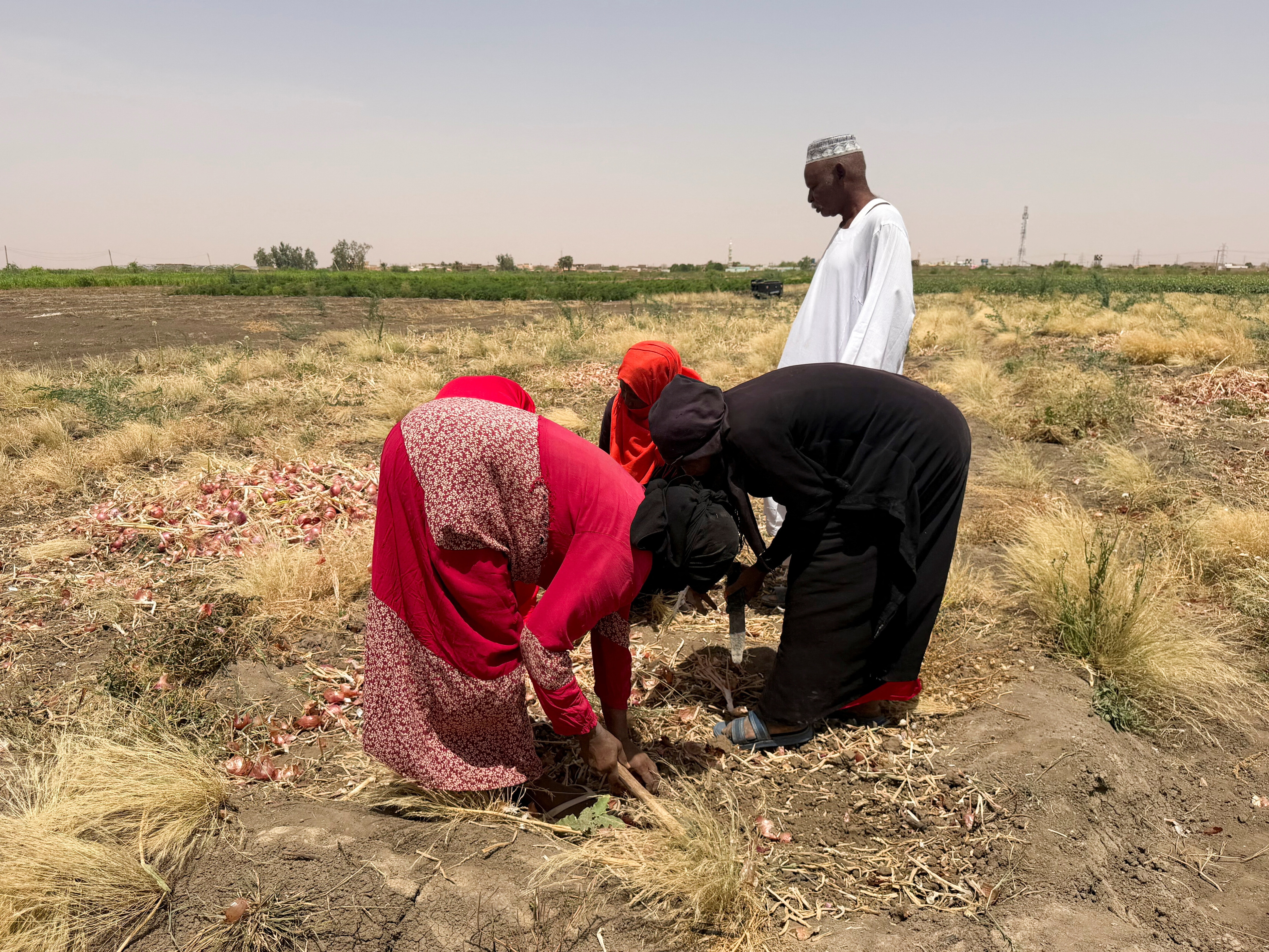
Participants arrived at Summer Davos describing Iran war-induced impacts on everything from American store shelves to farm fields in Sudan. Image: REUTERS/El Tayeb Siddig
- What a difference a year makes; attendees at Summer Davos in China shared readouts on economies around the world that were starkly different than at the previous iteration of the annual confab.
- The meeting served as a barometer of the crisis, where the closure of the Strait of Hormuz was described as everything from a contributor of harmless inflation (in small doses) to ‘another nail in the coffin for globalization.’
“Things changed after February.”
True for many different places, in a variety of ways. Just when a post-pandemic global economy seemed to be jogging along at an even pace despite the Ukraine war, a brand-new war shoved it onto a murkier path. The status of the Strait of Hormuz is being negotiated, but several months of inactivity for the vital trade corridor amid hostilities will leave lasting marks.
The changed “things” referred to specifically by a dean at Peking University during a discussion at Summer Davos in Dalian, China were the circumstances for central bankers in control of the money supply. But the description applies to a number of developments. Most bad, some benign, and none exactly the same in any two places. The yearly confab was a collecting pool for anecdotes about them.
A moderator of one panel brought news of numbness to high prices in New York City, a chief economist explained that a little war-related inflation isn't such a bad thing for China (in contrast to reports of the astonishing amounts in Iran), a political economist described efforts to ease the pain in India likely to lead to long-lasting complications, and another expert spelled out grave circumstances for farmers in African countries like Sudan.
The gathering reflected a wider world in flux. Where countries are scrambling to reroute goods via once-unthinkable passage through the Arctic, and building costly new infrastructure as Hormuz alternatives.

That kind of ant-like resilience has emerged in response to trying circumstances; economists surveyed not long ago suggested that a closure of the strait into June of this year (there are about five days left in the month) could generate a negative impact approaching COVID-19 levels.
The economic outlook for of many African countries is now “much softer,” Africa Finance Corporation Chief Economist Rita Babihuga-Nsanze said during a Summer Davos discussion. The lack of fertilizer reaching eastern Africa via the strait has raised serious concerns about the planting season in places like Sudan, and the ways in which the region’s central bankers deal with a related inflationary shock “over the next few years” will have far-reaching effects.
Other participants expressed wonder at the ability of economies to hold up as well as they have. That adaptability can come at a price. In places like India, where the government has eased the pain of shortages and higher prices with subsidies, Columbia University political economist Karen Young said the impact “reveals itself in a different way in the economy,” by shackling future public spending.
Other participants suggested that the future of global trade in general is now in question, in a world likely to respond to the energy supply shock by stockpiling ever-bigger reserves. The shutdown of the Strait of Hormuz is “another nail in the coffin of globalization,” said S&P Global Chief Economist Paul Gruenwald.
Shared inflation, different realities
The moderator of a Summer Davos panel on inflation kicked things off by recounting a recent visit to a New York grocery store and being tempted to argue about her eye-popping checkout total. “I thought, there’s been a terrible mistake,” she said. “But I know enough not to say anything, at this point.”
It wasn’t so long ago that inflation was a curious blast from the past, something parents had to explain to their adult children. The fresh wave stirred up by the Iran war has crashed onto beaches just about everywhere.
In Australia, where people “feel locked out of the property market,” government efforts to steady the economy in choppy waters (by eliminating tax breaks, for example) create the risk of political blowback, said University of New South Wales Professor of International Political Economy Elizabeth Thurbon. “The moment calls for bravery.”
In China, people buying things are bearing less of the weight of war-induced inflation than companies making things – at least compared with the US, said Huang Yiping, the dean of Peking University’s National School of Development. In a country like China that's historically grappled with deflation, which is an unwelcome signal of malaise, a little inflation isn’t necessarily a bad thing.
The goal is more along the lines of “How do we achieve a modest increase,” he said.
We should be careful what we wish for. Even resilience-building will probably trigger higher costs. “Energy producers are going be doubling down on resilience,” said Columbia’s Karen Young, by aggressively buying up materials for things like new pipelines. “That’s a longer-term inflationary pressure.”
Some situations are more extreme than others.
Iran’s “astronomical” rate of inflation (more than 70%) has been coupled with a loss of some five million jobs and the likelihood of 10 million more, Middle East Institute Affiliate Mahmood Sariolghalam said during a Summer Davos discussion.
Sariolghalam said the recent change in the country’s leadership has installed people who grasp “that their survival… hinges on economics.” That’s likely to temper any desire to assert control over the Strait of Hormuz in way a that effectively re-seals the 39-kilometer-wide passage – which limits it to “a short-term source of deterrence.”
Yet, the opening of the strait is still a work in progress.
If it remains impeded, said Jason Bordoff, the founding director of the Center on Global Energy Policy at Columbia University, real economic damage may be inescapable.
Oil prices haven't surged to the degree many expected during the strait’s closure, Bordoff said, but global reserves are reaching a point where they can’t make up for lost supply.
“Once that happens, you start to see prices increase in a parabolic fashion, not a linear fashion.”
Don't miss any update on this topic
Create a free account and access your personalized content collection with our latest publications and analyses.
License and Republishing
World Economic Forum articles may be republished in accordance with the Creative Commons Attribution-NonCommercial-NoDerivatives 4.0 International Public License, and in accordance with our Terms of Use.
The views expressed in this article are those of the author alone and not the World Economic Forum.
Related topics:

Forum Stories newsletter
Bringing you weekly curated insights and analysis on the global issues that matter.
More on Geo-Economics and PoliticsSee all

Manar Alohaly
September 23, 2026


