Iran-US war widens and other geopolitical stories to know this month
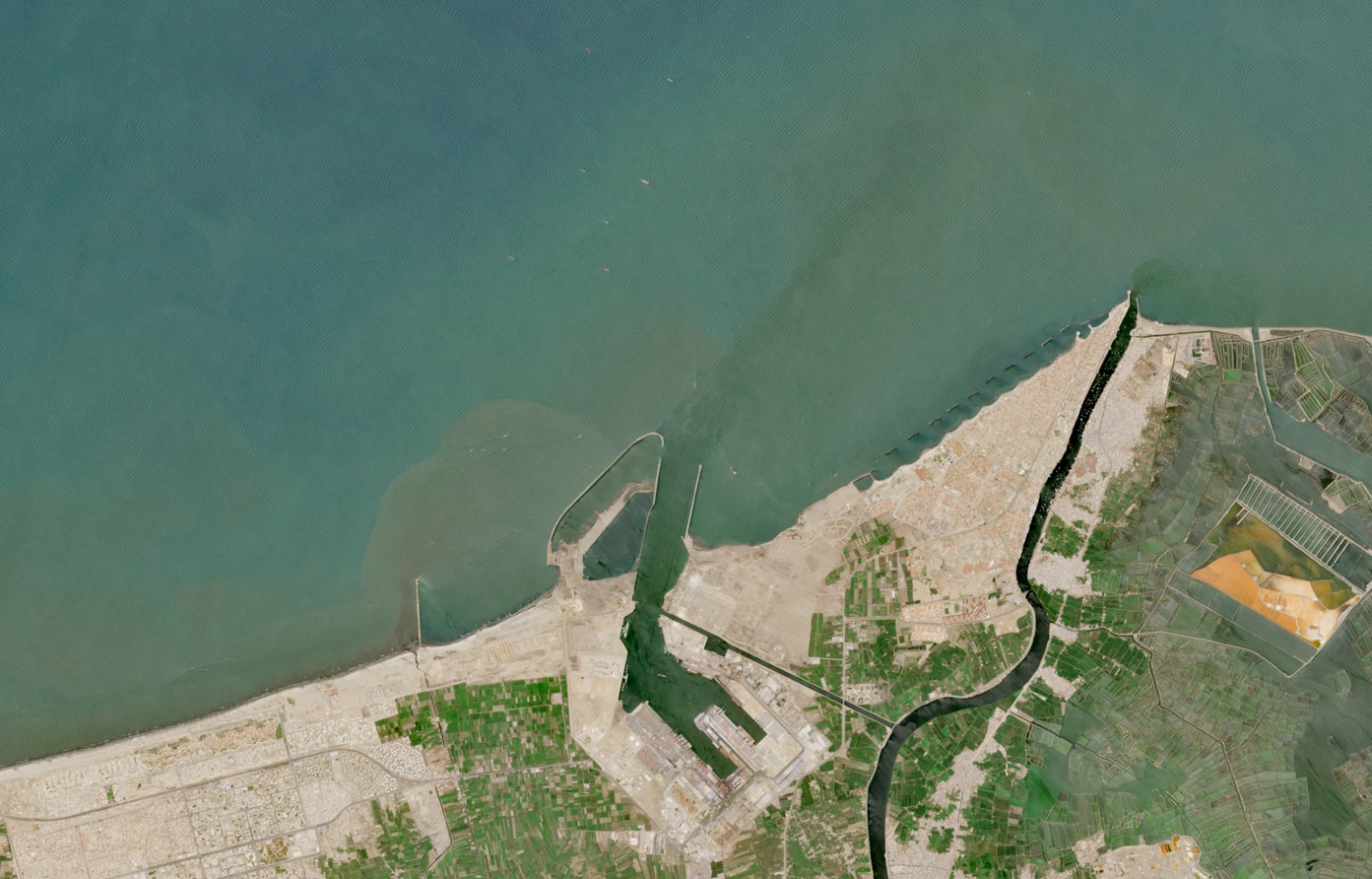
Vessels at Damietta port, on Egypt's Mediterranean coast, have been hit by drones. Image: REUTERS
- This monthly round-up brings you a selection of news and updates on the latest geopolitical developments.
- Top stories this month: the US-Iran war deepens into an energy, fiscal and political crisis; Ukraine appoints a new military chief; Hamas agrees to disarmament in Board of Peace deal.
1. Regional and economic impact of US-Iran war escalates
Fighting between the United States and Iran intensified through July, with the conflict's costs mounting well beyond the battlefield, while a drone strike on vessels in the Egyptian port of Damietta, in the Mediterranean near the Suez Canal, raised fears of a new front opening up in the war.
The war has already opened a second maritime front. Yemen's Houthis declared a blockade of Saudi-linked shipping through the Bab el-Mandeb strait, with recent shipping data showing crude tankers actively exiting the Red Sea and rerouting around Africa. That leaves two key chokepoints under active threat simultaneously – Hormuz in the Gulf and Bab el-Mandeb on the Red Sea.
In response, Saudi Arabia has proposed a maritime defence coalition to protect shipping in the Red Sea, with a meeting of representatives from 43 countries and the European Union.
Other updates on the war include:
- US defence secretary Pete Hegseth told senators the conflict has already cost $37.5 billion. He testified before Congress on July 21 to request more funding for the war.
- Oman proposed a regional mechanism to manage Hormuz with voluntary user fees, though Iran is pushing for full administrative authority and service charges over the waterway.
- The New York Times reported that Ukraine struck an Iranian-linked vessel in the Caspian Sea, targeting what Kyiv said was tied to military cargo flows involving Iran and Russia – highlighting how supply chains, drone technology and maritime logistics are increasingly connecting the two conflicts.
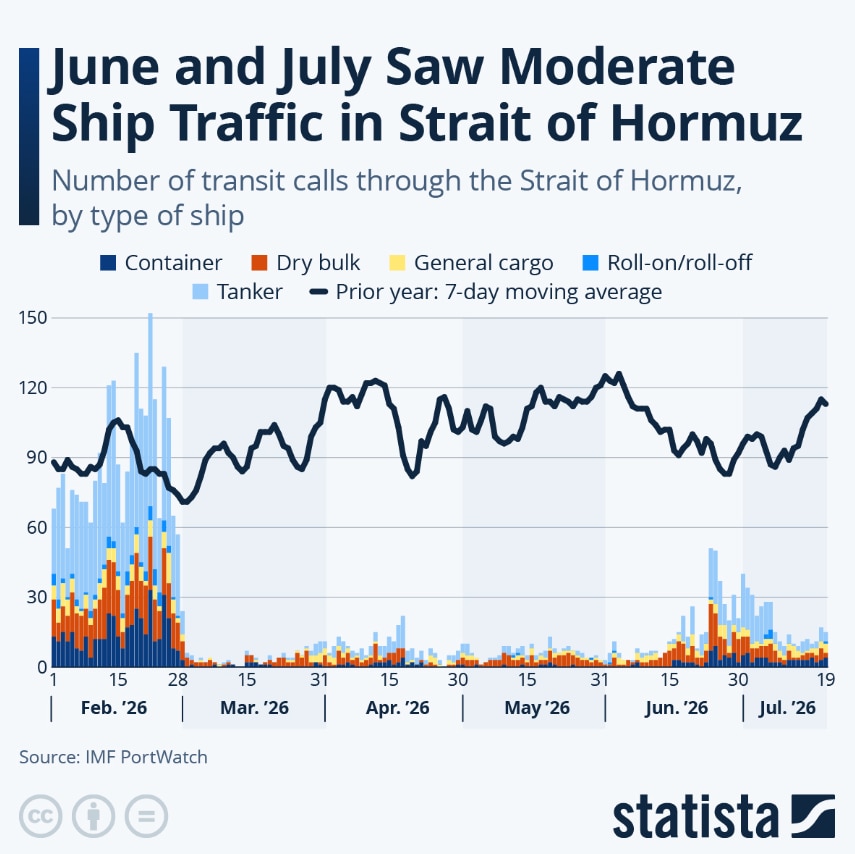
- Traffic through the Straight of Hormuz remains thin, dropping to just 10 vessels per day by mid-July, keeping global energy markets on edge and sustaining broader economic uncertainty. This is down from an average of 25 per day in late June and early July, and 100 per day from the same period last year, according to Reuters and Statista.
2. Ukraine reshuffles its military command, appeals to Washington
President Volodymyr Zelenskyy appointed Major General Mykhailo Drapatyi as Ukraine's new commander-in-chief, replacing Oleksandr Syrskyi in the most significant wartime leadership reshuffle in years, following public anger over the dismissal of former defence minister Mykhailo Fedorov.
Analysts view the appointment of Drapatyi, 43 – known for his work with drone warfare and an accessible leadership style – as an effort by Kyiv to modernize command structures and bolster public trust as the war moves into its fourth year.
Zelenskyy also travelled to Washington to meet President Donald Trump, ahead of attending the funeral of Senator Lindsey Graham, a long-time advocate of US military support for Ukraine.
Kyiv is pressing for air-defence capabilities, a drone-cooperation deal and clarity on Patriot missile interceptor production, even as Reuters reports the Trump administration is delaying some Ukraine aid spending until 2029 while Russian missile attacks continue.
3. News in brief: Geopolitical developments from around the world
Hamas has agreed to disarmament in Gaza, in a deal brokered by President Trump's Board of Peace, saying its handover of heavy weapons would be contingent on Israel "ending all forms of aggression", the BBC reports. The Board of Peace's National Committee for the Administration of Gaza would take responsibility for storing the weapons.
A proposed US-Saudi civil nuclear agreement is raising proliferation concerns and facing pushback on Capitol Hill. The Council on Foreign Relations argues the deal departs from the stricter non-proliferation model Washington has historically required of partners, appearing to preserve a future Saudi enrichment option without the safeguards accepted by the UAE.
The United Nations has launched its search for the next Secretary-General to succeed Antonio Guterres, whose term officially concludes on 31 December 2026. Al Jazeera reports that whoever is appointed faces numerous challenges: from global conflicts to calls for organizational reform.
President Trump pledged to help Lebanon "a lot" after meeting Lebanese President Joseph Aoun at the White House and restoring direct US-Lebanon flights after a decades-long ban.
India's domestic politics have been rocked by the "cockroach" youth movement in recent months. On 27 July, the government introduced a bill amending public examination laws to impose tougher penalties – including up to 10 years in prison for paper leaks – just days after widespread protests forced the education minister's resignation.
President Xi Jinping encouraged global collaboration around artificial intelligence in a major speech, promising that China would serve as an ally to developing nations trying to harness the benefits of the technology.
How the Forum helps leaders make sense of regional, trade and geopolitical shifts
4. More on geopolitics on Forum Stories
The closure of the Strait of Hormuz has disrupted global oil markets and hit energy-import-dependent Asian economies hardest, but China has weathered the shock comparatively well. Erica Downs of Columbia University's Center on Global Energy Policy says decades of pipeline-building, oil stockpiling, energy diversification and transport electrification have validated Beijing's long-term push to become an "energy powerhouse" even as the country continues to rely on fossil fuels during an "orderly" transition. Read the full article here.
Can AI help countries import good government? This article explores how artificial intelligence, drawing on data generated outside the state, may let developing countries compress decades of state-capacity building into a much shorter timeframe. The analysis cautions that imported administrative capability is not the same as earned legitimacy, and that AI works best as an accelerant for states already willing to reform rather than a substitute for institution-building.
From "polycrisis" to "polytunity": in a special episode of Radio Davos, political economist Yuen Yuen Ang of Johns Hopkins University argues that today's global breakdown is also a rare opening for transformation, with the "global majority" gaining a stronger voice in setting the agenda. Listen to the podcast below.
License and Republishing
World Economic Forum articles may be republished in accordance with the Creative Commons Attribution-NonCommercial-NoDerivatives 4.0 International Public License, and in accordance with our Terms of Use.
The views expressed in this article are those of the author alone and not the World Economic Forum.

Forum Stories newsletter
Bringing you weekly curated insights and analysis on the global issues that matter.
More on Geo-Economics and PoliticsSee all

Miriam Schive and Spencer Feingold
September 18, 2026