Innovator-founders at Summer Davos reveal the next big thing
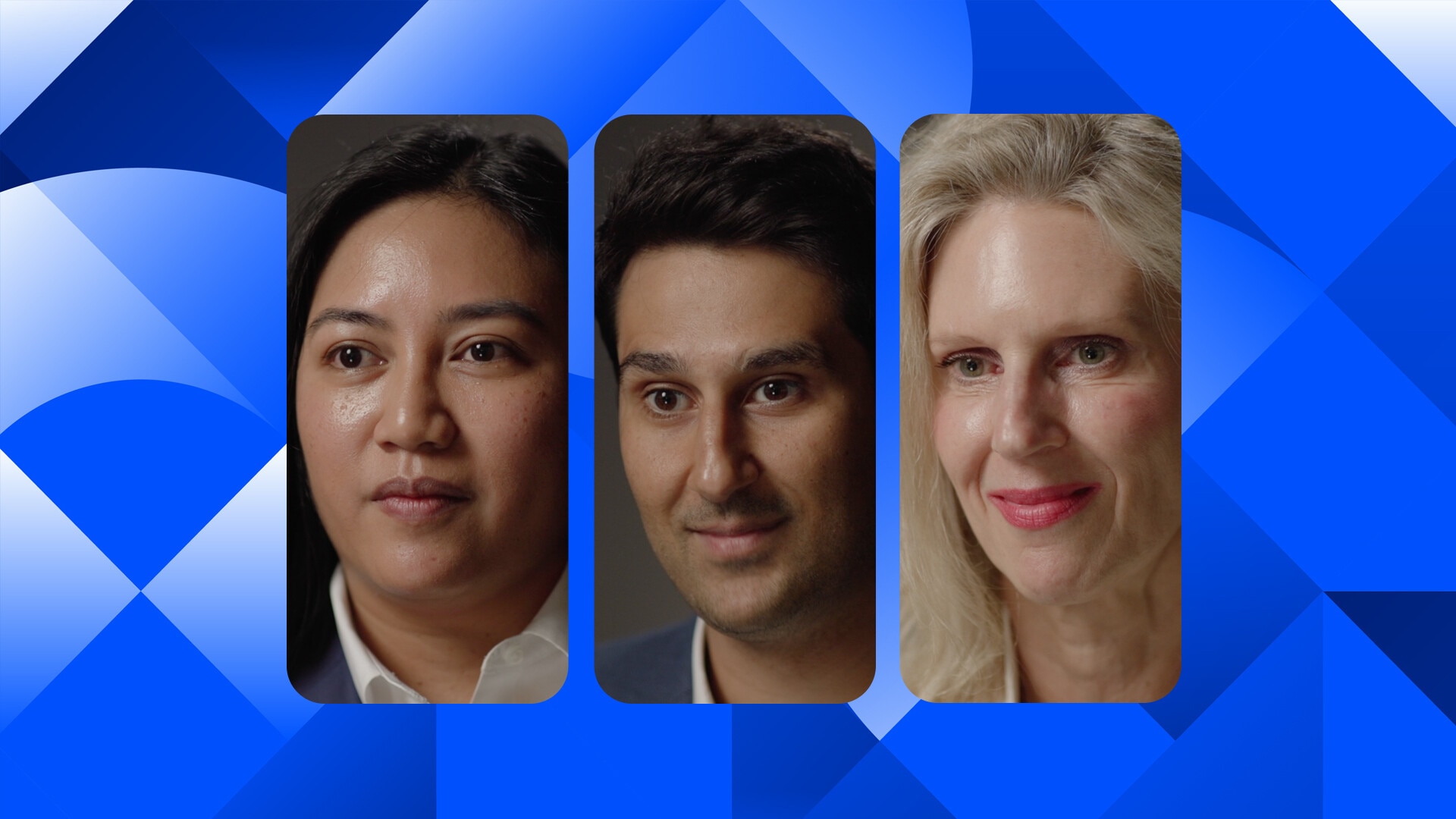
From batteries and biology to learning and quantum security, each innovator shared a specific bet on what's about to become possible, at Summer Davos . Image: World Economic Forum
- Founders at Summer Davos see breakthroughs arriving sooner than the industry expects.
- The biggest barriers to scaling them are no longer scientific, most of them agree.
- What's left is the structural work: financial architecture, regulation, and overcoming human inaction.
The World Economic Forum's 17th Annual Meeting of the New Champions in Dalian, known as Summer Davos, brought together more than 1,800 leaders from 90 countries under the theme 'Innovating at Scale'. Over 200 of them were innovators: founders of unicorns, technology pioneers, builders working at the frontier of their fields.
We sat down with some of them and asked one specific question. What's becoming possible in your field in the next 18 months that most people, even in the industry, still think is years away?
What follows is a collection of their answers.
The battery from 1977 that's finally ready
Emilie Bodoin was trying to find out why lithium-ion batteries weren't commercialized, even though they were invented way back in 1977 by Nobel laureate Stanley Whittingham. "I could not stop thinking about this until I had figured out why, and the answer is surprisingly simple.”
Now, with a process that eliminates graphite and a joint patent with Professor Whittingham, she has introduced a lithium metal battery at Pure Lithium that is half the weight and twice the capacity of lithium-ion batteries. And finally, five decades later, she says commercialization is on the horizon. "It's much, much closer than people in the industry think."
What does it mean for the future of transport? She offers an example around electric vehicles. "The battery will last longer, it will charge faster, and the replacement cost, the cost of storage could go down by almost 75% in a grid setting," she says.
The applications stretch beyond phones and electric vehicles. "It's for things like uninterrupted power supply… a hospital loses power and people need oxygen to be delivered through breathing machines." It's also to enable growth in areas like Africa and places like Saudi Arabia, she says, "where they don't make batteries now but could."
Sodium-ion is making a similar argument from a different angle. Tang Kun, co-founder and CEO of HiNa Battery Technology, has spent years commercializing batteries built from one of the most abundant elements on Earth — a spinout from the Chinese Academy of Sciences that was the first to establish a GWh-scale sodium-ion production line. Where lithium metal wins on weight and capacity, sodium-ion has a different edge: it operates stably at -40°C, making it the practical choice for grid storage and cold-climate fleets where lithium struggles. "The shift will surprise people," he says, "because it's already happening."
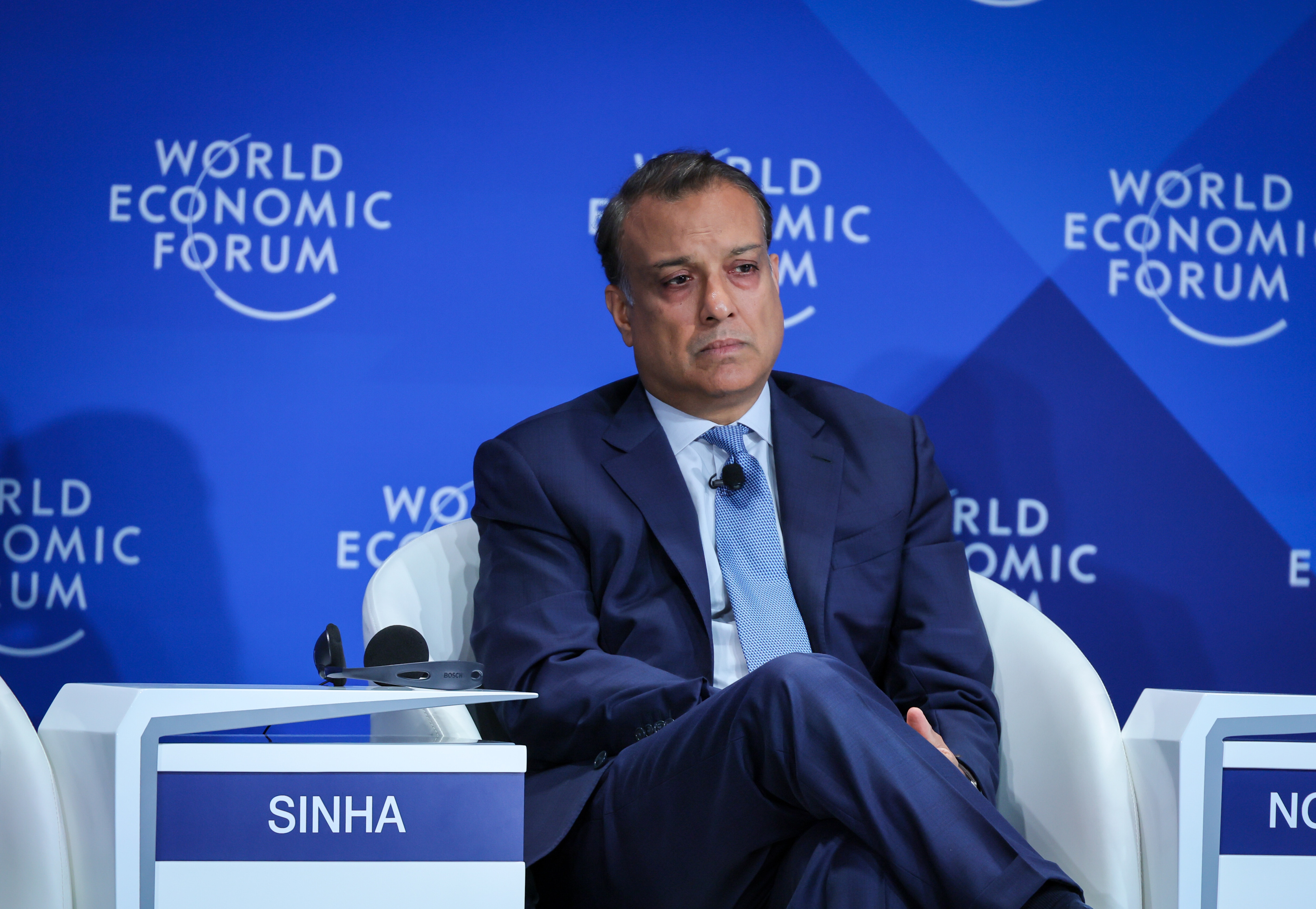
The timing may be better than it looks. Sumant Sinha, CEO of ReNew, one of India's largest renewable energy companies, says grid-scale battery storage is about to move faster than almost anyone in the industry expects. "Grids are really struggling right now," he says. "It's going to happen much faster than people expect."
A blend of fuels on our roads
We often think about the energy transition in terms of electrification. But about 70% of the system is driven by liquid fuels, says Lee Beck, who has spent her career focusing on frontier technologies.
It led her to join the e-fuels company HIF Global and help decarbonize energy technologies. But in the near term at least, there isn't going to be "a binary choice that all of the vehicles that are on the road have to use e-fuels or e-gasoline in the near term," she says. "It will really be driven by more of a blend of fuels."
Why? Because there won't be a single, uniform energy transition across the world. "Countries will move according to different timelines… those timelines will be dictated by: What is your energy security need and what can you afford? What is your national interest in terms of producing fuels, importing fuels, or creating markets abroad? And then finally, what is your local resource circumstance?"
Incremental emission reductions will become important, she says, especially as governments become more cost-sensitive to decarbonization. Which means we'll still have countries that blend cleaner fuels, biofuels, e-fuels into their gasoline mix and reduce emissions in the near term, with combustion engine vehicles.
We can make butter from CO2. Now comes the hard part
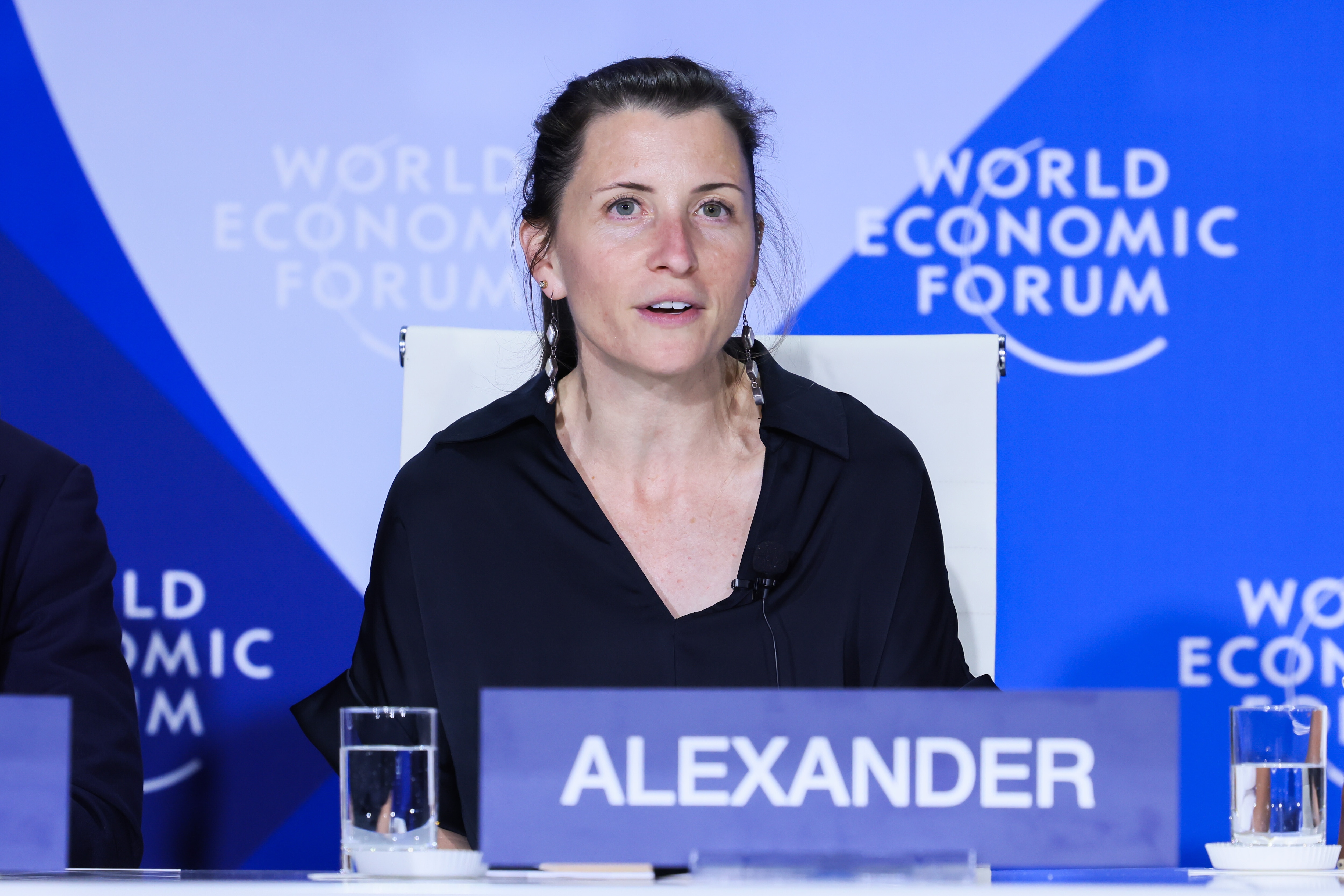
Kathleen Alexander’s company can already make fats and oils without farms or sunlight.
The way food is produced right now, she explains, relies on photosynthesis, which uses sunlight or photons to drive the assembly of molecules. “Thermosynthesis is a similar kind of pathway, where we take similar starting materials and build them into the same end materials. But instead of driving that process with light through organisms called plants, we can just drive that directly with heat, so thermosynthesis.” It has resulted in one of their first products: a butter currently used by restaurants like SingleThread in the United States.
But this ‘ancient organic chemistry process’ that Savor is scaling up with a smaller planetary footprint wasn’t necessarily the hard part. There’s a bigger hurdle to overcome for every new ingredient in the food system, and that is: you need sufficient demand to justify building scale, and you need scale for prices to fall enough to generate demand.
"We used to call it the valley of death," says Alexander. "I now call it the abyss of death. I don't think the valley is a very tame thing."
It’s not something that existing players in the middle of the supply chain, or the large CPG companies whose products fill grocery shelves, can bridge alone. Their ingredient purchasing runs on 12-month agricultural cycles because that's the rhythm farming runs on.
And what Alexander didn't expect to see this soon is who's starting to break the loop. It’s the retailers, the companies at the end of the chain, that are beginning to put advance market commitments in place, giving the CPG players in the middle enough certainty to make longer-term sourcing commitments upstream. "In the last six months we've seen pretty impressive movement and leadership specifically from folks on the retail side," she says. "It's an entirely new paradigm."
Once that architecture exists at scale, a whole category of ingredients that are currently stranded between proven science and commercial viability gets a route to market. "People are starting to get creative about what has to be true for us to actually make this transition."
A partner in a week, not a decade
By 2030, workers can expect nearly 40% of their existing skill sets to be transformed or even outdated, according to the World Economic Forum's Future of Jobs Report. Kian Katanforoosh spends his time working with enterprises to target reskilling and upskilling efforts.
His company Workera begins by measuring the gaps that exist but in his words, it’s almost always larger than expected. "Enterprises underestimate how much behind they are in learning velocity," he said on the Forum’s Radio Davos podcast last year.
But when asked at Summer Davos what's coming next, Katanforoosh offered a dramatic evolution of the learning landscape. “Ten years from now, people will be learning at a pace that you cannot even imagine,” he says.
In his current work with a consulting firm, for example, they are working on a question that would have sounded absurd five years ago: how do you make someone a partner in a week rather than ten years? "I think all of this will be possible because we will find a way to use AI to increase the human's ability to learn."
The mechanism already exists in early form. Rather than sending one-size-fits-all training to thousands of employees, Workera is placing an AI agent across existing learning content, assessing each person’s individual gaps, goals, and current projects, and telling them exactly what to learn next. "It's going to take you 15 minutes and you're probably going to be good for this week."
Hiring, he says, is next. Within a year, the first studies will show AI outperforming human interviewers at assessing technical skills. "Once you have those validation studies, you would actually not want humans to interview people."
Impossible is not too far away
“Cancer in space is beautiful.”
These are the words of a founder who is trying to study cancer cells in space, where gravity doesn’t compress them and they are able to grow freely. “It has similarities to how cancer evolves in our body,” says Allison Bajet of SPARK microgravity. And when we have a more accurate understanding, “in theory, this would mean we have more accurate drug development for cancer therapies.”
The current study of life sciences in space is bulky, she says. "It could be the size of a fridge or two. And our particular product is the size of a shoe box." That smallness matters. "It allows us to fit in any rocket going up, any shuttle, any satellite orbiting."
The idea sounds futuristic until you realize how much of daily life already runs on space technology. Bajet reckons the average person touches about 32 space technologies every day without noticing. The weather app on your phone runs on Earth observation systems, the taxi app's navigation comes from satellite positioning originally built for military operations, the mattress you sleep on uses absorption foam developed to protect astronauts on the International Space Station. Anti-scratch glasses, power tools, sneaker cushioning... these are all examples of space technology, repurposed.
Studying cancer in space, she argues, is the next application. "Impossible is not too far away."
A digital twin for a living cell
Drug development is slow because biology is hard to predict. You design a candidate, then wait years through layers of testing to find out if it works. Le Song wants to compress that timeline by moving the first experiments into a simulator.
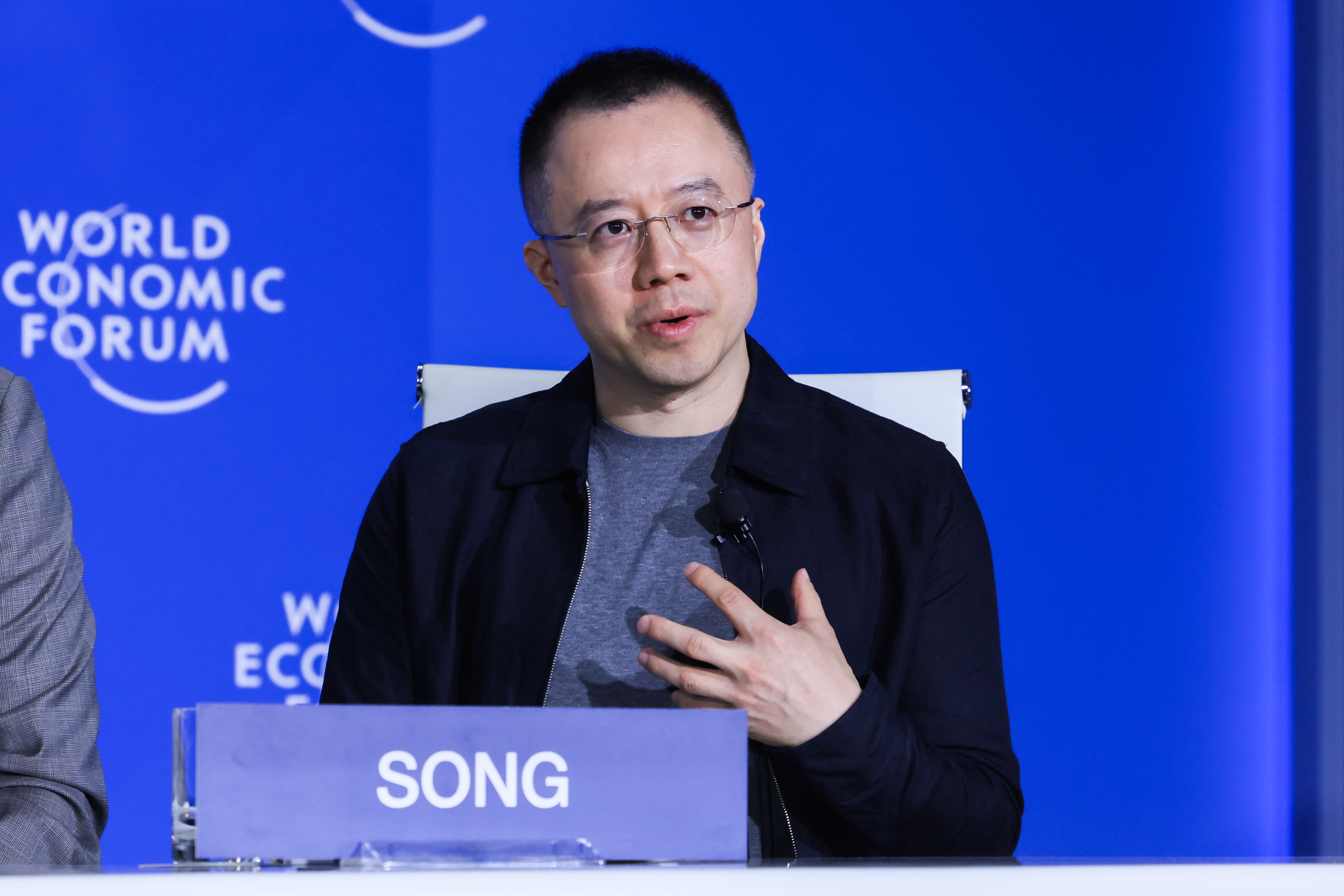
The co-founder and CTO of GenBio AI, who is also a professor at the Mohamed bin Zayed University of Artificial Intelligence in the UAE, is building what he calls a world model for biology. The software simulates how cells respond to drugs, treatments and disease. "Biology is very complex," he said at the founders' media session in Dalian. "We want to understand the effect of a drug and treatment" before it ever reaches the lab.
In the next 18 months, he says, the first version of that simulator becomes real. "We will be able to construct initial virtual cells to simulate cellular responses to drugs and use that for drug design." And the construction process itself, he adds, will be automated by agentic AI, software agents that build the virtual cells without a human in the loop for every step.
The vision sits inside a broader shift he is excited about. "I'm most excited about our increasing ability to build digital twins of everything." Digital twins of office workflows, of software engineering tasks, of drug trials. Each one shaves cost and time off something that used to take years.
The quantum threat that already has an answer
There is a quiet shift happening in cybersecurity that most people, including most cybersecurity leaders, have not yet caught.
It is the realization that the threat from quantum computing, the long-promised machine powerful enough to break encryption, is no longer a distant problem. And more importantly, that the answer to it already exists.
The founder of one quantum security firm, speaking to us at Summer Davos, says the next 18 months will be defined by the rollout of solutions that have been sitting on the shelf. "What most people don't know is that the quantum threat, there's already solutions. And you don't need a quantum computer to fight the quantum threat." Government-standardized, proven algorithms exist and mandates to adopt them are already in place. But they have, in her words, flown a bit under the radar.
That changed this week, with the United States government bringing forward its deadline for adopting quantum-safe encryption from 2035 to 2030. Financial services, telecommunications, energy, pharmaceuticals and insurance are all beginning to move. But healthcare, she says, needs to catch up because the data is sensitive and has a long shelf life.
She continues to emphasize that “the biggest threat that we face is not quantum computing breaking encryption. It is human inaction.” Quantum-safe cybersecurity, she says, has been miscategorized as research and development. "You do not need quantum to fight quantum. It is not R&D. It is yet another classical migration process."
The 18-month bet is that organizations stop treating it that way. "This is one thing that we have the ability to stop," she says. "The biggest challenge is just doing it."
None of these bets is certain. But all of them, the founders suggest, are closer than most people think.
License and Republishing
World Economic Forum articles may be republished in accordance with the Creative Commons Attribution-NonCommercial-NoDerivatives 4.0 International Public License, and in accordance with our Terms of Use.
The views expressed in this article are those of the author alone and not the World Economic Forum.
Related topics:

Forum Stories newsletter
Bringing you weekly curated insights and analysis on the global issues that matter.
More on Emerging TechnologiesSee all

Jacob Nathan
September 25, 2026


