Defensive stockpiling sparks correction fears, and other trade news to know
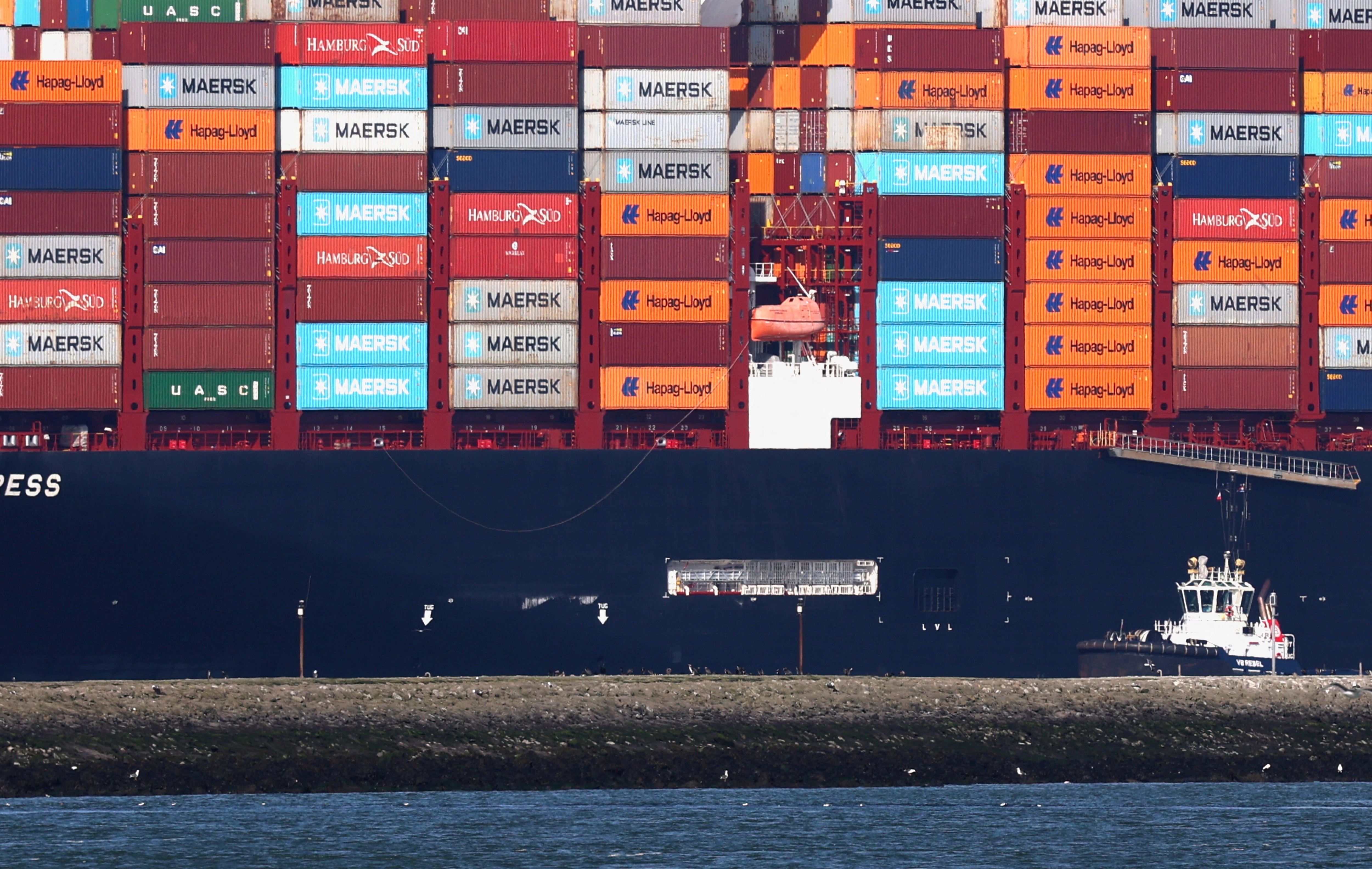
Importers are aggressively accelerating shipping calendars to outrun impending tariff adjustments. Image: REUTERS/Yves Herman
- This monthly round-up brings you a selection of the latest news and updates on global trade.
- Top international trade stories: Trade up on frontloading, but does correction loom?; Chinese expansion squeezes European carmakers; US lifts export restrictions on Anthropic's latest AI models.
1. Global trade volumes rise, but frontloading sparks correction fears
Global commercial timelines are undergoing a structural shift as regulatory deadlines, tariff anxieties and geopolitical supply shocks replace traditional seasonal consumer cycles as the primary drivers of trade.
Recent reports reveal that international procurement patterns are being compressed, with companies engaging in defensive frontloading to outrun impending policy transitions and maritime constraints.
This trend, reports show, has pulled the traditional commercial calendar forward by four to six weeks. According to Reuters, US importers are accelerating orders from Asian manufacturing hubs to ensure holiday and back-to-school goods clear customs before scheduled tariff adjustments take effect. This tactical race to land inventory under current rules is creating an unseasonably early peak in global trade volumes.
The concentrated cargo wave is colliding with an international trading system already absorbing what the Forum's latest Chief Economists' Outlook calls a global economic shock, with rising logistics costs linked directly to the conflict in the Middle East. Though BBVA Research does note that global trade volume remains structurally resilient – sustained by energy reallocation and AI-driven semiconductor demand.
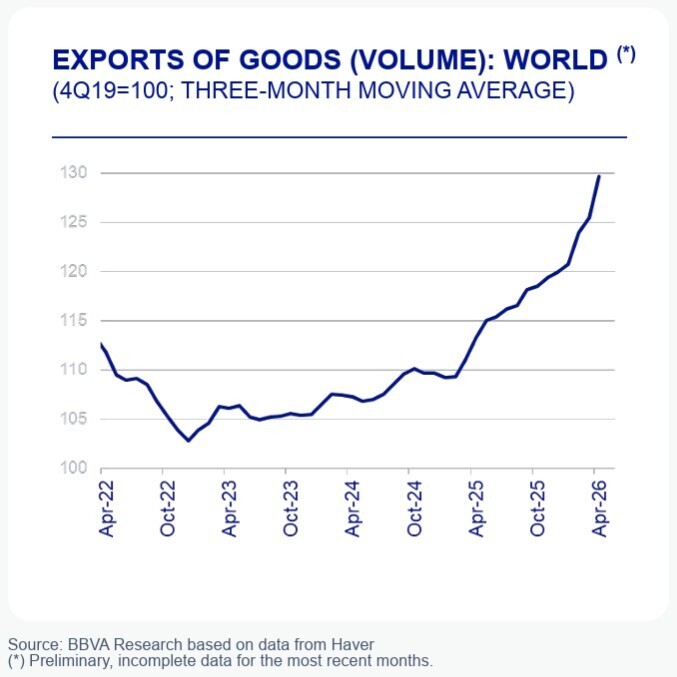
However, Maersk’s updated full-year market assessment highlights that this compounding mix of frontloaded demand across key East-West corridors has triggered a capacity crunch. This is pushing up spot rates and driving a projected 14.3% year-over-year surge in June import volumes.
The artificial spike could signal a major correction for primary trade lanes, warn the shipping executives and industry analysts cited in the reports. Given that the current volume expansion is being partly driven by defensive acceleration to outrun trade barriers and geopolitical friction, the market is to some extent borrowing growth from future quarters – setting the stage for a potential deceleration once the frontloading window closes.
How the Forum helps leaders make sense of regional, trade and geopolitical shifts
2. Auto restructuring signals further shifts in Europe's supply chains
Volkswagen's recent announcement that it's considering up to 100,000 job cuts and four factory closures has added to signs of mounting pressure across Europe's automotive sector. The proposed overhaul comes as European carmakers contend with weaker demand, rising competition from Chinese manufacturers and an increasingly complex trade environment.
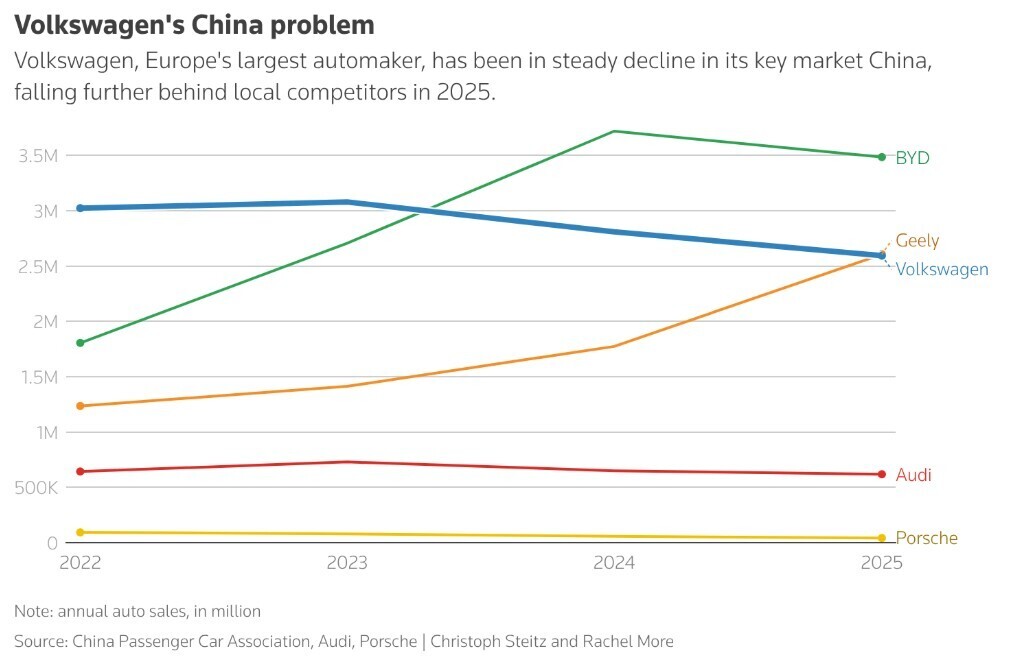
Chinese brands including BYD, Chery and Leapmotor have expanded their presence in Europe, with their combined market share roughly doubling through May from a year earlier, according to industry data cited by Reuters.
At the same time, the European Union has unveiled tighter steel import quotas aimed at protecting domestic producers from global overcapacity, highlighting growing concerns in Brussels about industrial competitiveness and supply security.
Looking ahead, analysts say these shifts are likely to change how European carmakers build and trade, keeping more value in the region and broadening partnerships – pointing towards leaner workforces, closer collaboration and stricter local‑content rules in the search for competitiveness.
3. News in brief: Trade stories from around the world
The US has lifted export restrictions on Anthropic's latest AI models after the company agreed to strengthen safeguards against cybersecurity risks. The episode marked one of the first instances of US export controls being applied directly to a frontier AI developer, highlighting how trade policy is increasingly extending beyond physical technologies to advanced digital capabilities. The administration is also reportedly discussing "trusted partner" arrangements for AI access with allies, signalling a possible new frontier in technology trade governance.
The European Commission has proposed a new Tech Sovereignty package aimed at strengthening the bloc's technological sovereignty and reducing strategic dependencies in critical digital technologies. The proposals include a new Chips Act 2.0 to expand Europe's semiconductor capabilities, a Cloud and AI Development Act to strengthen trusted cloud infrastructure for sensitive workloads, and measures to accelerate data-centre capacity and promote open-source software. The package will now be negotiated by the European Parliament and EU member states.
Global demand for critical minerals is set to surge, with lithium demand projected to jump 353% by 2040, according to UN Trade and Development (UNCTAD). The agency said governments are increasingly intervening to secure supplies, with nearly 100 new export measures introduced since 2020 and dozens of new international partnerships reshaping supply chains. Without greater cooperation, critical minerals trade risks fragmenting into competing blocs, UNCTAD warned.
The US has declined to extend the Canada-United States-Mexico Agreement, triggering negotiations on amendments to the North American trade pact. The move, announced by US Trade Representative Jamieson Greer, does not terminate the agreement, which remains in force until 2036, but opens the door to potentially contentious talks with Canada and Mexico over its future terms.
The US Department of Agriculture has announced $500 million in funding to boost domestic fertilizer production, aiming to expand existing plants and build new capacity as global supply disruptions push up prices. The move follows a spike in costs linked to the Iran conflict and tighter global supply flows, putting extra pressure on US farmers already facing elevated input costs and weaker grain prices.
Have you read?
4. More on trade on Forum Stories
Supply chains are no longer judged solely on cost and efficiency but increasingly on their ability to remain financially “investible” under sustained disruption, according to new analysis. This article argues that geopolitical tension, climate shocks and cyber risks are forcing investors, lenders and insurers to reassess exposure, with firms increasingly evaluated on whether their supply chains can preserve value as well as maintain operations.
Green trade is already a multi‑trillion‑dollar growth engine and expected to be worth about $7 trillion by 2030, as China embeds sustainability more deeply across its value chains and trade corridors, write Forum experts Pengyu Li and Yiran He. This shift is making carbon tracking, low‑carbon logistics and rising clean‑tech demand central to how goods move as well as how deals are struck in the global economy.
Is global fragmentation now a permanent feature of the world economy? The recent wave of tariffs and investment restrictions is reshaping global trade and financial flows. These policies are already weighing on growth and lifting inflation pressures, while also creating domestic winners that then make the policies politically difficult to reverse. Researchers warn that this self-reinforcing dynamic could entrench fragmentation across the global economy, with further escalation posing significantly larger costs to output and wages worldwide.
License and Republishing
World Economic Forum articles may be republished in accordance with the Creative Commons Attribution-NonCommercial-NoDerivatives 4.0 International Public License, and in accordance with our Terms of Use.
The views expressed in this article are those of the author alone and not the World Economic Forum.

Forum Stories newsletter
Bringing you weekly curated insights and analysis on the global issues that matter.
More on Trade and InvestmentSee all

E. Richard Gold
September 30, 2026