Graham Allison: US-China competition is the ‘fiercest Thucydian rivalry of all time’
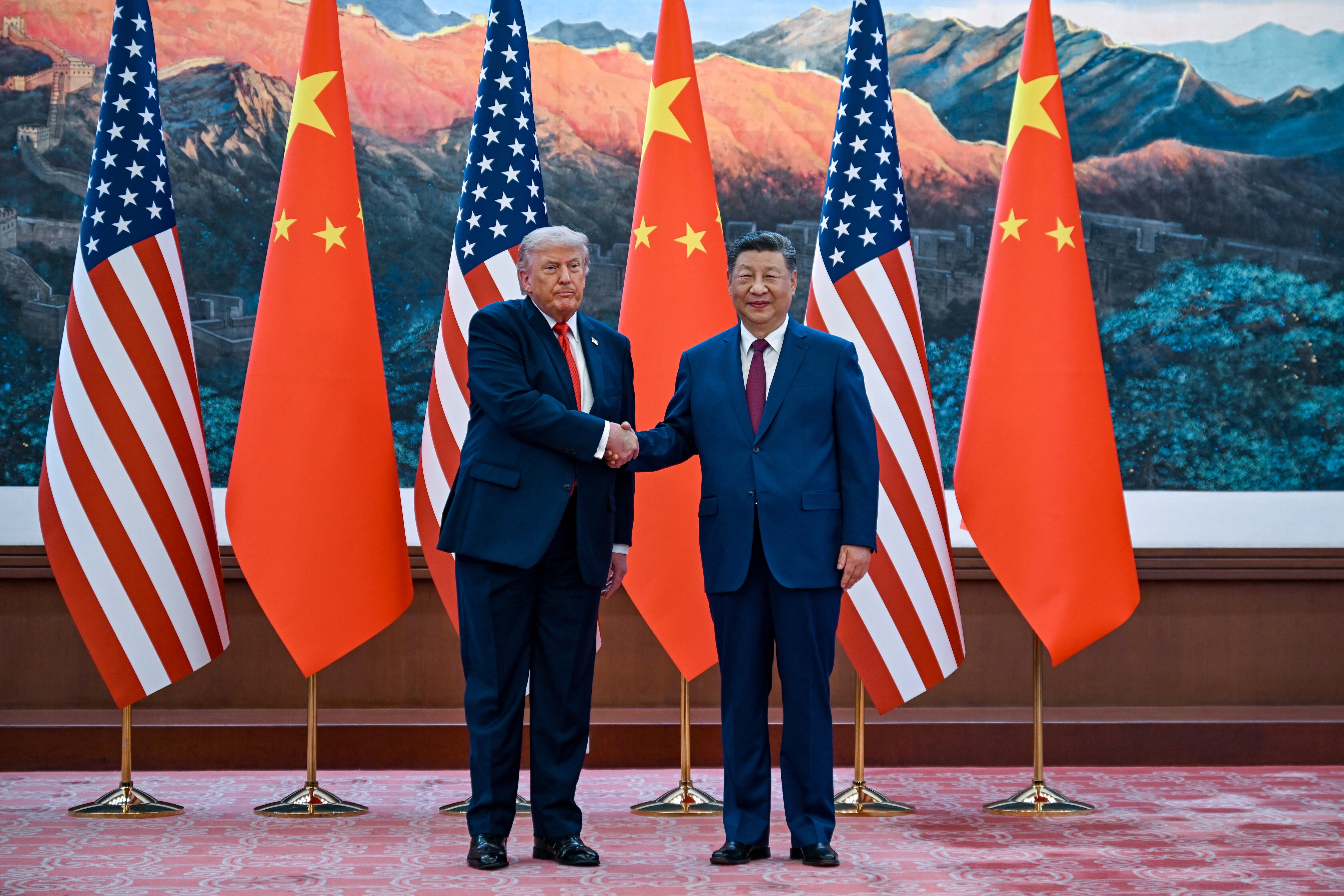
At Summer Davos in Dalian, China, Allison examined US-China relations, calling the Thucydides Trap a “clear-eyed diagnosis of the problem.” Image: REUTERS
- In the 2010s, Harvard Professor Graham Allison popularized the so-called Thucydides Trap.
- The political theory refers to the dangers that arise when an ascendant power challenges an established one.
- At a World Economic Forum event in Dalian, China, Allison examined US-China relations, calling the Thucydides Trap a “clear-eyed diagnosis of the problem.”
Last month, during the highly anticipated meeting in Beijing between Chinese President Xi Jinping and US President Donald Trump, Xi invoked a political theory that refers to the dangers that arise when an ascendant power challenges an established one: the Thucydides Trap.
“Can China and the United States overcome the Thucydides trap and create a new paradigm of major-country relations?” Xi asked at the bilateral summit.
The Thucydides Trap, named after the ancient Greek historian Thucydides who chronicled the power struggle and subsequent war between Sparta and Athens, was popularized by Harvard University Professor Graham Allison in the 2010s. Since then, the concept has become a common framework for analyzing US-China competition, with observers invoking it to warn of the risk of conflict between the two powers.
This week, at the World Economic Forum’s Annual Meeting of the New Champions in Dalian, China, Allison further examined US-China relations and the Thucydides Trap, calling the theory a “clear-eyed diagnosis of the problem.”
“This is the fiercest Thucydian rivalry of all times,” Allison said, noting that “China is a meteoric rising power” that is on track to overtake the United States, a “colossal ruling power.”
“When a rapidly rising power seriously threatens to displace a major ruling power, that structural dynamic creates conditions that magnify misperceptions and multiply miscalculations,” he explained. These dynamics “produce conditions in which incidents or accidents that would otherwise be manageable trigger a vicious spiral that ends where nobody wants: in war.”

Allison argued that while the dynamics of the Thucydides Trap define the vast majority of the US-China relationship, stability and cooperation could still prevail given the interconnectedness – and nuclear deterrence – of the two countries.
Last year, despite significant tensions over tariffs and trade restrictions, US goods trade with China totaled an estimated $414.7 billion. China remains the United States' third-largest trading partner, behind Mexico and Canada.
“The two nations are so inextricably entangled that each requires a level of cooperation with the other to ensure its own survival,” Allison said.
Nonetheless, Allison noted that while national leaders retain agency, history points toward conflict. Over the past 500 years, he said, 12 of the 16 great-power transitions identified by the Thucydides Trap ended in war.
“History as usual would be a catastrophic conflict,” he said.
Allison explained that Chinese and US leaders will need to grapple with the contradiction of competing in a great-power rivalry while also maintaining a mutually beneficial cooperative relationship.
“Can two leaders do that with the complex governments that they have and then the complex societies?” Allison asked. “Over the long run, Thucydides would say good luck.”
Don't miss any update on this topic
Create a free account and access your personalized content collection with our latest publications and analyses.
License and Republishing
World Economic Forum articles may be republished in accordance with the Creative Commons Attribution-NonCommercial-NoDerivatives 4.0 International Public License, and in accordance with our Terms of Use.
The views expressed in this article are those of the author alone and not the World Economic Forum.
Related topics:

Forum Stories newsletter
Bringing you weekly curated insights and analysis on the global issues that matter.
More on Geo-Economics and PoliticsSee all

Manar Alohaly
September 23, 2026


