Iran war: What's next for the Middle East?
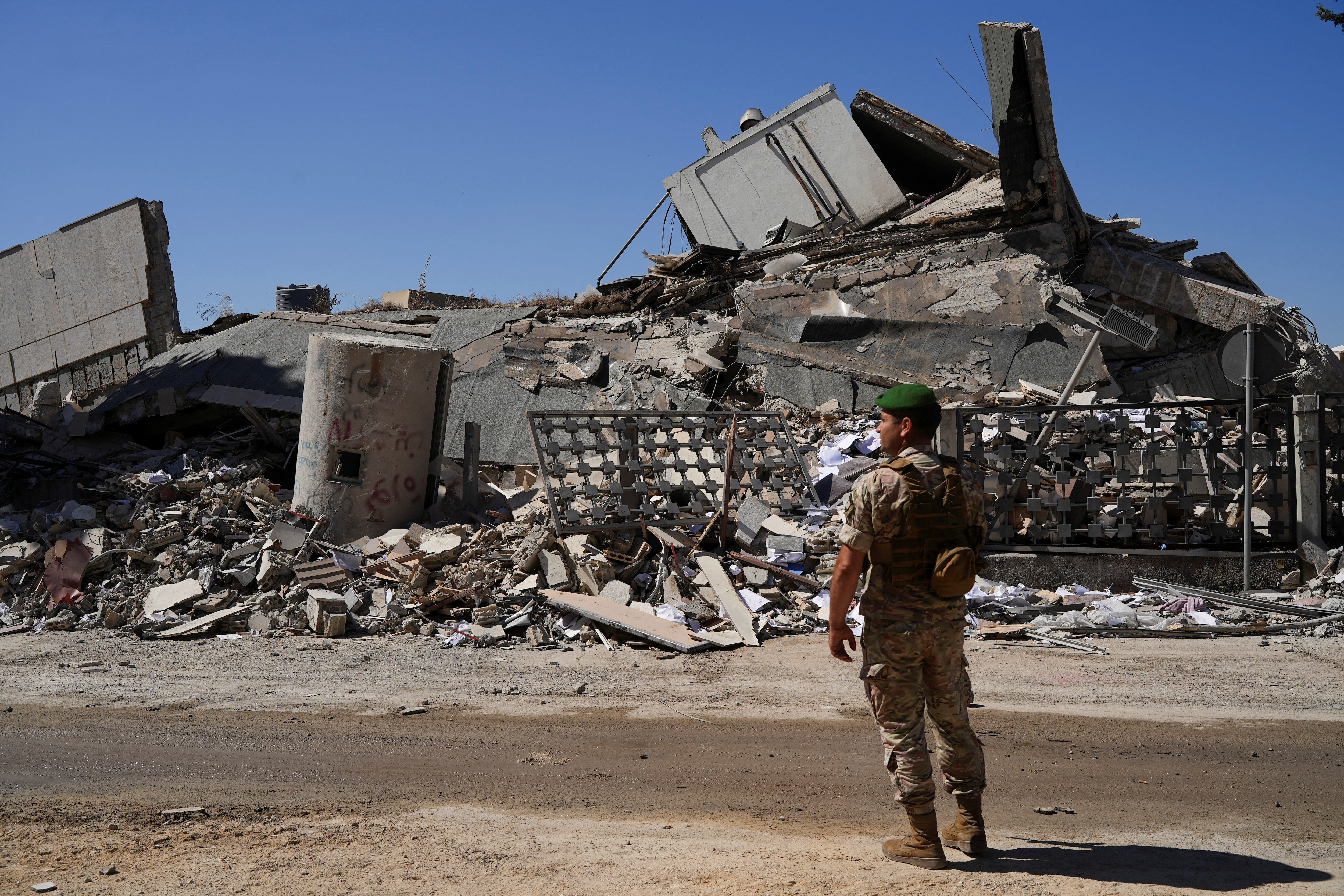
Summer Davos participants examined the future of the Middle East and what the Iran war means for the world. Image: REUTERS
- With peace talks ongoing, the Iran war was top of mind at the Annual Meeting of the New Champions in Dalian, China.
- Participants examined how the conflict has transformed the Middle East and the global economy.
- "We have made progress," one expert said. "But instability should be in your minds over the next few months."
Almost four months after the Iran war began, ceasefires and peace talks have come and gone. But as of now, a memorandum of understanding has been signed on ending the conflict and ships are passing through the Strait of Hormuz.
Yet while both sides say they are aiming to reach a definitive deal to end the conflict by mid-August, significant disagreements remain over issues such as nuclear inspections and frozen assets.
Whatever happens in the weeks ahead, the fallout from the war and wider regional conflict will continue to reverberate across the global economy. Considerations about energy security, for instance, have already intensified, with economies across Asia shaken by their reliance on Middle East oil and China stepping in both to fill fuel shortfalls and to export rising amounts of renewable energy technology.
This week, war and stability in the Middle East were major topics of discussion at the World Economic Forum’s Annual Meeting of the New Champions in Dalian, China, with speakers focusing on the future of the region and what it might mean for the rest of the world.
How might Iran war peace talks play out?
The complexity of the peace talks means they are likely to last longer than the 60-day timeline noted in the memorandum of understanding, said Sanam Vakil, Director of the Middle East and North Africa at Chatham House.
“We have made progress, this is positive, but instability should be in your minds over the next few months,” she said. “I imagine more inflammatory statements, more threats to open and close the Strait of Hormuz, maybe even more tit-for-tat strikes – and at the same time diplomacy will tick along. Hopefully we’ll get to an arrangement, but there are no guarantees.”
For Mahmood Sariolghalam, an Affiliate at the Middle East Institute, there have been fundamental changes in the approach of the Iranian government since the war began in late February.
“There is a very small circle of decision makers now and they have come to the understanding that their survival in the near to medium term hinges on economics, not so much geopolitics – they're far more economically oriented than in the past,” he said. “The economic damage [of the war] – infrastructure damage of $200-$250 billion, minus 10% industrial output, 5 million people have lost their jobs – I think that's driving the paradigm to move to a compromise.”
Meanwhile, Jason Bordoff, Founding Director of the Columbia University Center on Global Energy Policy, sees clear economic gains for Iran from parts of the peace deal that are emerging.
“It's a really good deal when you compare it to where Iran was before. Waivers have already been issued for sale of oil, oil products and petrochemicals,” he said, noting that Iran did not have to “give up much of anything other than a promise not to develop a nuclear weapon.”
Yet the nuclear question remains a key issue that could prevent a deal, according to Sariolghalam: “The Strait of Hormuz is a short-term source of deterrence for Iran. It cannot serve even as a medium-term source of deterrence. The real deterrence is its nuclear power.”
Other potential obstacles include Iran’s “calculus” around the US midterm elections in November and Israel’s legislative elections in October, Sariolghalam suggested.
For Vakil, lessons must be learned from the 2015 nuclear talks. “Do not give up on a second or thirds phase of negotiations,” she said. “What else needs to be agreed upon to try and resolve the bigger portfolio of regional conflicts? This requires a discussion on noninterference. This requires a broader discussion on regional security.”
Remaking the Middle East
The impacts of the Strait of Hormuz closure have triggered a mindset shift around the role of the Middle East in the world economy, several speakers said. However, rather than causing businesses to turn away from the region, it is instead prompting them to consider investing more to diversify supply routes and de-risk logistics.
“The Strait of Hormuz transports 20% of world energy, so looking for alternative routes needs to happen sooner rather than later,” said Lina Noureddin, President and Founder of Lamar Holding, which develops energy projects in Saudi Arabia.
“There will be more investment in ports, in logistics hubs, transport, land corridors. A lot of opportunities are coming ... Chinese companies are coming more, deploying money in the region and bringing their technologies,” she added.
The next 10 years for the Middle East will be pivotal.
”Khaled Sharbatly, CEO of Saudi Arabian renewable energy and smart infrastructure company Desert Technologies, says he has seen “a big shift towards the western region of Saudi Arabia”, with Jeddah Islamic Port and King Abdullah Economic City moving vast numbers of containers to “really carry the rest of the world during this war”.
He added that more international companies are now seeking to invest in logistics in the Middle East, especially in Saudi Arabia. “The next 10 years for the Middle East will be pivotal, shifting the Middle East from a trade corridor to an industrial and an added-value region.”
For Sanam Vakil of Chatham House, “building more inclusive regional corridors would be a way of creating greater buy-in and shared prosperity, which ultimately is what is needed.”
New generation, new alliances
Around half the population of the Middle East and North Africa is aged under 24. For Mazen S. Darwazeh, Executive Vice-Chairman and Deputy Chief Executive Officer of Hikma Pharmaceuticals, this represents a different generation with different expectations.
“This generation will not accept the way that things were done in the past, so things are going to change. It will be quite involved in developing the Middle East and North Africa,” he said. “Unfortunately, wars create opportunities. I believe there will be many opportunities for local companies to pop up. [The war] has destroyed a big part of the infrastructure that was built during the last 20 years, so now we have to pay again to build that infrastructure. The bill is going to be big, and when there's a big bill, there's a big opportunity. Who is going to grab that opportunity?”
The answer may lie in new partnerships, according to Darwazeh, who says the war has changed approaches to alliances in the region.
“This war has taught people in the Arab world that they should depend on themselves,” he said. “We're seeing new regional alliances between countries in the Arab world because they saw what happened. My enemy today could be my friend tomorrow.”
This is not a region only defined by conflict.
”Karen E. Young, Senior Research Scholar at Columbia University’s Center on Global Energy Policy agreed, saying that the war has caused a “rupture in terms of the way regional countries and actors have dealt with each other.”
Sanam Vakil of Chatham House added that while the war has set back relations between Iran and the Gulf states, bilateral and multilateral groupings are emerging to try and restore relationships.
There is also “hope in the region that China will play a more overt role in mediating or balancing adversarial relationships” after its help with the Iran-Saudi dialogue in 2023, she said. This engagement, she added, can not be taken for granted as its investments in the region are more focused on economic security than regional or political security.
“This is not a region only defined by conflict,” she concluded. “There is a lot of ambition, a lot of desire for growth and stabilization.”
License and Republishing
World Economic Forum articles may be republished in accordance with the Creative Commons Attribution-NonCommercial-NoDerivatives 4.0 International Public License, and in accordance with our Terms of Use.
The views expressed in this article are those of the author alone and not the World Economic Forum.
Related topics:

Forum Stories newsletter
Bringing you weekly curated insights and analysis on the global issues that matter.
More on Geo-Economics and PoliticsSee all

Manar Alohaly
September 23, 2026


