A new kind of propulsion engine could help space travel and high-speed flight take off
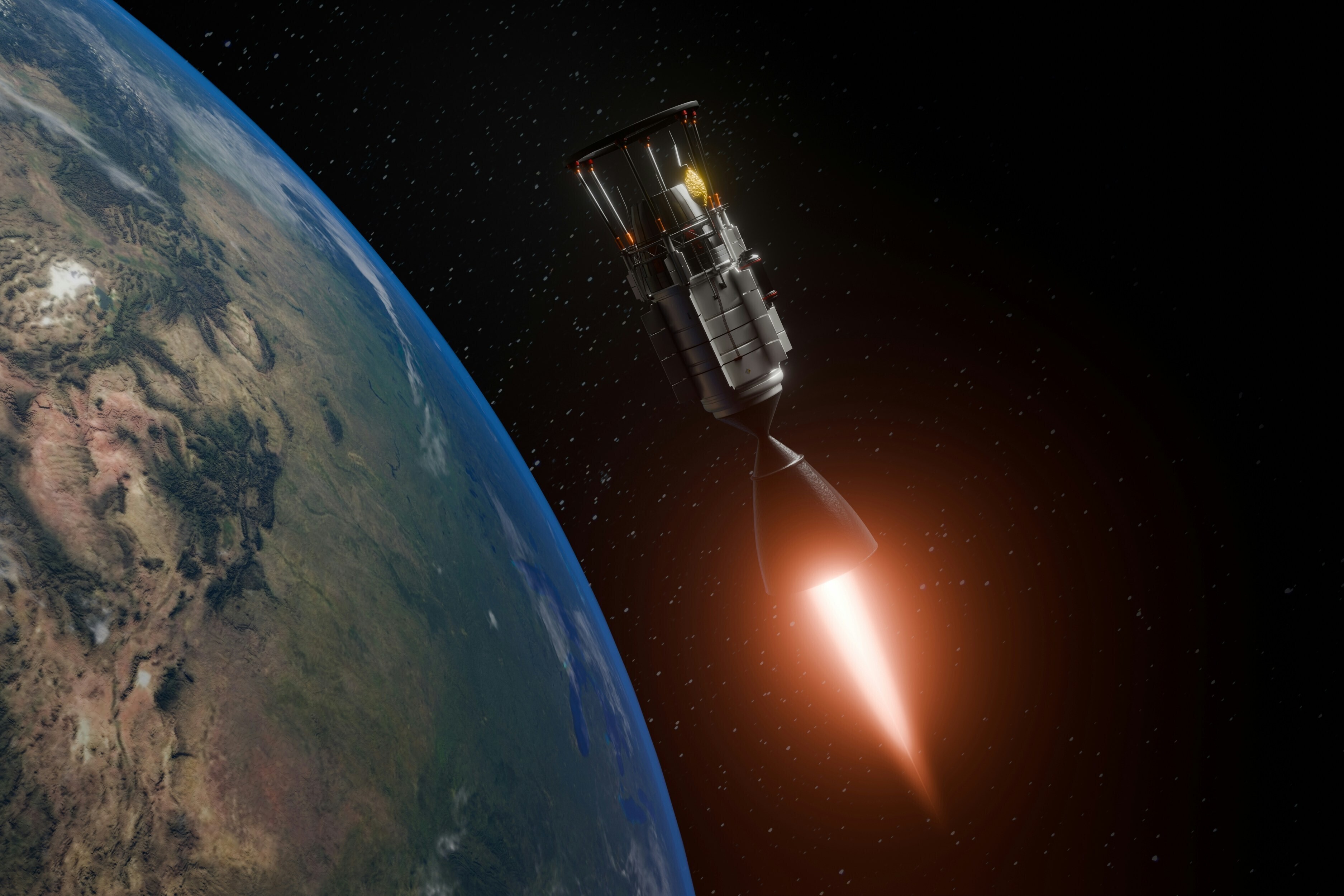
A new kind of propulsion engine could boost high-speed flight and the space economy, with benefits for climate research, disaster recovery and more. Image: Unsplash+ / Hartono Creative Studio
- A new kind of propulsion engine could bring benefits including affordable access to space and high-speed flight.
- If it becomes manufacturable at scale, medical logistics, humanitarian response and other time-critical industries could operate faster.
- How promising ideas can be scaled for impact is a key focus at the World Economic Forum’s Annual Meeting of the New Champions, also known as 'Summer Davos', in China from 23–25 June 2026.
Imagine real-time intelligence on a planet in climate crisis. Disaster response that actually responds. Connectivity reaching every corner of the world, not just where infrastructure exists. Materials and medicines built in conditions impossible on Earth. Organs for transplant reaching recipients across continents in time. Humanitarian and diplomatic response that arrives when it matters. A new economy with new participants, new opportunities, new prosperity, accessible to nations and people who have been priced out of the future.
These futures all depend on one thing: a different kind of propulsion. Whether it’s affordable access to space or high-speed flight, the technology that moves us is the constraint that defines what we can do.
To put a kilogram of anything in space today, you burn an extraordinary amount of fuel. The math is brutal. The more you want to carry, the more fuel you need, and the more fuel you need, the bigger and heavier and more expensive your system becomes.
That exponential relationship is why space remains the province of governments and billion-dollar companies. It’s also why high-speed travel – the ability to cross the world in less than two hours – has remained out of reach for commercial and humanitarian use. It's why the futures we talk about, on Earth and in space, remain out of reach.
Space and aviation leaders understand this intimately. They can see what's possible. They know what needs to happen. But this limitation has felt immovable for decades. What could change if that constraint shifts?
How the aerospace industry works today
Today's aerospace players are running systems that work. Supply chains function based on procurement timelines. There are proven designs, experienced teams and billions in sunk capital. But the organizations that could benefit most from what a new form of propulsion enables – in climate, communications, manufacturing, medical logistics, humanitarian response – are locked out by cost and capability.
The propulsion architecture that runs the current system is fixed. An engine generates X thrust from Y fuel weight. That boundary is immovable and everything flows from it – payload capacity, range, speed, system cost and manufacturability.
The tradeoffs are structural. If you want to carry more, you need exponentially more fuel. If you want to reach farther, you must sacrifice what you can carry. If you want both, you must accept a system so expensive that only the wealthiest can afford it.
Every organization operating in this system is rational. But optimization within a constraint is not the same as asking whether the constraint can shift. Most organizations never actually ask that because they're too busy working out how to do more with what currently exists.
A new approach to propulsion
A fundamentally different approach to propulsion – rotating detonation combustion instead of traditional burn – is now moving from decades of lab work to real-world flight validation.
This technology delivers approximately 15% higher efficiency than legacy systems. It can move four times the payload at comparable cost, reaching farther distances without proportional fuel requirements. And it’s manufacturable at scale.
The significance here isn't just the efficiency, it’s that moving from one architectural approach to another actually works in practice. The propulsion constraint that has shaped what's possible for decades isn't immutable – it can shift, and when it does, the math changes.
Suddenly, in-space manufacturing, lunar infrastructure, high-speed travel and global climate monitoring stop being aspirational and start being achievable. The space economy stops being a vision for governments and starts becoming infrastructure for humanity. High-speed flight stops being a luxury concept and starts being a tool for saving lives.
This development opens up who gets to participate in the future and what humanity can solve when access stops being a barrier.
Fulfilling the promise of propulsion
When propulsion becomes more efficient, nations that have been excluded from the space economy can participate. Researchers can deploy instruments without waiting decades for government programmes. Climate scientists can build urgently needed monitoring systems. Communications operators can reach communities that have always been off the grid. In-space manufacturing can build materials and medicines that Earth’s physics won't allow.
And when high-speed flight becomes manufacturable at scale, medical logistics, humanitarian response and other time-critical industries can operate in hours instead of days. This means that time stops being the variable that determines who lives, who gets connected and who gets resources.
This shift is real, and it's accelerating. Proving the technology works was step one. Building the world it enables is now the main task.
Manufacturing has to scale, supply chains have to form and capital has to flow towards what's possible, not what's familiar. Also, new ideas about what we can build with this new capacity have to catch up to what the technology now enables.
The organizations who see that, and act on it, will define what humanity can build – on Earth and in space.
The Forum is spotlighting how innovation moves from breakthrough to scale to impact ahead of 'Summer Davos' in China, 23–25 June 2026. Follow the latest.
Don't miss any update on this topic
Create a free account and access your personalized content collection with our latest publications and analyses.
License and Republishing
World Economic Forum articles may be republished in accordance with the Creative Commons Attribution-NonCommercial-NoDerivatives 4.0 International Public License, and in accordance with our Terms of Use.
The views expressed in this article are those of the author alone and not the World Economic Forum.
Stay up to date:
Space
Related topics:


Forum Stories newsletter
Bringing you weekly curated insights and analysis on the global issues that matter.
More on Built Environment and InfrastructureSee all

Miroslav Zafirov
October 9, 2026


