Can free trade deals still deliver? 3 takeaways from Switzerland's China negotiations
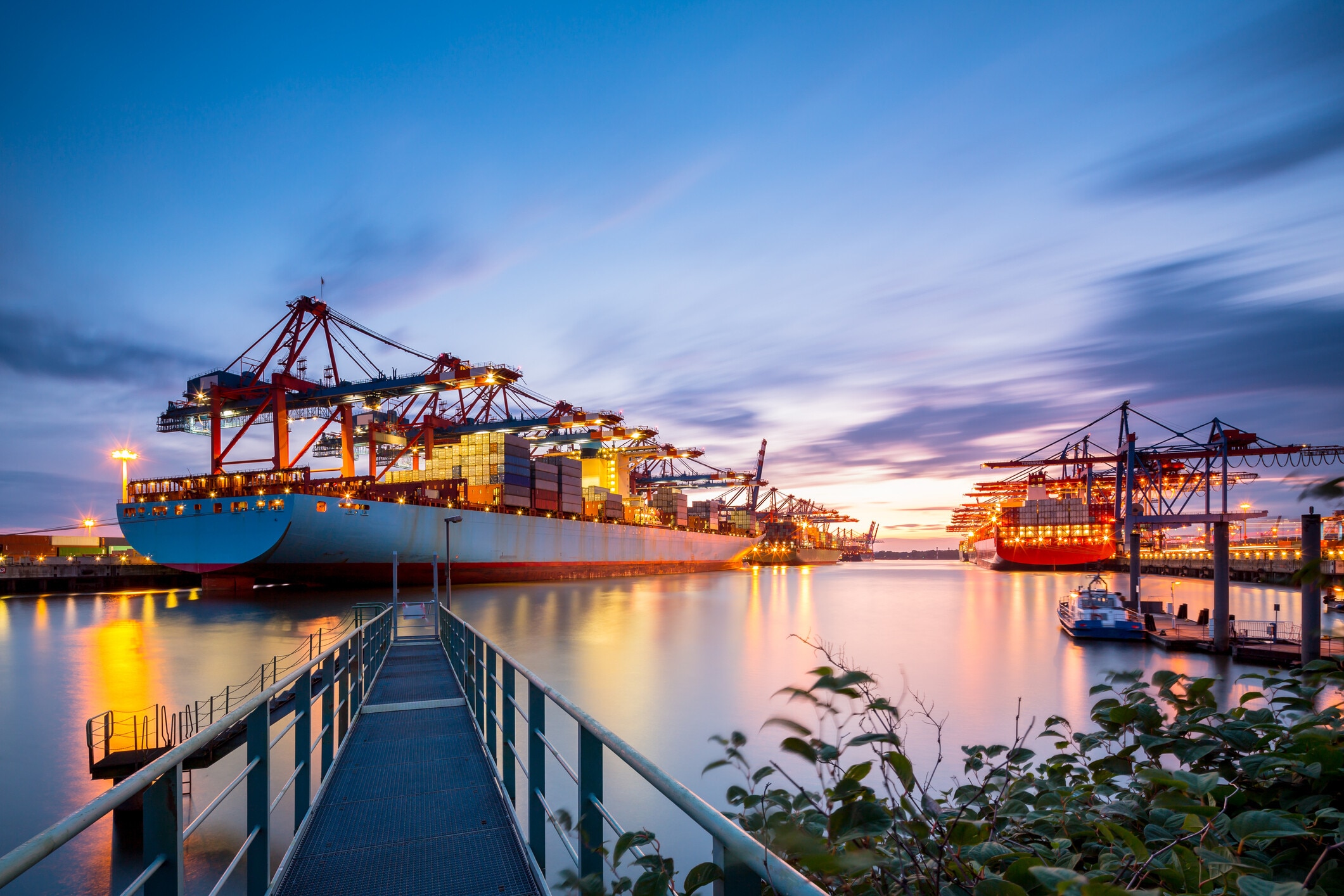
Freighted with expectations … trade deals in the 2020s. Image: Getty Images
- Switzerland's enhancement of its 2014 free trade agreement with China is testing whether economically focused deals can meet expectations regarding technology, security and values.
- Switzerland’s approach to weighing up economic openness with resilience and security could set an example for other economies.
- How promising ideas become scalable impact will be a key focus at the World Economic Forum’s Annual Meeting of the New Champions, also known as 'Summer Davos', in China from 23–25 June.
When Switzerland's free trade agreement (FTA) with China took effect in 2014, the priorities were straightforward: cut tariffs, open markets and grow exports. Upgrading that deal today, however, means grappling with a much more complex set of concerns. Supply chain resilience, technological competition, labour standards and economic security were not major considerations in the original negotiations. The question facing Swiss negotiators – and, indeed, anyone updating a trade deal right now – is whether an instrument designed for the era of globalization can still be effective in an age of geopolitics.
This isn't just a Swiss problem: Trade agreements everywhere are being asked to do more, such as supporting resilience, reinforcing shared values, cutting strategic dependencies and answering to a public that has become wary of globalization. Much of this wish list sits uneasily with the purpose for which FTAs were originally built.
The agreements haven't stopped working. It's just that the expectations attached to them have grown faster than the tools themselves.
A test case
Switzerland is a good place to watch this play out. It has a small, highly globalized economy that depends on open markets and operates in a world shaped by US-China rivalry, Europe's push for economic security, and growing anxiety about depending too much on any one partner.
China now follows the EU (first) and the US (second) as one of Switzerland's three largest trading partners.According to Swiss customs data, bilateral trade reached around CHF 59 billion ($74 billion) in 2023, made up of CHF 40.6 billion in Swiss exports and CHF 18.4 billion in imports. These figures may appear impressive on paper, but they do not necessarily reflect deep economic integration. A significant share of this is gold and precious metals.
Therefore, the upgrade is not only about bilateral trade. It provides a useful insight into how a smaller, trade-dependent economy adapts its strategy when economics and geopolitics become inseparable.
The fourth round of enhancement talks took place in Switzerland in March 2026, covering goods, services, investment, rules of origin, trade facilitation, e-commerce, environment and economic cooperation. Beijing has framed its goals in similar terms to Bern's, with Foreign Minister Wang Yi describing the talks as an effort to "optimize" the agreement and extend zero-tariff treatment to more products, alongside a push for greater Swiss investment into China.
What trade agreements still do well
Despite the scepticism, free trade agreements still fulfil their core function. They cut tariffs and non-tariff barriers, opening up markets. They provide businesses with enough predictability to make long-term investment decisions. They also create a framework for handling regulatory differences and disputes before they escalate.
None of that has lost its value. In fact, it matters more now than ever: Markets have become more volatile, and the recent escalation in tariffs has demonstrated how quickly the situation can change for exporters. For a trade-dependent economy, stable market access and predictable rules are still extremely valuable. This is one of the reasons why governments continue to negotiate these deals, even as the politics surrounding trade become more complicated.
Where they fall short
Non-tariff barriers were always part of the FTA toolkit, and labour and environmental differences sit squarely within that category. The issue isn't that these provisions don't belong in trade agreements. It's that including a clause in a treaty doesn't automatically change behaviour on the ground unless it comes with real monitoring and enforcement.
The original Switzerland-China deal illustrates this well. Alongside the FTA, the two countries signed a separate labour and employment agreement intended to encourage the implementation of existing labour laws. While the provisions existed, critics say they were never equipped with the kind of monitoring or enforcement mechanisms now expected of modern trade agreements. It's that nobody built the machinery to make it count.
A similar pattern emerges with larger geopolitical objectives. A trade agreement can reduce tariffs, but it cannot resolve strategic rivalries. It can streamline customs procedures, but it cannot make a country's technology supply chain less vulnerable. It can strengthen commercial ties, but it cannot replace a foreign policy or a security strategy. Trade deals are increasingly being assessed against objectives they were never designed to carry alone.
Three things to watch
As talks between Switzerland and China continue, three questions will likely determine how this agreement is judged.
The first is straightforward economics: Does the revised deal actually deliver for Swiss businesses and workers? FTAs have the strongest track record in this area, and the clearest case for existing at all.
The second is resilience. Can Switzerland strengthen its economic ties with China without creating new vulnerabilities? Every government engaged in de-risking is grappling with the same tension between maintaining openness and ensuring safety.
The third is legitimacy at home. In a direct democracy, a trade deal can't just clear an economic bar anymore. Voters expect it to hold up on sustainability, labour rights and human rights too. Switzerland has only once put an FTA to a popular vote, when the 2021 Indonesia agreement narrowly passed after concerns over palm oil imports; a referendum is triggered only if opponents gather 50,000 signatures after parliamentary approval, so it isn't automatic. But it remains a live possibility for any deal seen as politically contentious. Whatever Switzerland and China agree on will need to survive that scrutiny, not just a cost-benefit analysis.
Beyond Switzerland
The specifics here are Swiss, but the tension isn't. Governments from Europe to Asia face the same trade-off between openness and security.
When leaders meet in Dalian for the Annual Meeting of the New Champions to talk innovation and growth, trade will inevitably come up. The real question isn't whether trade agreements still matter, it's whether anyone negotiating them is conscious about what they can and can't fix. Free trade agreements still generate growth and certainty, but they were never going to substitute for foreign policy, security strategy or industrial policy. Switzerland's upgrade of the trade agreement with China is a reminder that the choice isn't between openness and resilience. It's figuring out how to hold onto both.
Don't miss any update on this topic
Create a free account and access your personalized content collection with our latest publications and analyses.
License and Republishing
World Economic Forum articles may be republished in accordance with the Creative Commons Attribution-NonCommercial-NoDerivatives 4.0 International Public License, and in accordance with our Terms of Use.
The views expressed in this article are those of the author alone and not the World Economic Forum.
Stay up to date:
Trade and Investment


Forum Stories newsletter
Bringing you weekly curated insights and analysis on the global issues that matter.