What is the ‘missing middle’ and why is it an untapped opportunity for inclusive longevity?
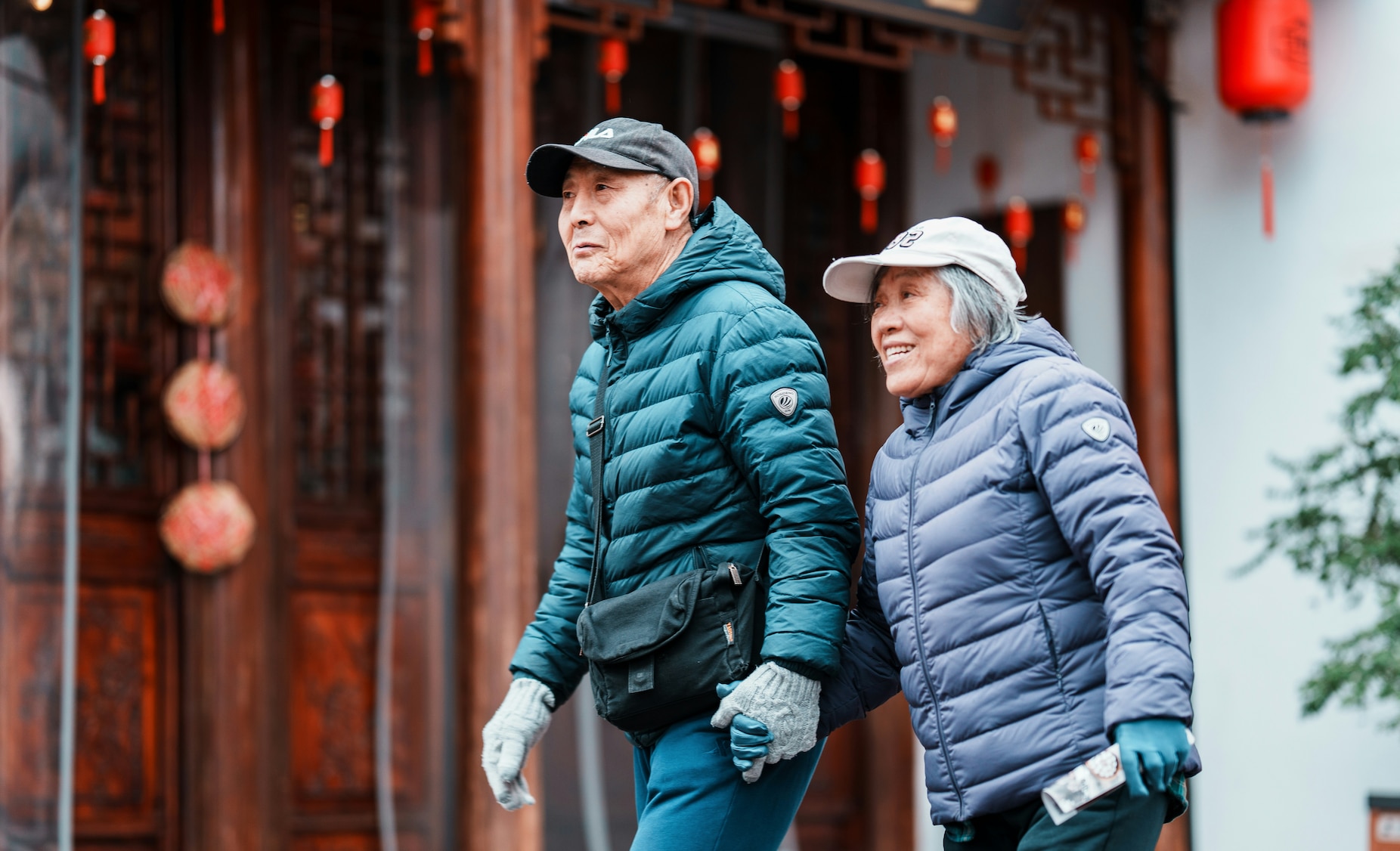
Ageing societies must help older adults find purpose, connection and contribution in the years after work. Image: Unsplash/ZhengYijun
- Many Asian countries are ageing societies in which people are growing old faster, but at a fraction of the income levels of European populations.
- This means helping the "missing middle" – older adults, aged roughly 55 to 70, who are too healthy for the care system and too old for working life.
- Scaling promising ideas for impact is a key focus at the World Economic Forum’s Annual Meeting of the New Champions, also known as 'Summer Davos', in China from 23–25 June 2026.
When we talk about ageing societies, we usually tell one of two stories. The first is a story of crisis: hospital beds, pension deficits and dependency ratios. The second is a story of luxury: premium retirement villages and longevity clinics for the wealthy few.
Both stories are real, but between the two, there’s a third story – one that almost no one is talking about and that affects a larger group of people. I call these people the missing middle.
These are older adults, aged roughly 55 to 70, who are too healthy for the care system and too old for the systems built around working life. They have finished full-time careers but are decades away from frailty. They have some money in their pockets, smartphones in their hands and 20 to 30 active years ahead of them. But they often lack a clear pathway to purpose, connection and contribution in the years after work.
In my country, Thailand, the numbers make this story impossible to ignore. More than 20% of Thais are now over 60, and according to the National Statistical Office, and nearly six in ten of them are in their sixties — the "young old". That's roughly 8 million people in Thailand alone. Across Asia and the Pacific, the Asian Development Bank projects the population aged 60 and over will more than double, from 606 million in 2020 to 1.3 billion, by 2050.
Much of Asia is growing old before it grows rich. Populations are ageing at several times the speed of Europe at a fraction of the income levels. Many Asian nations cannot afford to copy the institutional care models of wealthier nations, but the encouraging news is that they do not need to.
From managing decline to engineering vitality
For eight years, I have run a social enterprise that serves this missing middle, and our community has taught me an unexpected lesson. When we started, we assumed older adults needed help, but what they actually wanted was to be useful. They wanted to learn, teach, volunteer, earn and belong. One of our members put it best when they told me that retirement is not an ending, it’s a new start.
This reframing matters because of how ageing actually unfolds. A person typically moves through three phases: active, home-bound and bed-bound. The aim for people, families and public budgets is not extending life, but compressing the dependent phases by stretching the active one. The World Health Organization, as part of its Decade of Healthy Ageing initiative, describes this as "functional ability that enables wellbeing in older age". The goal is not to manage decline, but to engineer vitality.
Across Asia, there is strong evidence that this approach works. In Japan, community "salons" — simple, volunteer-run gathering places for older adults — have been associated with roughly half the incidence of new long-term care needs and a one-third reduction in dementia risk among participants. Vietnam has built thousands of Intergenerational Self-Help Clubs that combine social connection with livelihoods. Singapore is investing in Active Ageing Centres in every neighbourhood. China, which is home to the world's largest older population, has pivoted its national strategy toward home- and community-based care.
The direction of travel is to keep people connected, contributing and at home.
The missing layer of ageing infrastructure
Ageing societies are building two layers of infrastructure. There is a physical layer, which includes age-friendly homes and cities, and a clinical layer, which covers integrated care and remote health monitoring.
Both are necessary, but neither answers the question of what a person wakes up for? Answering this determines whether longer lives are a blessing or a burden.
This is where the third layer — the activation layer — comes in. It provides daily purpose, learning, social connection and opportunities to contribute and earn. It is the difference between housing an older person and encouraging them to remain active.
Unlike hospitals or care homes, this layer is remarkably affordable to build, because the tools to keep people connected already exist. In Thailand, 84% of people over 60 have access to a smartphone. Since most seniors in emerging Asia have only primary education, smartphones can support services that are voice-first, vernacular and built on trust earned within the community.
Further, China's "silver economy" is already estimated to be valued in the trillions of renminbi and growing fast, driven by the active young-old. The ADB frames ageing well around four dimensions — health, productive work, economic security and social engagement — and each one is an invitation for entrepreneurs, not just policymakers.
Innovating on ageing – at scale and inclusively
No single organization can serve the hundreds of millions of people entering this new stage of life. And while the missing middle can often pay for a service, less well-off seniors with deeper needs may not be able to. Inclusive longevity means designing models in which public budgets, private capital and community organizations each carry part of the load.
Humanity is being handed a gift of a second life of 20 or 30 healthy years after the age of 60. Today that stage has no playbook, no infrastructure and very little imagination invested in it. The countries that build the activation layer affordably, inclusively and at scale will turn ageing societies from a costly concern into a renewed source of wisdom, workforce and demand.
The missing middle is not a gap in the market. It is the market. More than that, it is our parents — and soon, all of us. The most hopeful innovation of this decade may simply be building a world in which growing old means starting something new.
The Forum is spotlighting how innovation moves from breakthrough to scale to impact ahead of 'Summer Davos' in China, 23–25 June 2026. Follow the latest.
Don't miss any update on this topic
Create a free account and access your personalized content collection with our latest publications and analyses.
License and Republishing
World Economic Forum articles may be republished in accordance with the Creative Commons Attribution-NonCommercial-NoDerivatives 4.0 International Public License, and in accordance with our Terms of Use.
The views expressed in this article are those of the author alone and not the World Economic Forum.
Stay up to date:
Demographic Disruptions
Related topics:


Forum Stories newsletter
Bringing you weekly curated insights and analysis on the global issues that matter.
More on Social InnovationSee all

Lissi Qian and Enkhuun Byambadorj
August 12, 2026


