This global round-up brings you health stories from the past month.
Top health news: WHO declares Ebola emergency in DRC and Uganda; AMR rising as climate changes, study finds; Europe’s aid cuts under scrutiny.
1. Ebola outbreak declared health emergency in DRC and Uganda
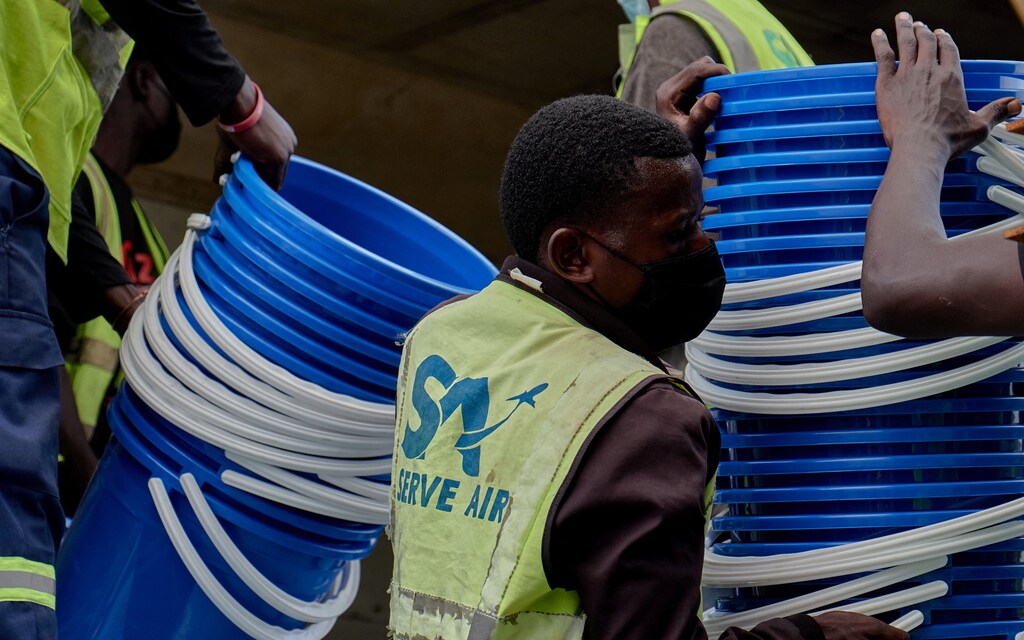
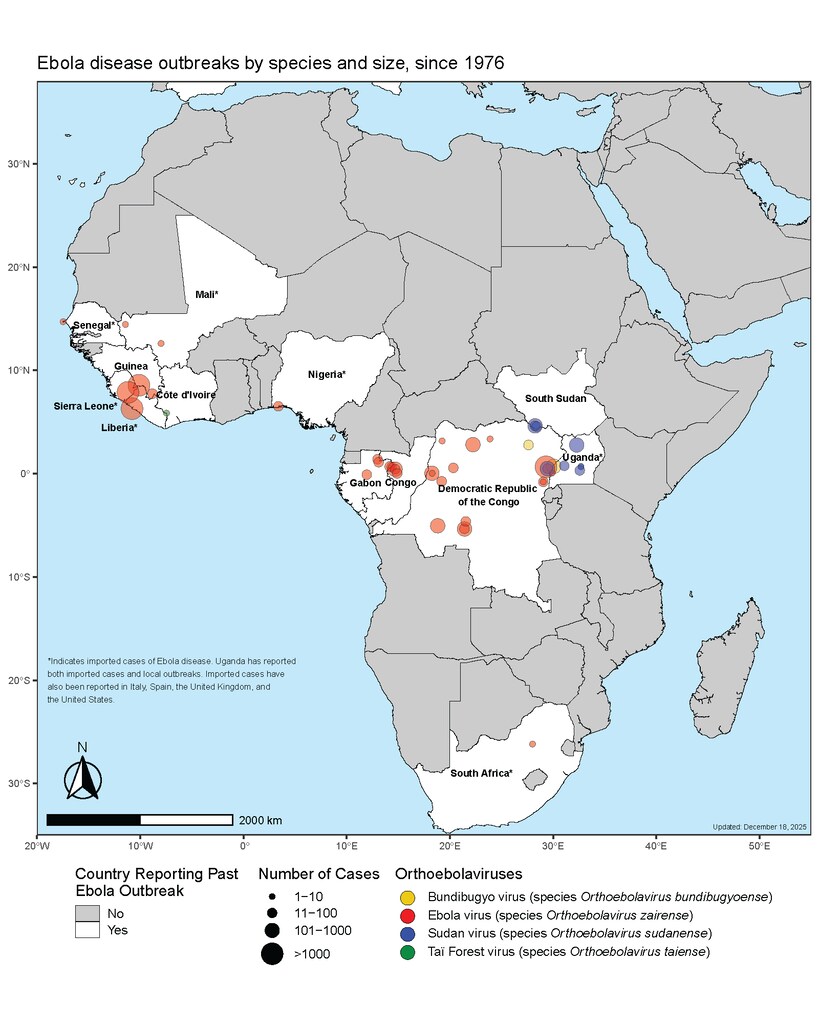
The Ebola virus has once again triggered an outbreak in the Democratic Republic of the Congo (DRC) and Uganda, renewing concerns over regional health security and the risk of wider international spread.
The World Health Organization (WHO) declared the outbreak a public health emergency of international concern on 17 May, citing the Bundibugyo virus strain for which there is currently no vaccine. The designation has affected response coordination, including treatment, containment efforts and health reporting, according to the WHO.
Official figures of 906 suspected cases in the DRC on 29 May have since been revised down to 321, with the WHO also confirming 48 deaths in the country. In Uganda, there have been nine WHO-confirmed cases and one death so far, Reuters reports, with Uganda's health ministry subsequently confirming six more cases.
Three Ebola vaccines are being fast-tracked, backed by more than $60 million in funding from the Coalition for Epidemic Preparedness Innovations (CEPI) and partners, according to the British Medical Journal. However, scientists have warned it could still take up to nine months before they are fully ready for clinical trials on the ground in Africa.
Meanwhile, the European Union has allocated $17.4 million in humanitarian funding to support Ebola response and preparedness efforts in the DRC and Uganda. This includes $5.8 million earmarked for the WHO, alongside additional deliveries of emergency medical supplies and equipment.
Cases remain confined to the Democratic Republic of the Congo and Uganda at the time of writing, with no confirmed spread beyond the two countries. The possibility of cross-border transmission has raised wider international concern. A World Cup warm-up match involving the DRC was cancelled in Spain on 3 June over Ebola-related health fears.
2. Climate change accelerating global antibiotic resistance, study finds
While the overuse of antibiotics is the primary cause of drug-resistant 'superbugs', a major new study in The Lancet Planetary Health reveals that climate change is actively accelerating this global health threat.
Researchers analyzed nearly 500,000 Salmonella bacterial genomes across 139 countries over an eight-decade period. Using Salmonella – a leading cause of severe food poisoning – as a model, the study shows that rising temperatures and erratic weather are compounding antimicrobial resistance (AMR), making dangerous bacteria much harder to kill.
Key takeaways
The climate link: Shifting weather patterns are independently tied to a 10% global increase in antibiotic resistance genes (ARGs) – the DNA that allows bacteria to defeat medicine – affecting 82% of the countries studied.
A rising threat: Due to both antibiotic overuse and environmental changes, the global presence of ARGs has surged by 38% since 2010, with the hardest-hit areas in the Middle East, North Africa and South Asia.
Weather as catalyst: High temperatures cause bacteria to mutate faster and directly swap resistance genes with one another. Additionally, floods flush superbugs from sewers into the food chain, while droughts concentrate antibiotic pollution in shrinking water sources.
A roadmap to 2100: If high emissions continue, the global AMR crisis will escalate unchecked. However, combining global climate action (meeting Paris Agreement targets) with a 25% reduction in antibiotic use could cut projected resistance by 24%.
Ultimately, this research shows that combating AMR is no longer just a challenge for doctors. Because a warming planet directly strengthens and spreads ARGs, cutting carbon emissions must now be treated as a critical pillar of public health.
Responding to this growing environmental link, the World Health Assembly has adopted an updated Global Action Plan on AMR (2026-2036), establishing a comprehensive 'One Health' framework to coordinate global medical and environmental defences over the next decade.

3. News in brief: Health stories from around the world
Cuts to foreign aid budgets by the UK, Germany and France could contribute to more than 11.5 million preventable deaths by the end of the decade, according to a new report warning of a major retreat in global health and development support. The analysis finds sharp reductions in official development assistance across all three countries, says The Guardian, with researchers warning that scaling back funding for health and humanitarian programmes risks undermining global health systems and leaving vulnerable populations increasingly exposed to preventable disease and crisis.
Room size plays a major role in reducing airborne virus transmission, according to a new study published in Nature. Researchers in China and Hong Kong SAR found that more space per person helps dilute virus particles, lowering infection risk even in poorly ventilated settings. Current indoor air standards are insufficient, they warn, recommending guidelines that require both better ventilation and adequate space.
US regulators have approved an oral antiviral developed in Japan for post-exposure prevention of COVID-19, making it the first oral treatment shown to help prevent symptomatic infection regardless of vaccination status. The drug expands available options beyond vaccines and antibody treatments for reducing infection risk after exposure, reports Reuters.
An experimental oral treatment for ulcerative colitis has met its main goal in a late-stage clinical trial, with around half of patients achieving clinical remission compared with about 10% on placebo. The results suggest a potentially strong new option for treating the chronic inflammatory bowel condition.
The WHO is urging governments to strengthen rules to protect young people from addiction to tobacco and nicotine products, amid rising use of e-cigarettes and nicotine pouches. It warns that flavoured, heavily marketed products are driving youth uptake and calls for measures such as advertising bans, flavour restrictions and stronger enforcement of smoke-free laws.
Researchers at the University of Cambridge say they have developed a 'world-first' vaccine using artificial intelligence to design its key component. The early-stage vaccine aims to protect against a broad range of coronaviruses, including current COVID-19 variants and animal viruses that could trigger future pandemics. Initial trials in 39 people were designed to test safety and showed a modest immune response, with larger studies now planned. The team is also exploring AI-designed vaccines for flu, bird flu and viral haemorrhagic fevers such as Ebola.
4. More on health from Forum Stories
The Annual Health Roundtable brought together ministers, executives, researchers and innovators in Geneva to move beyond diagnosing health system challenges and focus on practical design. Discussions explored how AI can reshape life sciences and care delivery, why AMR and non-communicable diseases require sustained cross-sector action and how health systems can help people live longer, healthier lives. The launch of the Global Virtual Health Alliance was a key milestone, advancing a vision of "health without walls" through more equitable, connected and scalable virtual care.
Women’s health system redesign: The women’s health gap remains a major global challenge, with misdiagnosis and delayed care affecting outcomes worldwide. Closing it could add at least $1 trillion a year to the global economy. Explore how health systems are being redesigned to close long-standing diagnostic gaps.
Tackling AMR: Can the rising tide of antibiotic resistance still be reversed? With drug misuse and a slowing pipeline of new treatments, experts warn the window to act is narrowing. This article explores what it would take to turn the trend around.
AI in healthcare: Data quality is the critical foundation for AI in healthcare, shaping whether new tools can deliver on diagnosis, treatment and system-wide efficiency. Poor data risks limiting the technology’s real-world impact, warns a health-tech VP.