How responsible businesses are investing in climate-resilient schools to improve children's health and education
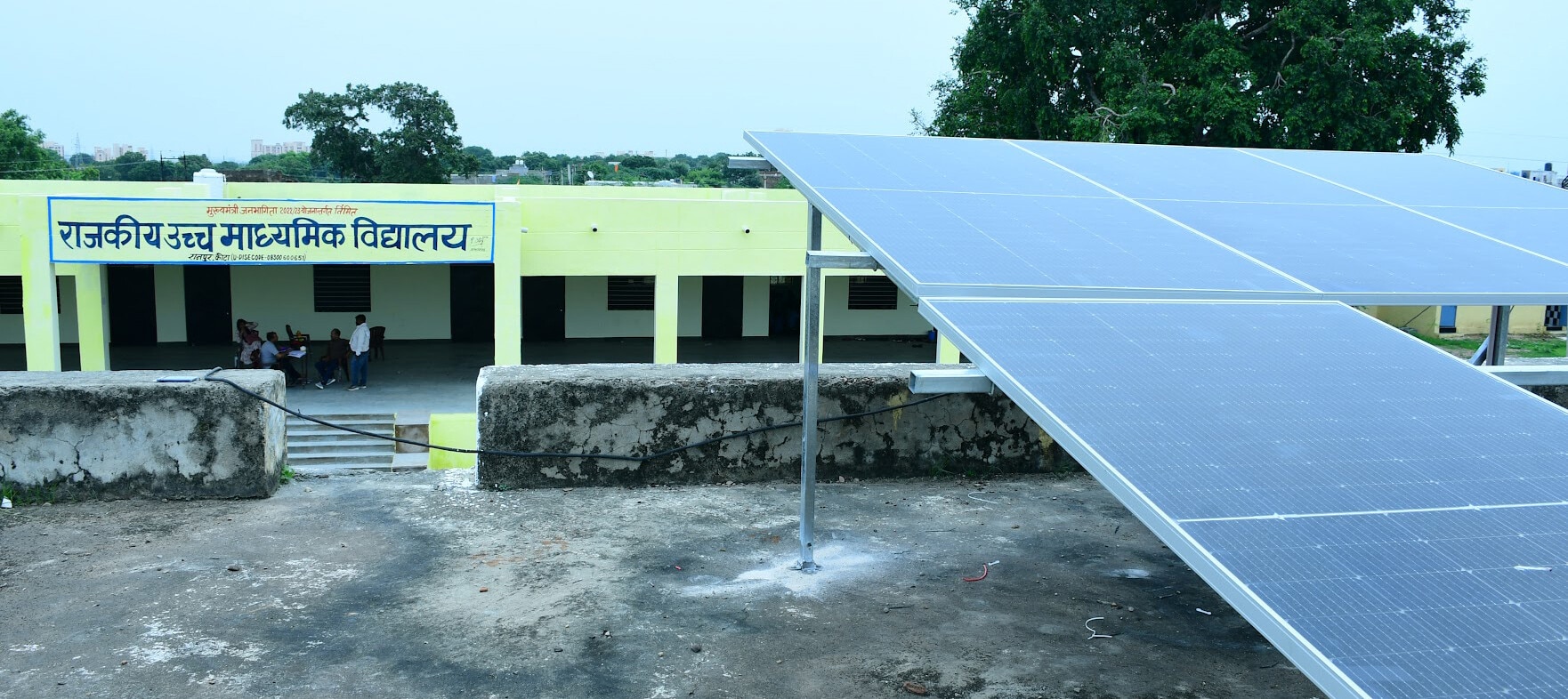
A solar panel at a government-run school in rural India helps mitigate the impact of climate change-related heat on children. Image: Samarpan
- At least 242 million students across 85 countries had their schooling disrupted by extreme climate events in 2024, reports UNICEF.
- Children suffer the effects of heat more than adults and the impact of heat on schooling is particularly pronounced in local-income regions.
- One grassroots organization in India, supported by the Asia Climate Tech Venture Fair, is leading the solar electrification of government schools in India to help mitigate the impact of heat on children's education and health.
Climate change no longer announces itself only through melting glaciers or extreme storms. Increasingly, it shows up somewhere far more ordinary: the classroom.
In 2024 alone, at least 242 million students across 85 countries had their schooling disrupted by extreme climate events – about one in seven students worldwide, according to UNICEF. Heatwaves were the single largest cause and South Asia was the hardest-hit region on the planet.
For children, this is not a future risk. It is already happening, and it is happening fastest to the ones with the least capacity to absorb it.
Children more vulnerable to heat than adults
Children are physiologically more vulnerable to heat than adults – they heat up faster, sweat less efficiently and cool down more slowly. Where classrooms lack fans, shade or reliable drinking water, that vulnerability becomes a genuine health risk rather than mere discomfort. Concentration drops, fatigue sets in and dehydration becomes routine and these effects compound over a school year, not just on the hottest days.
For adolescent girls, the effects compound further. Without functioning water and sanitation, managing a menstrual cycle at school becomes difficult enough that many girls simply stop attending during those days. In the worst-affected regions, prolonged disruption has been linked to rising school dropouts and early marriage.
Most schools respond to this the same way: extended summer breaks, emergency closures on the worst days. That protects children from the extremes but does nothing for the hundreds of ordinary days each year that are simply hotter than they used to be.
The challenge is sharper still in remote, low-income settings, where the range of responses is narrower to begin with. Across many rural and forested regions in low- and middle-income countries, grid electricity runs only a few hours a day where it exists at all, since terrain and distance make conventional grid extension slow and expensive to build out.
These communities are often working hardest to adapt, with the fewest fallback resources to draw on. For schools in these areas, decentralized power is not one option among several. It is the practical starting point.
How responsible business can help build climate resilience in schools
Solar electrification is often framed as a climate mitigation story. In a rural school, its real impact is more immediate than that. Solar power runs the water pump and purification system that makes drinking water safe. It keeps fans running through peak heat.
It sustains functioning toilets, keeping girls in school through their cycles rather than pulling them out. None of this requires new technology or a large budget by global standards. It requires power that works, every day, in a building that previously had none.
That is the shift worth recognizing: climate resilience in schools is not simply an infrastructure upgrade. It is a children's health intervention that can be implemented today – and the technology already exists.
While reducing greenhouse gas emissions remains essential, mitigation alone is no longer sufficient. Some of the impacts of climate change are already unavoidable, making adaptation an equally important part of climate responsibility.
Improving climate resilience in schools ultimately requires investment. Governments will continue to play the leading role, but businesses, investors and philanthropic organizations can also make meaningful contributions by supporting practical, community-led initiatives with measurable outcomes.
There is no single model for doing this well. Some companies establish foundations, others support local non-profit organizations or community programs. Increasingly, industry events and business communities are also looking for ways to leave behind a positive impact beyond the event itself.
The Asia Climate Tech Venture Fair (AVF) is one such example. Organized by ADB Ventures, Emerald, Eurazeo, SGInnovate and TRIREC, the AVF is a non-profit conference that brings together climate-focused venture capital firms, corporate investors and entrepreneurs from across Asia. Its primary purpose is to strengthen the region’s climate investment ecosystem by fostering dialogue, sharing perspectives and building relationships within the climate investment community.
As a non-profit event, the organizers have also chosen to support a grassroots climate initiative alongside the conference. Rather than seeking to generate profits, the aim is simply to ensure that the event creates a modest but tangible contribution beyond the discussions taking place in the conference room.
What this looks like on the ground and why it's a model worth replicating
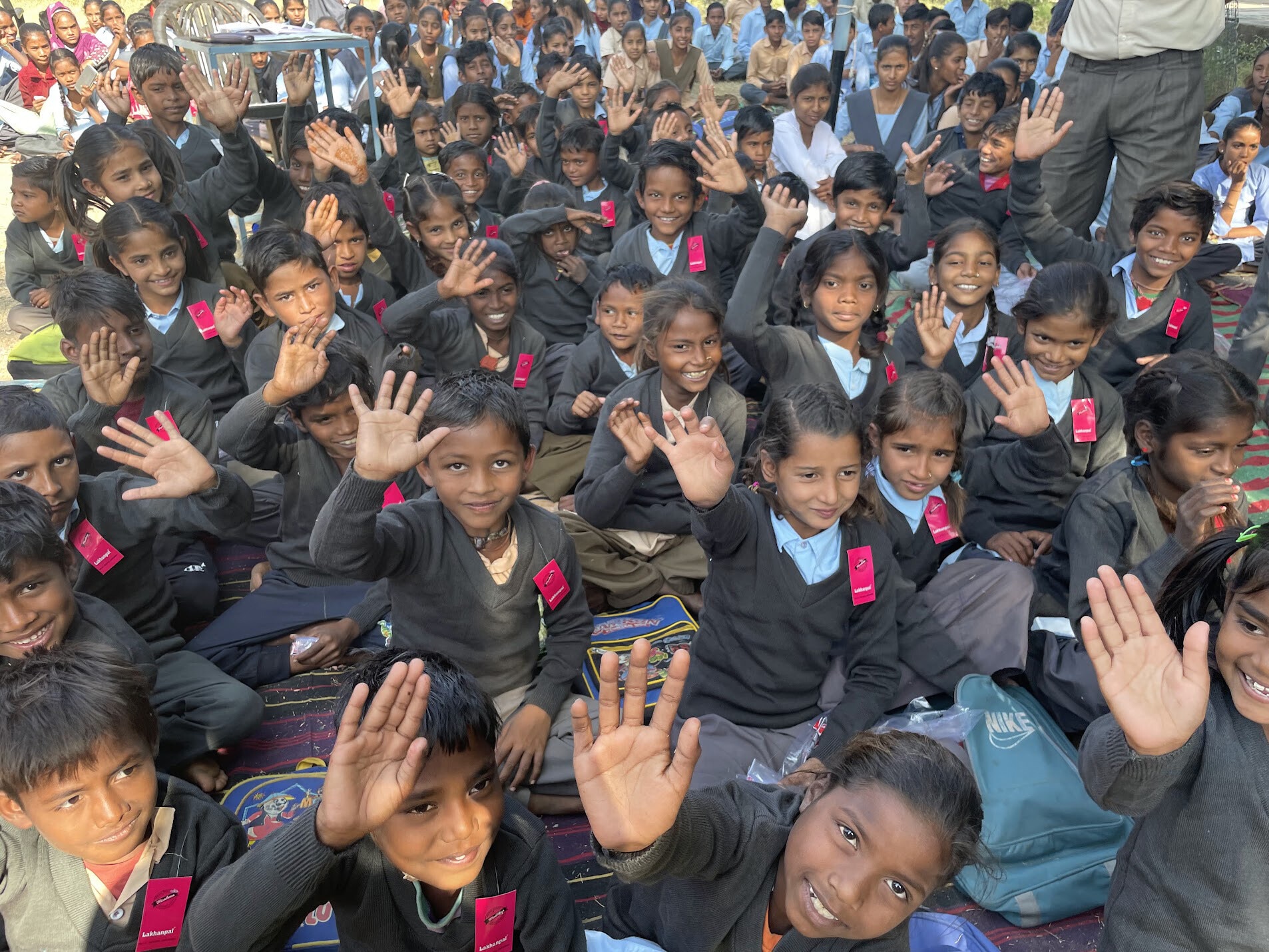
The AVF chose to support the solar electrification of government schools through Samarpan, a grassroots organization that has worked across health and education in rural India for over 10 years, today reaching more than 400 government schools and impacting 1.5 million people.
The solar-powered school is more than an energy project – it enables safe drinking water, running water in toilets, more consistent access to digital learning, and a cooler, more comfortable learning environment for close to 400 students and staff, and an estimated 4-7 tonnes of carbon dioxide offset annually per installation.
The AVF's contribution represents only a small part of Samarpan's broader work – and that is precisely the point. No single organization can solve challenges of this scale, but each can make a meaningful contribution in ways that complement its primary purpose.
The scale of the problem is global. But the model to address it does not need to be invented. It already exists, in the solar-electrified schools built on proceeds from a venture fair that decided sustainability should mean something both for the future and in the present.
Every classroom powered this way is a small piece of evidence for a larger claim: responsible business is not only about what companies avoid, reduce or offset. It is also about what they actively enable.
This can help build the technologies of tomorrow while protecting the health, education and dignity of children now. That is the kind of responsible business the climate era demands and requires.
Don't miss any update on this topic
Create a free account and access your personalized content collection with our latest publications and analyses.
License and Republishing
World Economic Forum articles may be republished in accordance with the Creative Commons Attribution-NonCommercial-NoDerivatives 4.0 International Public License, and in accordance with our Terms of Use.
The views expressed in this article are those of the author alone and not the World Economic Forum.
Stay up to date:
Climate and Health


Forum Stories newsletter
Bringing you weekly curated insights and analysis on the global issues that matter.
More on Health and Healthcare SystemsSee all

Shyam Bishen
September 1, 2026


