From resilient to investible: Why the next generation of supply chains will be built on risk, not efficiency
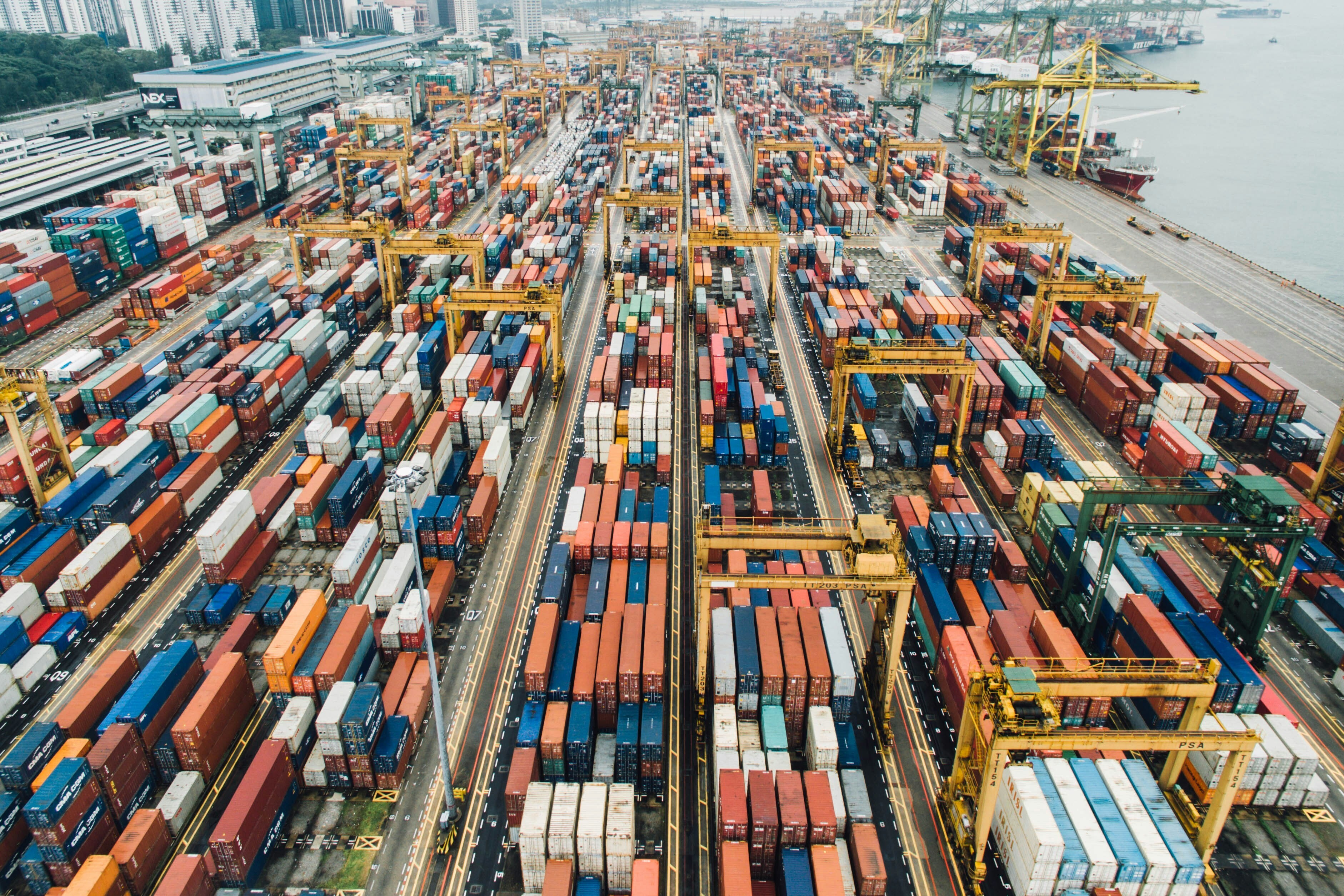
Operational resilience won't serve supply chains without financial resilience Image: Unsplash/Chuttersnap
- Supply chains have evolved from operational systems into strategic financial assets, with investors, lenders, insurers and partners increasingly assessing their ability to preserve value, manage risk and support long-term growth.
- A supply chain can continue operating during disruption while still eroding value through higher costs, margin pressure, increased working capital requirements or financing strain.
- Workforce continuity, skills shortages, fatigue and leadership decision-making are presented as increasingly important yet under-appreciated risks.
For more than a decade, the supply chain conversation has centred on efficiency and, more recently, resilience. Both still matter but they are no longer enough. The real test of a supply chain now is whether it is investible.
Supply chains have moved on from just operational systems to being assessed and priced according to their impact on financial outcomes, balance sheet exposure and long-term value creation.
Why supply chains must become investible
In recent years, organizations have responded to disruption by diversifying suppliers, rethinking sourcing strategies and investing in data and visibility. However, that only partly accounts for the changes to the industry.
Supply chains must now withstand disruption without eroding value if they are to retain the confidence of investors, lenders and partners.
Risk is now more central to this assessment and in many cases evolving faster than organizations are prepared for.
Geopolitical instability, climate events, cyber threats and workforce disruption are interconnected risks that reinforce one another, creating a more volatile and fragmented trade environment for business leaders to navigate.
In response, insurers are adjusting terms, lenders are reassessing exposure and investors are asking more searching questions around volatility and resilience. Together, these forces are influencing which supply chains are supported, which are restructured and which become harder to sustain over time.
How businesses should start measuring supply chain risk
Relevant metrics are shifting too. Alongside cost and efficiency, leaders need clarity on concentration risk, critical dependencies and exposure to single suppliers, routes or regions.
They also need to understand how disruption would propagate across their networks and translate into financial impact under different scenarios.
Aon’s 2025 Global Risk Management Survey found that 28% of organizations experienced a recent supply chain loss, yet only 12% had quantified their exposure and just 11% had evaluated risk financing or transfer options. That gap is itself a material risk.
The shift now is not simply towards collecting more data but towards the kind of measurement that genuinely supports better decisions about risk, capital and resilience.
The gap between operational and financial resilience
In many organizations, there is still a disconnect.
Supply chains are often designed for operational efficiency and continuity but they have not always been designed with the same discipline around financial resilience, which becomes clear in periods of prolonged disruption.
A supply chain may continue to function while simultaneously eroding margins, increasing financing pressure or weakening the ability to invest in future growth. This is where investibility becomes relevant and whether the system can maintain confidence across stakeholders over time.
An investible supply chain is built with transparency and adaptability from the outset. It is underpinned by clear exposure mapping, credible risk governance, scenario analysis and risk transfer strategies aligned to actual risk.
Less resilient systems tend to be more concentrated, with limited visibility beyond the first tier of suppliers and assumptions that have never been stress-tested.
The financial impact of disruption is already visible but often underestimated. Aon’s recent analysis shows how supply chain fragility is increasingly shaping insurance outcomes, from pricing and capacity through to underwriting scrutiny, especially in markets exposed to geopolitical risk.
Costs manifest through declining margins, delayed or cancelled investment, increased financing pressure and lost market share.
Why people are an underestimated risk factor in the supply chain
One of the most significant and often underestimated risks in this system is people.
Workforce continuity, skills availability and fatigue in critical roles are becoming central to supply chain stability, increasingly shaping day-to-day operations.
At the same time, organizations have more supply chain data than ever before. However, that insight does not always translate into action.
Technology and analytics can improve visibility and speed, yet without clear risk ownership and governance, they can just as easily amplify volatility. Turning insight into better decision-making is becoming as important as generating insight.
How leaders should ensure their supply chains remain investible
This shift is pushing supply chain strategy firmly into the boardroom.
Supply chains are no longer just networks to optimize but critical assets that need to be understood, financed and governed with greater clarity.
In conversations with business leaders, the same themes come up again and again. Addressing them requires a more integrated approach that brings together:
- Risk insight and analytics to identify and quantify exposure.
- Insurance and risk transfer to manage balance sheet volatility.
- Capital considerations to support investment decisions.
- Workforce and operational strategies to ensure continuity.
All of these point to a more practical set of priorities for leaders.
First, move beyond visibility to a clear understanding of exposure. Know who your critical suppliers are, which routes you depend on, where concentration risk exists, and what the financial impact would be if those points of failure were disrupted.
Second, ground resilience in operational reality. Diversification and alternative routing only work when supported by tested business continuity plans, clear escalation protocols and defined decision-making responsibilities.
Third, recognize that historic data is no longer enough. In a more volatile environment, leaders need forward-looking insight and the ability to act on it quickly.
Fourth, align risk transfer and capital strategy with actual exposure. Insurance should not be treated as an annual transaction but as a strategic tool that evolves with changing conditions, particularly in regions exposed to geopolitical risk.
As Aon's recent commentary on the Middle East highlights, disruption can extend well beyond delayed deliveries to include storage costs, contractual penalties, reputational damage, client losses and missed future opportunities.
Finally, break down functional silos. The organizations making the most progress treat supply chain resilience as a cross-functional, board-level priority rather than a procurement or logistics issue alone.
Building something that holds under pressure
The next phase of global trade is not about reshaping supply chains as fast as possible. Supply chains must hold financially and operationally under sustained pressure.
That means systems that can absorb disruption without undermining enterprise value, demonstrate clear risk governance, and that investors, partners and employees are willing to stand behind over time.
That is a higher bar than resilience alone and this is where the advantage is now shifting.
Don't miss any update on this topic
Create a free account and access your personalized content collection with our latest publications and analyses.
License and Republishing
World Economic Forum articles may be republished in accordance with the Creative Commons Attribution-NonCommercial-NoDerivatives 4.0 International Public License, and in accordance with our Terms of Use.
The views expressed in this article are those of the author alone and not the World Economic Forum.
Stay up to date:
Supply Chain, Logistics and Transport
Related topics:

Forum Stories newsletter
Bringing you weekly curated insights and analysis on the global issues that matter.
More on Supply Chains and TransportationSee all

Pim Valdre and Joy Shumake-Guillemot
September 17, 2026


