Why climate resilience solutions are context- and culture-specific
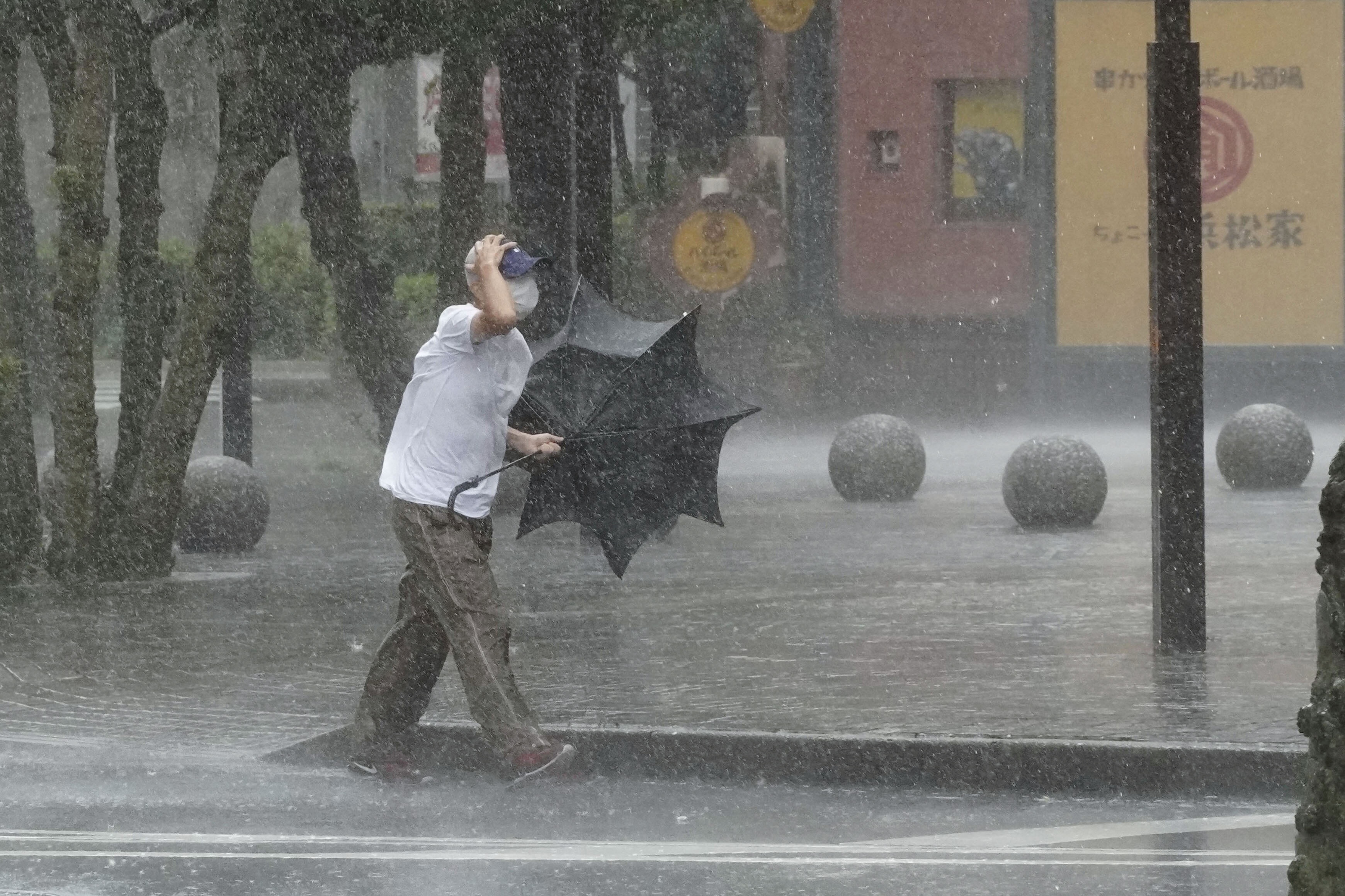
The examples of Japan and Peru show why successful climate solutions are shaped by lived experiences and cultural values. Image: via Reuters
Shinnosuke Komiya
CEO / Design Engineer; Project researcher; Former Hoffmann Fellow, SERINUS LLC, University of Tokyo- Climate-induced weather events such as extreme rainfall, floods and heatwaves are affecting communities across the world.
- Yet while climate hazards may appear similar across continents, how communities experience them differ due to context.
- The examples of Japan and Peru show how smart technologies co-designed with local communities to manage local realities will be key to future climate resilience.
Extreme weather events do not respect geopolitical boundaries. In recent years, floods, extreme rainfall, heatwaves, droughts and cyclones have affected communities across continents with growing intensity and severity.
In the 20 years since 2000, more than 7,348 major disaster events were recorded globally, affecting 4.2 billion people and causing an estimated $2.97 trillion in economic losses, according to the UN Office for Disaster Risk Reduction.
Yet while the climate hazards may appear similar across countries, the conditions in which communities experience them differ, and the climate solution that might actually work is shaped by cultural values, lived experiences, infrastructure legacies, maintenance capabilities and the respective region's institutional adaptability.
Climate technology discussions often assume that solutions proven in high-income countries can be transplanted into Global South contexts with minor modifications. This is especially clear in the case of early warning systems (EWS), a key form of climate adaptation.
By providing just 24 hours of warning before a hazardous event, an EWS can reduce damage by up to 30%. Yet the benefits of such systems are not distributed evenly.
Japan as a model for early warning systems for disasters
Japan – which has living experience of extreme heat, as well as devastating storms and floods – offers one of the most compelling models and suites of EWS technologies for disaster risk reduction, built on three foundational pillars:
- Technological advancement
- Strong institutional coordination
- A high level of community engagement
Japan’s EWS is supported by internet of things (IoT) devices, sensors, satellites, modelling, supercomputing and hydro-meteorological observation network and relies on strong coordination among the Japan Meteorological Agency, local governments and other institutions. This enables rapid dissemination of information, while BOSAI programmes support locally grounded preparedness.
Still, the assumptions embedded in Japan’s comprehensive EWS do not always hold in Global South contexts, such as that of Peru, which is facing climate challenges including El Niño-induced extreme weather, deforestation and rapid glacial retreat.
Earlier this year, the Embassy of Japan in Peru convened the BOSAI Business Seminar, bringing Japanese companies, institutions and Peruvian participants together to discuss Japan’s disaster risk reduction knowledge and technologies. The discussion highlighted that local infrastructure, local capabilities, environmental conditions, and operational realities must shape climate resilience efforts to be effective.
For instance, a flood warning system that works well in Japan cannot simply be transplanted to Peru. Not because the basic hydrological challenge is fundamentally different, but because the infrastructure, maintenance conditions, institutional systems and social realities surrounding it are.
Viability of EWS technologies depends on context
Japan’s example shows that EWS technologies can work in principle. The more difficult question is whether they can work in places where exposure is highest and infrastructure is weakest.
In Japan, many rivers are bordered by relatively robust embankments and supported by extensive public infrastructure. Monitoring devices can often be installed in stable locations connected to existing communications networks and maintained through established systems.
In parts of Peru, riverbanks may be more fragile, and protective infrastructure may be limited or unsuitable for installing similar monitoring devices. These differences highlight how the practical viability of EWS technologies changes in Global South contexts.
A sensor that can be deployed openly and confidently in one country may be too maintenance-intensive or too dependent on stable connectivity in another. In remote areas, there may be no reliable public or commercial network to carry data back for analysis, and in harsh environments, sensor durability becomes challenging.
The learning is that climate resilience should be understood not only as an engineering problem but as a sociological, technological and environmental problem.
The challenge is not to build more accurate sensors but to design a sensing system that withstands varying conditions, such as uneven infrastructure, weak network coverage, limited maintenance capabilities and harsh environmental exposures.
This shift in perspective has implications for how we design the flood resilience programme. This shapes our work in Peru on flood risk monitoring, where the focus is on prioritizing systems that are adaptable and durable over optimized ones; ensuring long battery life to reduce the need for frequent site visits and resource constraints; implementing remote diagnostics for operational continuity; and installing mesh networks to complement or extend conventional communication infrastructure.
Climate resilience solutions rely on local adaptability
The Japan–Peru comparison highlights three lessons for building locally adapted climate resilience.
- Advanced technologies cannot be viewed in isolation from the supporting infrastructure, as connectivity, power supply, installation conditions and maintenance capacity determine whether EWS continue to function after deployment.
- Resilience depends on institutions as much as on devices. Different devices, sensors, modeling capabilities and dashboards only become useful when they are connected to trusted decision-making processes.
- Adaptation should be treated as co-design, not replication. It is a form of translation of capabilities into locally fit realities and practices. The goal shouldn’t be to export a proven system from one country to another, but to build systems that fit environmental, institutional and social realities.
The lesson learned extends beyond Peru, as similar lessons are emerging from many infrastructure-diverse settings, where technologies developed for highly serviced environments often underperform when transferred to contexts with different economic, social, technological and infrastructural realities.
This does not mean that emerging technologies have no value. On the contrary, emerging technologies – from advanced sensors to AI-enabled forecasting – are significantly improving environmental monitoring and decision-making capabilities across nations.
For example, quantum sensing may offer new ways to detect subtle changes in groundwater or soil moisture, helping to forecast future floods. However, the most advanced sensor will have limited impact if it cannot be deployed effectively in places facing greater threats.
The future of climate resilience lies not only in emerging smarter technologies but also in technologies co-designed with local communities to manage local realities.
Adaptive co-design key to successful climate solutions
This reorientation requires moving beyond the logic of bilateral or multilateral technology transfer toward adaptive co-design.
Co-design compels technology providers, public institutions, organizations, and local communities to reimagine technologies such as sensors, data systems, modeling and forecasting tools, and early warning procedures within the social and infrastructural realities of the places where they will operate.
The goal is not to create a Peruvian version of a Japanese system, but to build systems that can only be designed in and for the places where they belong.
As extreme weather intensifies, the need for advanced EWS technologies will continue to grow. The key question is how to build solutions that fit local realities, rather than merely exporting them across borders.
Don't miss any update on this topic
Create a free account and access your personalized content collection with our latest publications and analyses.
License and Republishing
World Economic Forum articles may be republished in accordance with the Creative Commons Attribution-NonCommercial-NoDerivatives 4.0 International Public License, and in accordance with our Terms of Use.
The views expressed in this article are those of the author alone and not the World Economic Forum.
Stay up to date:
Climate Indicators


Forum Stories newsletter
Bringing you weekly curated insights and analysis on the global issues that matter.
More on Climate Action and Waste Reduction See all

Alliance of CEO Climate Leaders
October 8, 2026


