We can measure climate resilience. Why aren’t we investing in it?
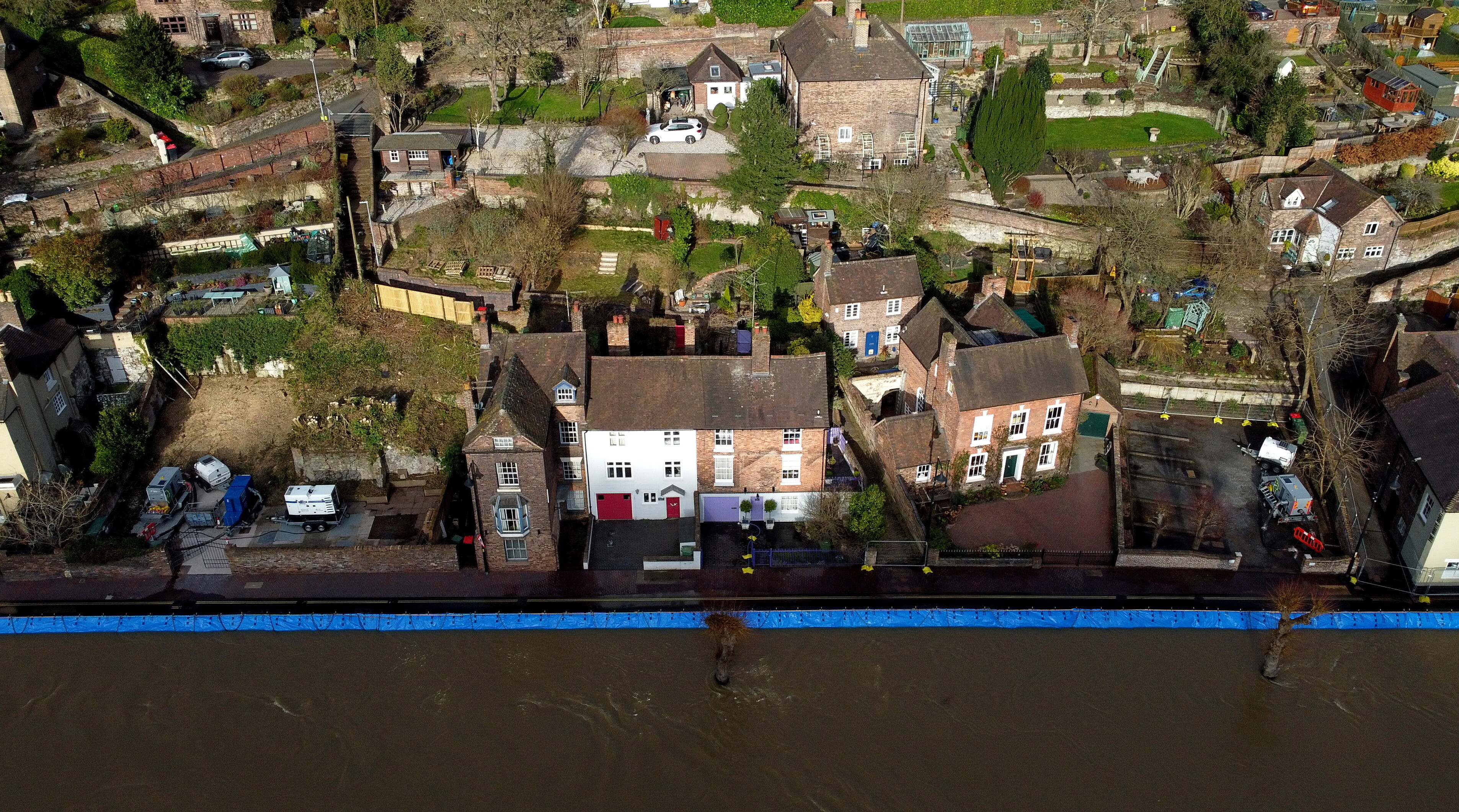
Flood defences along the River Severn in the UK. Image: Reuters/Carl Recine
- Climate adaptation finance still lags behind climate mitigation, but it is increasingly feasible to measure the benefits.
- Current 'avoided loss' calculations, involving risk modelling and digital twinning of assets, are becoming ever more sophisticated and precise.
- To build a scalable institutional architecture for adaptation finance, three key advances previously made by mitigation are required.
A persistent challenge in tackling climate change is the financing gap between adaptation and mitigation. Mitigation – efforts to prevent or minimize climate change – accounts for over 90% of global climate finance flows, reaching $1.3 trillion in 2022, while adaptation – responding to its impacts – has averaged just $68 billion annually.
Mitigation finance scaled because the global economy built a unified market architecture around fungible, monetizable units; either standardized metric tonnes of carbon avoided or kilowatt-hours generated. Adaptation, in contrast, has historically been too localized and fragmented. Furthermore, resilience – the quality strengthened via adaptation investment – has been methodologically too difficult to measure and financially quantify.
But the technical barrier to resilience measurement is fast dissolving. We can now measure resilience at scale through a new generation of climate analytics tools and methods. This presents an opportunity to build new global mechanisms and market architecture for adaptation finance and help it achieve the needed scale.
The measurement myth
The premise that the value of an adaptation investment cannot be quantified ignores decades of civil engineering precedent. Institutions such as the US Army Corps of Engineers have conducted rigorous cost-benefit analyses on large-scale flood defence and water diversion projects for generations. Examples include the Middle Rio Grande levee and the Fargo-Moorhead flood diversion system.
The process is this. Conduct probabilistic modelling of the baseline physical hazard (e.g., severe flood depth and return intervals), assess an asset or community's vulnerability and exposure to those hazards to estimate potential financial damage, re-run the model incorporating a structural resilience intervention that reduces vulnerability, and then calculate the change in expected loss. This “avoided loss” is the benefit of resilience intervention; it can be compared to the cost of construction to estimate the value of the investment.
The process has always been expensive and somewhat imprecise, creating financial risk. This has meant that only very large organizations with sufficient balance sheet capacity and strong resilience building mandates could undertake such work. But with rapid advances in technology, the capability to do these avoided loss calculations is being democratized, and the estimates are getting much tighter, reducing financial risk.
Quantifying resilience in real-time
The field of climate risk analytics started by using satellite imagery, publicly available information, and digital tools to assign “risk scores” to assets. While these were quite broad, they were fit for a few important use cases such as managing real-estate portfolios or prioritizing measures to protect assets within a fixed set of sites.
These use cases drove growth of over 30% per year in the climate risk analytics industry, and as the industry grew, their tools improved. The possibilities now are remarkable. Today, it is possible to build digital twins of assets and their surroundings, subject them to computer simulations of weather hazards, and to model both the physical and financial impacts under different adaptation scenarios. And it’s cheap enough that this capacity can be offered as a service.
Quantifying the avoided loss or return on investment of an adaptation intervention is therefore no longer a multi-year engineering study. It can be provided via an accessible, dynamic calculation available to any enterprise.
For example, AlphaGeo, a climate risk analytics firm, has been able to expand its offerings beyond resilience-adjusted risk scores to a Financial Impact Analytics (FIA) tool that projects asset-level financial outcomes. The kinds of insights it is able to offer include asset level estimates of “average annual loss”, which are crucial in pricing insurance, and estimates of savings via different adaptation interventions. There are many such companies offering these services.
Closing the gap between analysis and action
Despite this breakthrough in measuring the value of adaptation, investment levels have not begun to grow substantially. The Carbon Disclosure Project (CDP) reveals that global enterprises now identify upwards of $1.47 trillion in physical climate risk, yet only 9% of assessed companies report committing capital to climate adaptation measures.
If we can measure resilience, why aren’t we investing in it more? The answer is that our new analytics capabilities need a clear institutional architecture to be used at scale, and that has not yet been built. The climate mitigation experience suggests three things are needed:
- Standardized measurement: In its early days, calculating carbon footprints was inconsistent and fragmented. The mitigation market unlocked momentum only when frameworks like the GHG Protocol and SBTi established a shared, standardized accounting language.
- Shared data architecture and accounting: This is easily adoptable by both large and small corporations, governments of all sizes, and smaller businesses to compile and share reporting. In mitigation, this was provided by the voluntary reporting standards that have come together in the form of the Taskforce for Climate-Related Financial Disclosures.
- Economic incentives: Market designers then created mechanisms that transmitted real cost savings or earnings impact. Feed-in tariffs and power purchase agreements guaranteed revenue streams for renewables, while compliance markets (like the EU ETS) placed a cost penalty on unmitigated emissions.
What would this look like from an adaptation perspective?
1. Promoting standardized measurement
Adaptation requires unified taxonomies. Financial institutions, credit agencies and enterprise leaders must speak the same analytical language to legitimize resilience CapEx as an enterprise-value driver. Instead of merely relying on risk scores, regulators or markets can consider standardized methodologies for metrics like climate value-at-risk deltas or average annual losses avoided. Integrating these metrics into existing taxonomies provides corporates and financiers with a common financial language to evaluate adaptation spending alongside traditional capital investments.
2. Shared data architecture and accounting
Scaling adaptation requires a standardized data layer easily adoptable by both large corporations, governments of all sizes and smaller businesses to compile and share reporting with their partners and counterparties.
This comprehensive and accessible data layer should be coded to accommodate multiple spatial resolutions (in order to capture a wide range of real assets, such as buildings and infrastructure), time horizons for risk modelling, clear delineation of hazards, robust checklists of adaptation measures, and other parameters that have previously been fragmented. Such an open-source resilience data layer can enhance the credibility and visibility of contributing commercial vendors.
3. Market incentives
Converting measurable loss avoided into investable value at scale takes more than data analytics. Deploying adaptation capital at scale also requires a clear economic imperative and creative financing structures. Some examples of market mechanisms that can turn risk reduction into positive impact on savings and earnings include:
- Resilience-linked debt and preferential underwriting: By integrating standardized resilience metrics into credit ratings, bond issuances and insurance policies, banks and underwriters can offer discounts to borrowers who de-risk assets through resilience investments.
- Blended finance and concessionary facilities: Early-stage clean energy relied heavily on public feed-in tariffs and development bank backing to become bankable. Multilateral development banks (MDBs) and export credit agencies can supply first-loss equity and concessionary loan tranches to de-risk municipal or regional resilience infrastructure.
- Parametric liquidity triggers: For critical supply chains, vulnerable agricultural footprints and commercial assets, adaptation finance can leverage parameter-based contracts that pay out when pre-agreed environmental triggers are met.
The initial hurdle to scaling the adaptation economy – diagnosing physical risk and quantifying the economic return of adaptation – has finally been overcome. The analytical tools we need are mostly at hand. But far more needs to be done to bridge the gap between measurement and action. The mandate now falls on corporate leadership, institutional investors and policy-makers to establish the standards, data architecture and market mechanisms required to deploy capital into building resilience.
Don't miss any update on this topic
Create a free account and access your personalized content collection with our latest publications and analyses.
License and Republishing
World Economic Forum articles may be republished in accordance with the Creative Commons Attribution-NonCommercial-NoDerivatives 4.0 International Public License, and in accordance with our Terms of Use.
The views expressed in this article are those of the author alone and not the World Economic Forum.
Stay up to date:
Climate Indicators


Forum Stories newsletter
Bringing you weekly curated insights and analysis on the global issues that matter.
More on Climate Action and Waste Reduction See all

Daniel Mahadzir
September 24, 2026