How businesses can communicate sustainability claims without ‘greenwashing’
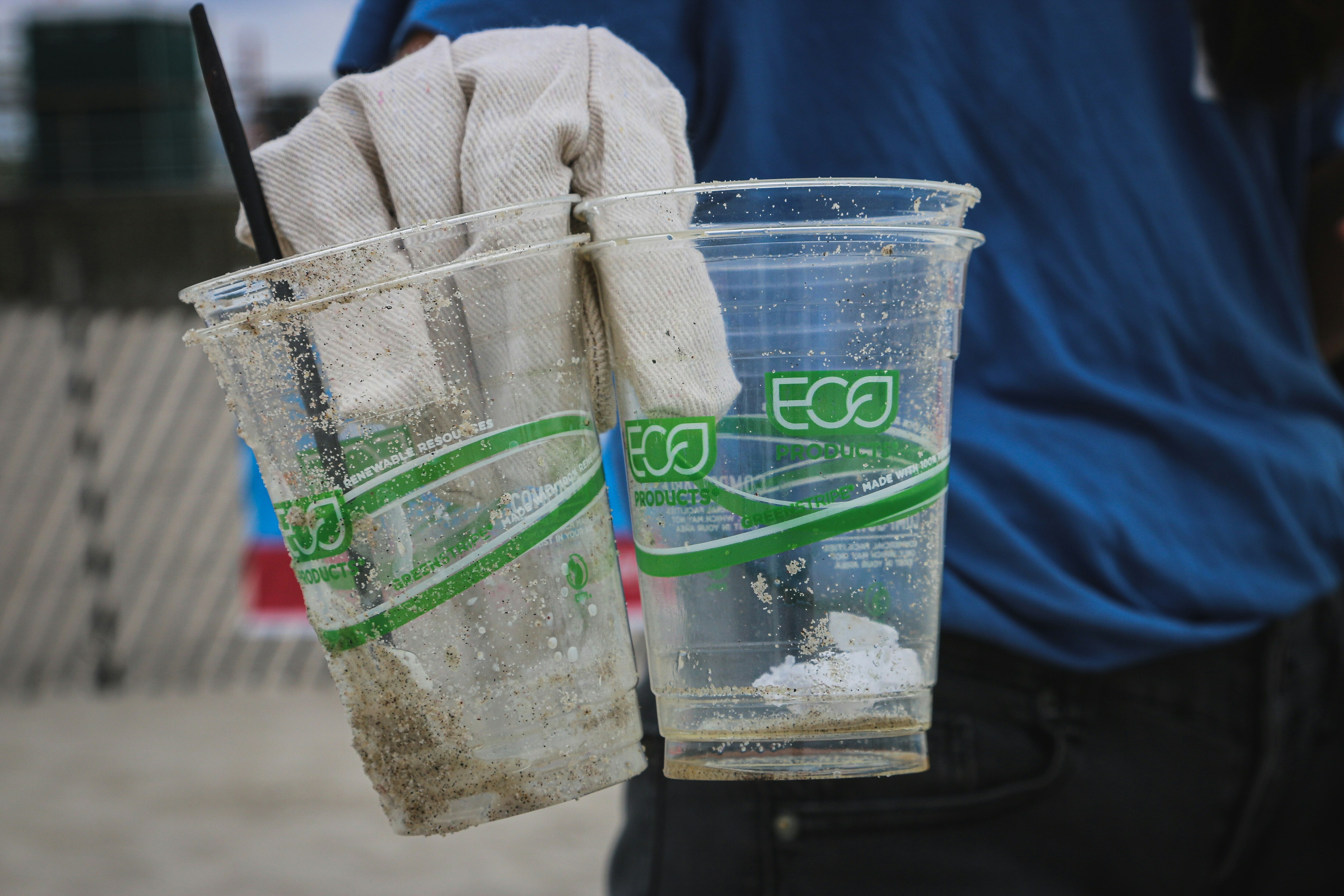
Greenwashing: even seemingly benign phrases should only be used with evidence to back them up. Image: Unsplash/Brian Yurasits
- Businesses should avoid vague exaggerations such as “eco-friendly,” “green” and “carbon neutral” unless they can substantiate them with credible evidence.
- While 'greenwashing' damages trust by overstating environmental progress, 'greenhushing' occurs when businesses stay silent about genuine sustainability achievements for fear of criticism.
- The data behind environmental claims can be critically assessed before information from internal teams is accepted.
Communicating sustainability has long been fraught with exaggeration, hoodwinking and simply getting the facts wrong. “Greenwashing,” “greenhushing” and misinformation can make corporate climate communications a minefield.
Businesses are increasingly expected to communicate their climate progress, but the consequences of getting their messaging wrong are becoming more serious.
The result is a difficult balancing act between saying too much, overplaying actual action, and saying too little and underplaying environmental gains – making genuine progress invisible.
A new European Union directive now outlines what may count as greenwashing, or where a company portrays its products, services or policies as good for the environment to cover up more harmful practices.
Last month, the EU’s Empowering Consumers for the Green Transition Directive (EmpCo), came into effect. It demonstrates a shift in direction.
The directive states that its purpose is to protect consumers from misleading environmental claims and labels. Words that were once seemingly benign, such as “eco-friendly,” “green,” or “carbon-friendly,” are now banned without proper evidence or substantiation.
This raises a serious question for businesses: what should credible climate communication look like in an era of greater scrutiny?
If credible companies retreat from the conversation, louder voices can dominate the sustainability landscape...
”What is ‘greenwashing’ and how is it communicated?
If you take a look at the recent roster of ClientEarth – a global environmental organization that uses the law to address the climate crisis – you can better understand some of the challenges corporate climate communicators face. Fossil fuel companies in particular have tried myriad PR tactics to make themselves look green, promising grand futures involving net zero and carbon neutrality.
While some brands’ greenwashing attempts are brazen (banks insinuating they only invest in renewables while clearly investing in fossil fuels), other campaigns that use subtler tactics to convey their sustainability credentials now risk falling afoul of the new EmpCo directions.
Not every misstep is blatant.
A flight comparison website that uses a green font may be accused of suggesting certain flight routes are cleaner or greener. Meanwhile “net zero” goals, once ubiquitous, now need a clear, verified strategy for how the business will achieve them.
Take, for example, a company using a picture of a tree to accompany an external message on sustainability practices – despite no significant achievements. Or a car hire business putting out a press release about its new fleet of electric vehicles, despite the vast majority of its cars still using petrol. Under the new EmpCo directive, these would be considered greenwashing.
Words and phrases that could elicit greenwashing claims in Europe
Here are some of the key words, phrases and visuals to watch out for under EmpCo:
- Green, eco-friendly and climate-friendly: The more general the language, the greater the risk that audiences interpret it as an overall claim about a product, service or company. Avoid broad environmental claims unless they can be clearly substantiated.
- Sustainable: Communicators should be clear about which aspect of sustainability they mean and what evidence supports it, as it covers a wide range of environmental and social impacts.
- Net zero: Companies should be able to explain the target, timeframe, emissions covered, pathway to reduction and the role of offsets or removals. Forward-looking claims need particular care because audiences may interpret them as promises of future performance.
- Carbon neutral or climate neutral: These claims require particular scrutiny because they can create the impression that an activity has no climate impact. Communicators should be transparent about how neutrality is achieved, including the role of carbon credits, offsets or removals.
- Biodegradable: Specify what is biodegradable, under what conditions and during what timeframe. A claim can become misleading if consumers interpret it as meaning that a product will naturally break down in any environment.
- Energy efficient: Avoid applying “energy-efficient” as a standalone benefit. Explain what is more efficient, compared with what and ideally provide a measurable figure or recognized benchmark.
- Green imagery: Depicting green leaves, forests, natural landscapes and green colour palettes can all contribute to the overall impression that a product or company is environmentally friendly. Communicators should assess the complete communication, not just the copy.
Poor climate communications can sometimes result from not challenging the data provided and accepting that everything given to the marketing and communications team is accurate and verified.
”What is ‘greenhushing’ and why is it a risk?
Greenhushing occurs when businesses don't share their sustainability success stories or commitments, for fear of being accused of greenwashing. It is an increasing risk, especially in light of the new directive.
Greater scrutiny potentially creates a “say nothing” culture, despite the value of credible communication in building trust. The result can be that companies invest less effort in sustainability efforts – or at the very least, communicating about them.
The South Pole 2023/24 Net Zero Report, based on a survey of more than 1,400 companies across 12 countries and 14 sectors, found that 58% of companies are deliberately reducing their climate communications.
Fourty-four percent say communicating climate targets has become more difficult, highlighting the growing tension between the value of sustainability communication and the perceived risk of getting it wrong.
GlobeScan’s Healthy & Sustainable Living Report 2025, based on a representative survey of more than 30,000 consumers across 31 markets, found that only 36% of consumers saw at least some sustainability messaging from brands in 2025, down from 49% in 2023.
When companies remain silent about credible climate action, they risk missing opportunities to help consumers, employees and other stakeholders make more informed and sustainable choices.
They may also struggle to translate genuine progress into reputational, customer and talent benefits, while losing an important opportunity to maintain momentum and encourage action across their value chains.
If credible companies retreat from the conversation, louder voices can dominate the sustainability landscape – making it harder for stakeholders to distinguish meaningful progress from less credible claims.
How to communicate climate progress without getting in trouble
For those tasked with communicating sustainability wins, challenges or goals, coming to grips with EmpCo’s cautioned words and concepts is critical. So is identifying the purpose of communicating these sustainability targets.
Is it to inspire? Is it to prove commitment? Or is it to stand out from competitors? Spending time understanding the EmpCo directive and the importance of providing evidential and verifiable claims is critical.
Poor climate communications can sometimes result from not challenging the data provided, and accepting that everything handed to the marketing and communications team is accurate and verified.
Companies face less scrutiny when claims are true and verifiable. As with all communications, transparency and accuracy are always best.
Don't miss any update on this topic
Create a free account and access your personalized content collection with our latest publications and analyses.
License and Republishing
World Economic Forum articles may be republished in accordance with the Creative Commons Attribution-NonCommercial-NoDerivatives 4.0 International Public License, and in accordance with our Terms of Use.
The views expressed in this article are those of the author alone and not the World Economic Forum.
Stay up to date:
Sustainability Reporting


Forum Stories newsletter
Bringing you weekly curated insights and analysis on the global issues that matter.
More on Climate Action and Waste Reduction See all

Edwin Lai and Shuraim Ahmad Malik
October 12, 2026


