How to measure the energy, food and water nexus
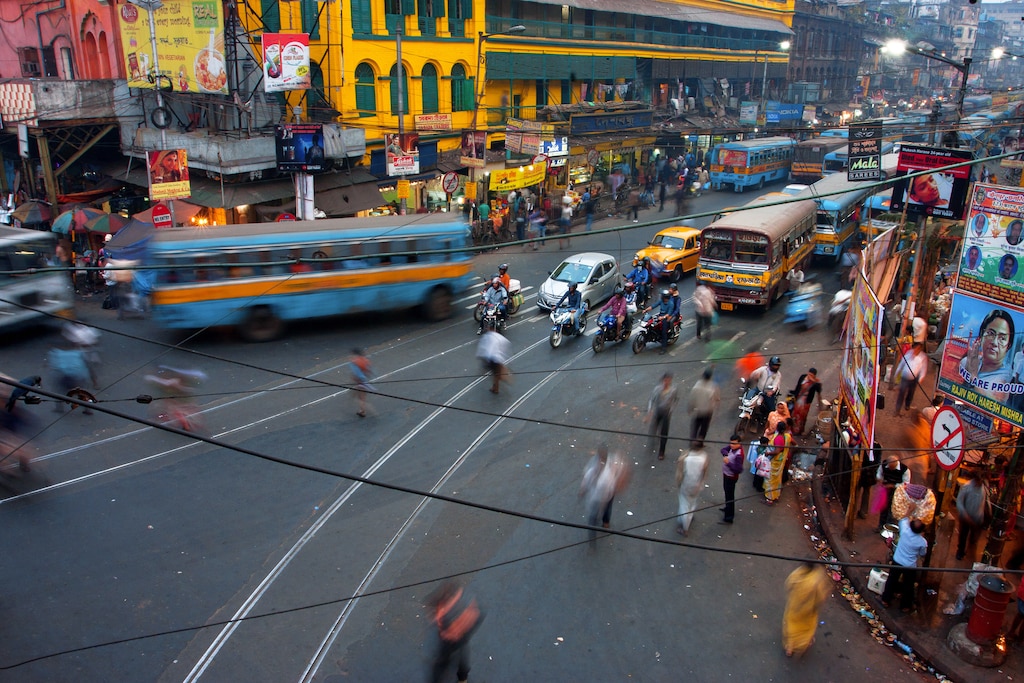
Hyperlocal research is helping to solve problems affecting the energy, food and water nexus in India. Image: Getty Images/Radiokukka
- Energy, food and water systems are interconnected in a complex nexus.
- Vulnerabilities, trade-offs, disruptions and opportunities can ripple across this nexus, affecting these resources in different ways.
- Hyperlocal research helps to explain these intersections at the smallest level, leading to new solutions to a range of environmental challenges.
“I will take the reading tomorrow morning,” thought Ravi, a village council building attendant in the Indian state of Rajasthan. “Going up the ladder right now is risky and I have two kids at home.”
The rain was pouring outside Ravi’s panchayat (village council) building. But up on the roof – one of the village’s highest – a rain gauge had overflowed because its reading had not been taken on time. Its funnel cap had also been installed upside down, causing it to wobble and resulting in reading inconsistencies.
The rainfall data that Ravi collects informs the Atal Bhujal Yojana (ABY), India’s landmark participatory groundwater scheme, which aims to improve resource management in water-stressed areas. But in many villages, readings might be taken quickly and incorrectly for reasons ranging from faulty equipment to the fear of slipping from a wet roof in heavy rain.
The ABY groundwater scheme is run by seven Indian ministries across water, energy and agriculture, with an interdepartmental steering committee at the national, state and district levels. In 2023, the Indian government tasked the Council on Energy, Environment and Water (CEEW) with conducting an independent analysis of the programme’s implementation.
From our headquarters in New Delhi, we could see that Ravi’s village in Rajasthan had rainfall data. The numbers existed. But they were not reliable. We had to be on the roof to get a more accurate picture.
Getting this information right is crucial because it affects more than water resources. Energy, water and land systems are interconnected in a complex, complicating and compounding nexus. Vulnerabilities, trade-offs, disruptions and opportunities ripple across this nexus. Hyperlocal research methods can help practitioners understand this nexus at the smallest level and develop successful solutions.
Hyperlocal research boosts clean energy use
India’s clean energy potential is estimated to exceed 24,000 gigawatts (GW) and getting to net zero will require only a third of that. But unlocking this opportunity without triggering social conflict, droughts or exorbitant infrastructure bills requires a specific approach using hyperlocal research.
When CEEW evaluated India’s renewable energy and green hydrogen potential, it considered the factors that energy infrastructure siting decisions actually hinge on – population density, social resistance to development projects, seismic and climate risks, water availability and land-use conflicts. This revealed constraints, but also opportunities and priority actions.
Agri-voltaics could become a gamechanger when deployed in horticulture areas, for example, unlocking solar potential of up to 13,875 GW across 28 million hectares of land. And slowing desertification in Rajasthan, where 832 GW of India’s solar potential is concentrated, was also revealed to be timely and critical.
The hyperlocal approach solved the problem of national estimates that discount the local nexus between energy, land and water. So, first among our recommendations was the need for a similar approach for siting plans, which will inevitably be complicated by the nexus.
Buffaloes in the energy, food and water nexus
India produces a quarter of the world’s milk — much of it in places like Madhya Pradesh’s dairyland of Datia. When CEEW researchers modelled the state’s dairy sector using a hyperlocal approach, they unearthed an energy, food and water causal chain that was impacting methane emissions and farmers’ income.
Datia sits in a drought-prone region. Power cuts are a regular occurrence – the grid is stretched too thin because it serves competing agricultural and domestic demands. Without electricity, farmers struggle to pump water. Without sufficient water, green fodder – fresh grass and plants grown for animals to graze on – is rarely cultivated.
This lack of green fodder impacts enteric fermentation, causing the area’s buffaloes to emit more methane. Additionally, without water to cool off during summers that grow longer and harsher each year, the buffaloes can get irritable and yield less milk or even die.
Visiting a representative sample of the state’s agroclimatic zones helped reveal the energy problem hiding behind this fodder problem. This discovery informed the Madhya Pradesh government's decision to bring together the relevant departments to boost milk production across 124 villages.
Hyperlocal research boosts urban heat resilience
City administrators were initially puzzled by CEEW’s city-level heat action plan (HAP) for Panaji, Goa. A certain ward (the smallest unit of city governance) in the outskirts of the city had “very high” vulnerability to heat, similar to more densely populated central wards – something that previous quantitative assessments did not reflect.
The researchers pointed out the ward’s significant elderly and infant population, since many of the area's working-age adults have moved closer to the city centre for work. The area is also far from major hospitals, affecting residents' ability to seek treatment for heat-related illnesses.
While CEEW recommended nature-based solutions and "cool roofs" for heavily populated central wards, hyperlocal realities suggested that this ward would benefit from cooling shelters and high speed ambulances. This approach helped unearth similar patterns across other cities.
With more than 140 HAPs prepared so far – a figure expected to reach 300 by 2027 – CEEW’s hyperlocal, neighbourhood-scale analysis combined with on-the-ground insights is helping other cities increase their resilience to heat stress.
Hyperlocal, not just granular
In Taloja, an industrial zone set up by the Maharashtra Industrial Development Corporation, urban flooding is a recurring problem. One flood-induced shutdown in an industrial unit means 74 hours lost while the furnace is restarted.
A granular flood risk assessment would use high-resolution data from the India Meteorological Department at a taluka (district sub-division) level. However, upon visiting the site, CEEW’s researchers realized it was necessary to go beyond analyzing granular data. Research might use granular data, but it is hyperlocal when it studies the smallest unit at which the impact of a problem is felt.
While specific areas that get inundated by water could be missed by a granular approach, the hyperlocal research approach looked at site maps to overlay asset locations on flood risk zones, run flood simulations and interview staff. The simulations were then run again to test specific recommendations.
This hyperlocal research method yielded a standardized site-level assessment tool that a floor supervisor can fill out. It also created protocols for “red”, “orange” or “yellow” alerts tied to site-specific rainfall thresholds, among other site- and zone-wide recommendations for companies and policymakers.
Back to Ravi’s rain-soaked roof
After 65 interviews and 17 focus group discussions across eight districts, and a two-district pilot, CEEW’s recommendations to the government to improve the implementation of the ABY groundwater scheme included state-level guidelines on where a rain gauge may be sited, among other recommendations.
Now data collectors like Ravi don’t need to be worried about slipping off wet roofs. And India’s Finance Commission has approved the scheme’s expansion from 7 to 13 states, strengthening India’s management of precious groundwater resources with more accurate data.
The energy nexus is a systems challenge but mitigating risks depends on a combination of technology, granular data, hyperlocal assessments and evaluating the capacity of local administrations and businesses. This helps create an inclusive and equitable approach to protecting vulnerable communities and companies from the impacts of environmental change.
Big decisions on energy, food and water nexus problems will keep being made in capitals and corporate boardrooms around the world. Whether these solutions work or not will be determined by whether anyone has actually gotten up on the roof for a closer look.
The Global Future Council on Energy Nexus shares ideas and examples through its Energy Nexus Insights series, which includes blogs, articles and infographics; guides for public- and private-sector decision-makers; and sector analyses.
Don't miss any update on this topic
Create a free account and access your personalized content collection with our latest publications and analyses.
License and Republishing
World Economic Forum articles may be republished in accordance with the Creative Commons Attribution-NonCommercial-NoDerivatives 4.0 International Public License, and in accordance with our Terms of Use.
The views expressed in this article are those of the author alone and not the World Economic Forum.
Stay up to date:
Energy, Water & Land Nexus
Related topics:


Forum Stories newsletter
Bringing you weekly curated insights and analysis on the global issues that matter.


