Why unlocking the hidden economic power of healthy soils is good for business
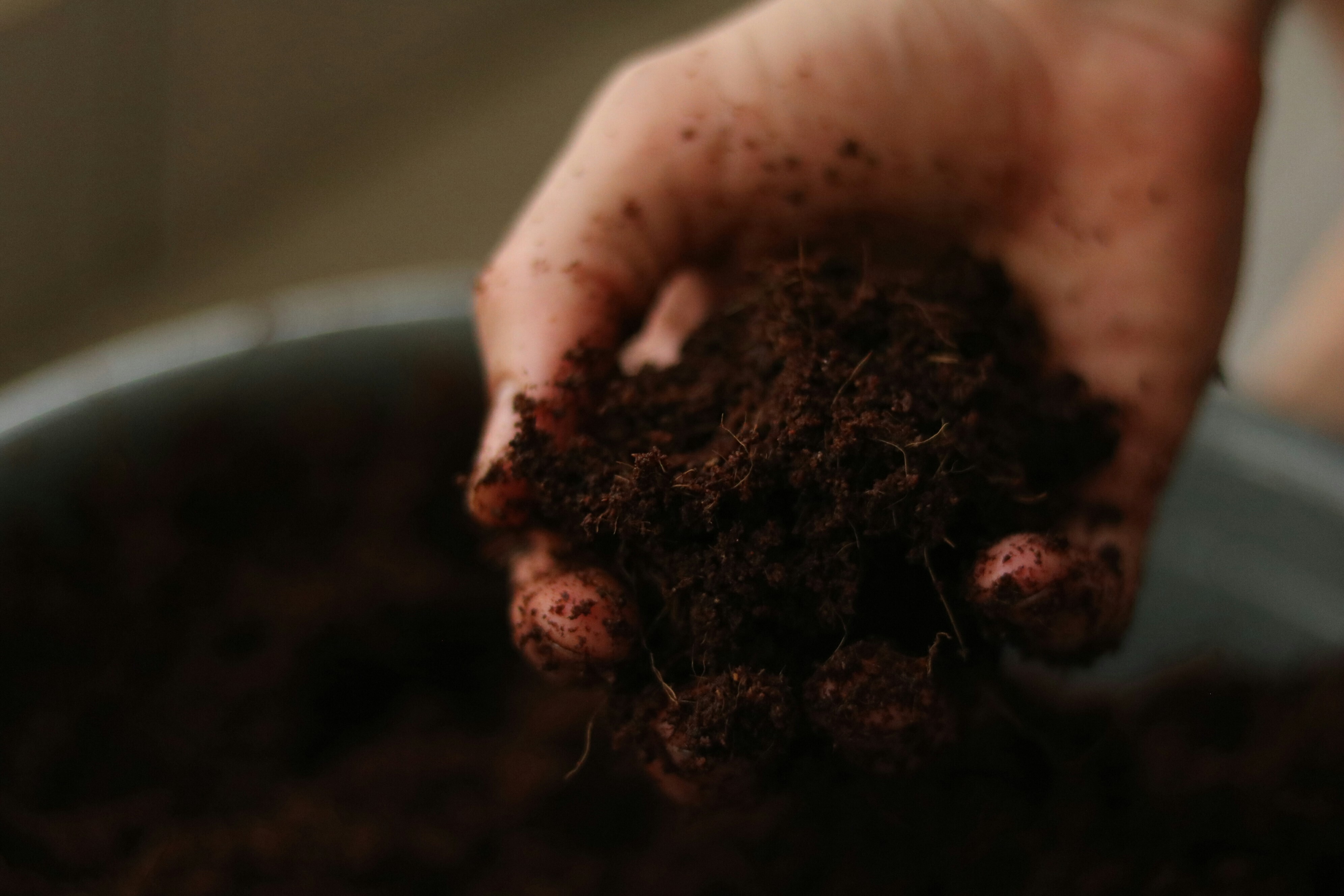
Healthy soils can have impacts beyond farming Image: Unsplash/Alicia Christin Gerald
Andrea Meza Murillo
Deputy Executive Secretary, United Nations Convention to Combat Desertification (UNCCD)- Healthy soils support productivity, reduce volatility, strengthen resilience and protect long-term value across farms, businesses and investment portfolios. Degraded soils undermine these crucial services.
- Soil is everywhere in business value chains but almost nowhere in business decision-making.
- Businesses can act by making soil dependencies visible, measuring outcomes, aligning commercial incentives with stewardship and investing in the transition to environmentally friendly farming.
Consider your morning routine: the grain in your toast or the sugar in your coffee at breakfast, along with the cotton in the shirt you pull on under the cashmere in your sweater – they all begin in soil; yet, most businesses have little idea how much they depend on it.
Soil does not ask to be noticed. Its degradation is quiet, gradual and largely invisible – until it is degraded irreversibly and gone. Today, up to 40% of the world’s land is degraded, costing the global economy an estimated $878 billion annually.
The consequences reach well beyond the farm, through rising production costs, volatile supplies and prices, and growing exposure to droughts, floods and other shocks such as war among nations.
Soil is foundational infrastructure and a business asset
Most people understand that soil is important for agriculture. Its health moderates the quantity, quality and safety of food. Far fewer appreciate the extent to which soil underpins the wider systems on which economies depend.
Healthy soils store, filter and renew water; cycle carbon that moderates climate; transform essential nutrients for healthy plant growth; sustain much of the planet’s biodiversity; and support the interconnected health of plants, animals, people and planetary processes.
Soil is therefore not simply an agricultural input but also living foundational infrastructure. It is a natural asset that supports productive landscapes, resilient supply chains, long-term prosperity and harmonious living but is rarely managed or financed as such.
Healthy soils influence outcomes businesses already care about: productivity, reduced volatility, resilience and long-term viability. Farmers experience this through stronger and more consistent yields, better margins and greater ability to withstand shocks.
Businesses and brands experience it through more reliable supplies and quality, reduced price volatility and greater continuity. Investors experience it through stronger underlying assets and lower exposure to climate- and nature-related risks.
A new report by the World Economic Forum’s Global Future Council on Healthy Soils and Land, in collaboration with the United Nations Convention to Combat Desertification shows how soil outcomes translate into business outcomes across farms, companies, value chains and financial systems.
It also shows that businesses do not merely depend on soil: through procurement, investment, product specifications and supplier incentives, they help shape how land is managed for both humanity and nature.
From invisible dependency to measurable action
Measurement can turn these hidden relationships into decision-relevant information. As part of its reporting against the Taskforce on Nature-related Financial Disclosures (TNFD), luxury goods group LVMH assessed ecosystem-service dependencies across its direct operations and purchased goods.
It found that 58.4% of its raw-material volumes depend on soil quality and formation and nutrient cycling. In comparison, more than 40% of soil-dependent raw materials are sourced from regions affected by soil degradation.
These dependencies span wines and spirits ingredients, wood and paper, textiles, leather and cosmetic ingredients. By identifying priority ecosystem services, sourcing regions and high-dependency materials, the TNFD assessment helped translate an invisible environmental dependency into information relevant to procurement, supplier engagement and long-term business strategy.
Crop nutrition company Yara shows what measurable action can look like on the ground. Yara's NossoCafe coffee programme in Brazil combines soil analysis, tailored agronomic advice and outcome-based monitoring to guide continuous improvement.
The programme brings environmental and business indicators together within a common measurement framework, allowing farmers and value-chain partners to track progress, adapt management and demonstrate outcomes over time.
The framework measures regenerative agriculture performance across five interdependent themes: climate, soil health, resource-use efficiency, biodiversity and prosperity. Other coffee-growing regions across Latin America follow similar approaches.
Measurement is not the destination but a journey that enables better management, accountability and investment.
What businesses can do now?
The business case is increasingly clear. The question is how to translate recognition into action. Five steps consistently emerge:
- Make dependencies visible. Identify where operations and supply chains depend on healthy soils and where business decisions influence soil-related outcomes.
- Measure what matters. Establish baselines and track a practical set of soil and business indicators that can guide decisions, rather than attempting to measure everything.
- Align incentives with stewardship. Use procurement, long-term commercial relationships, technical support and outcome-based rewards – including emerging payment for ecosystem services schemes – to make soil stewardship viable for farmers, pastoralists and other land managers.
- Invest in the transition. Develop financing models that recognize the long-term value of healthy soils and share transition costs and benefits fairly across value chains.
- Work together. Collaborate across sectors, support common approaches and engage constructively in policy. No business can restore soil systems alone.
Healthy soils are living infrastructure for resilient businesses, economies and societies. Investing in their stewardship is not only an environmental responsibility, but a strategic business decision.
Have you read?
This article draws on The Hidden Economic Power of Healthy Soils, a new Forum white paper developed through the Global Future Council on Healthy Soils and Land in collaboration with the United Nations Convention to Combat Desertification.
Don't miss any update on this topic
Create a free account and access your personalized content collection with our latest publications and analyses.
License and Republishing
World Economic Forum articles may be republished in accordance with the Creative Commons Attribution-NonCommercial-NoDerivatives 4.0 International Public License, and in accordance with our Terms of Use.
The views expressed in this article are those of the author alone and not the World Economic Forum.
Stay up to date:
Land Degradation Neutrality
Related topics:

Forum Stories newsletter
Bringing you weekly curated insights and analysis on the global issues that matter.