What it will take to create the regenerative agriculture economy
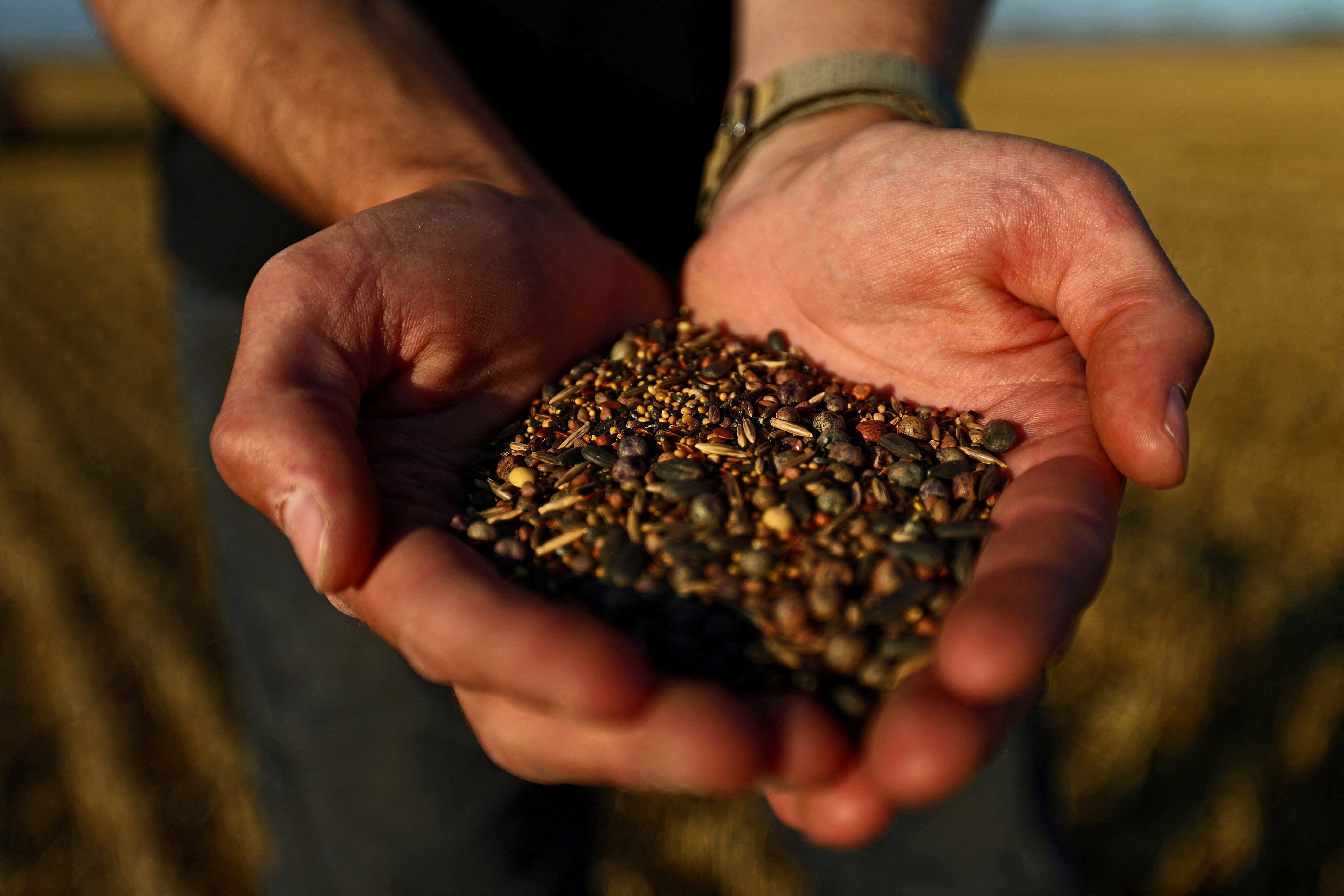
Regenerative agriculture can improve the lives of farmers, help fight climate change and give us all better food to eat. So what's the hold up? Image: REUTERS/Lisi Niesner TPX IMAGES OF THE DAY
- Farms using agroecological practices closely aligned with regenerative agriculture have seen average gains of 14% in yields and 45% in gross income.
- Farms, companies, investors, governments and consumers all have a role in building an agricultural market that rewards regeneration.
- The goal is to connect what farms grow, what companies buy, what investors fund and what people choose into a whole-of-market market transformation.
Somewhere in the world right now, a farmer is looking at soil that gives back less than it used to. Rain comes at the wrong time or not at all. Yields that used to be dependable are not anymore, and the margin for error in farming is getting thinner every season. This is the reality across the farms and landscapes that produce the coffee, cocoa, tea and other foods the world consumes without a second thought.
Our experience at the Rainforest Alliance, working with farmers implementing regenerative agricultural practices, shows us that this trajectory is not inevitable. Restore the soil, protect the water, work with the ecosystem instead of against it, and a farm can become more productive and more resilient at once.
On farms that are making the shift to regenerative agricultural practices, variations of the same story prevail: soil that holds water longer, harvests that are becoming steadier and farmers talking about the land as something they expect to hand down to their children.
What farmers are describing is increasingly reflected in the research. An analysis across the Global South found average gains of 14% in yields and 45% in gross income among farming systems using agroecological practices closely aligned with regenerative agriculture. Resilience, productivity and livelihoods need not pull in opposite directions.
Why isn’t regenerative agriculture business as usual?
The easy answer is that the transition to regenerative agriculture remains underfunded. That is true, but it is not the full story. Decades of unsustainable agricultural practices, compounded by a changing climate, are forcing farmers to rethink how they grow the food we eat, often at real cost and risk to their livelihoods. But the market has not yet been asked to change how it rewards that adaptation, investment and risk.
Farmers cannot carry this transition by themselves, and it is not fair to ask them to. If we want a farmer in Brazil or Kenya to bet years of income on a different way of growing coffee or tea, the rest of us must change as well.
Companies must want secure, resilient supply badly enough to pay for it before the results are visible. Investors must be able to trust that regeneration lowers risk, and that trust has to be earned with real numbers, not good intentions. Consumers need to understand what their choices support before they can be expected to shop differently. And governments must see resilient landscapes and sustainable agricultural production as national assets, because they are.
What it takes to build a regenerative agriculture economy
So what does it actually take to build the other half of the market?
Some of the responsibility is on buyers to change what they reward and the commitments they make. A business that needs resilient farms should make that need visible in its purchasing decisions, giving farmers a reason and the means to invest in the land. A commitment to buy for several years gives a farmer a different basis for investing than a general promise to source more sustainably. When that commitment includes support for transition costs and rewards for verified improvements, lenders have concrete information about expected revenue and how risk is shared. This is how a company’s interest in secure supply can become a basis for financing.
Government also has good reasons to participate that extend beyond any company’s supply chain. Agricultural resilience matters to food security, export earnings and rural employment. Protecting forests and watersheds creates benefits that crop sales alone cannot pay for. Public and philanthropic funding can support those outcomes while paying for technical assistance and absorbing some early transition risk. Commercial capital can then assess opportunities backed by stronger purchasing commitments and shared costs.
These contributions should be planned around the same farms and landscapes, with clear responsibilities and agreed measures of progress. Farmers need support before all the benefits materialize, while additional payments can reward results as they emerge. Financing should reflect the combined commercial, environmental and public value of the transition, with each contributor supporting outcomes relevant to its own interests.
Evidence makes those commitments credible. Companies and investors need to understand how changing practices affect productivity, income and exposure to climate shocks. Environmental claims need evidence of progress in soil health, biodiversity or emissions. A standard can establish what is expected, and independent assurance can check compliance. Tracking outcomes against a clear starting point helps establish what the investment is achieving and provides a basis for rewarding progress.
Consumer demand also has a role in making regeneration commercially valuable. The resilience of a coffee farm or the health of a watershed is rarely visible in the finished product. Brands can make those benefits meaningful by connecting the foods people enjoy with the people and places that produce them. That requires the same care they bring to explaining quality and origin, supported by claims that stand up to scrutiny.
As consumers recognize and choose products associated with credible improvements, companies have a further reason to sustain their commitments to farmers. But the transition cannot depend entirely on a premium paid by affluent shoppers. Companies already have a commercial interest in dependable supply, and governments have an interest in keeping agriculture viable.
How consumer demand can drive change
Consumer demand has the power to be a driving factor in a wider movement towards sustainable agriculture. But to do so, consumers must be empowered with the information required to consciously buy into the practices. Strengthened consumer demand would provide a catalytic impact across the regenerative agriculture supply chain: more demand means more investment, more lending, more income for farmers.
With strengthened consumer demand as the base, and better coordination throughout the value chain, regenerative agricultural practices can become the standard – and that has benefits for us all.
This is what we are working to strengthen at the Rainforest Alliance. Our Regenerative Agriculture Standard provides a framework for change, alongside technical support for farmers and work across landscapes to protect forests, watersheds and livelihoods. Data and assurance help establish credibility, while the Rainforest Alliance seal and brand make that work recognizable to consumers.
There's evidence that this works. In Siguatepeque, Honduras, a group of 73 small coffee producers became the first in the country to earn the Rainforest Alliance's Regenerative Agriculture Standard certification; the culmination of years spent building the soil health and farm management practices the standard requires. That work found a commercial outlet during the 2025/2026 harvest: global coffeemaker Lavazza sourced their coffee for the La Reserva de ¡Tierra! brand from those farmers – a tangible example of regenerative certification translating into market opportunity that arrived only after years of groundwork on the farms themselves.
In Honduras, connecting credibility, data on the ground and meaningful capabilities for farmers supported changes on the ground and brought customers into the transition. That's why our collective goal is no longer to simply close a financing gap for farmers. The goal is bigger: it is to connect what farms grow, what companies buy, what investors fund, what governments protect and what people choose to value, into one market transformation that finally rewards giving more to the land than we take.
Don't miss any update on this topic
Create a free account and access your personalized content collection with our latest publications and analyses.
License and Republishing
World Economic Forum articles may be republished in accordance with the Creative Commons Attribution-NonCommercial-NoDerivatives 4.0 International Public License, and in accordance with our Terms of Use.
The views expressed in this article are those of the author alone and not the World Economic Forum.
Stay up to date:
Sustainable Development
Related topics:


Forum Stories newsletter
Bringing you weekly curated insights and analysis on the global issues that matter.
More on Food, Water and Clean AirSee all

Peter Thomson and Retno L. P. Marsudi
September 22, 2026


