Uncertainty around US-Iran talks, and other geopolitical stories to know this month
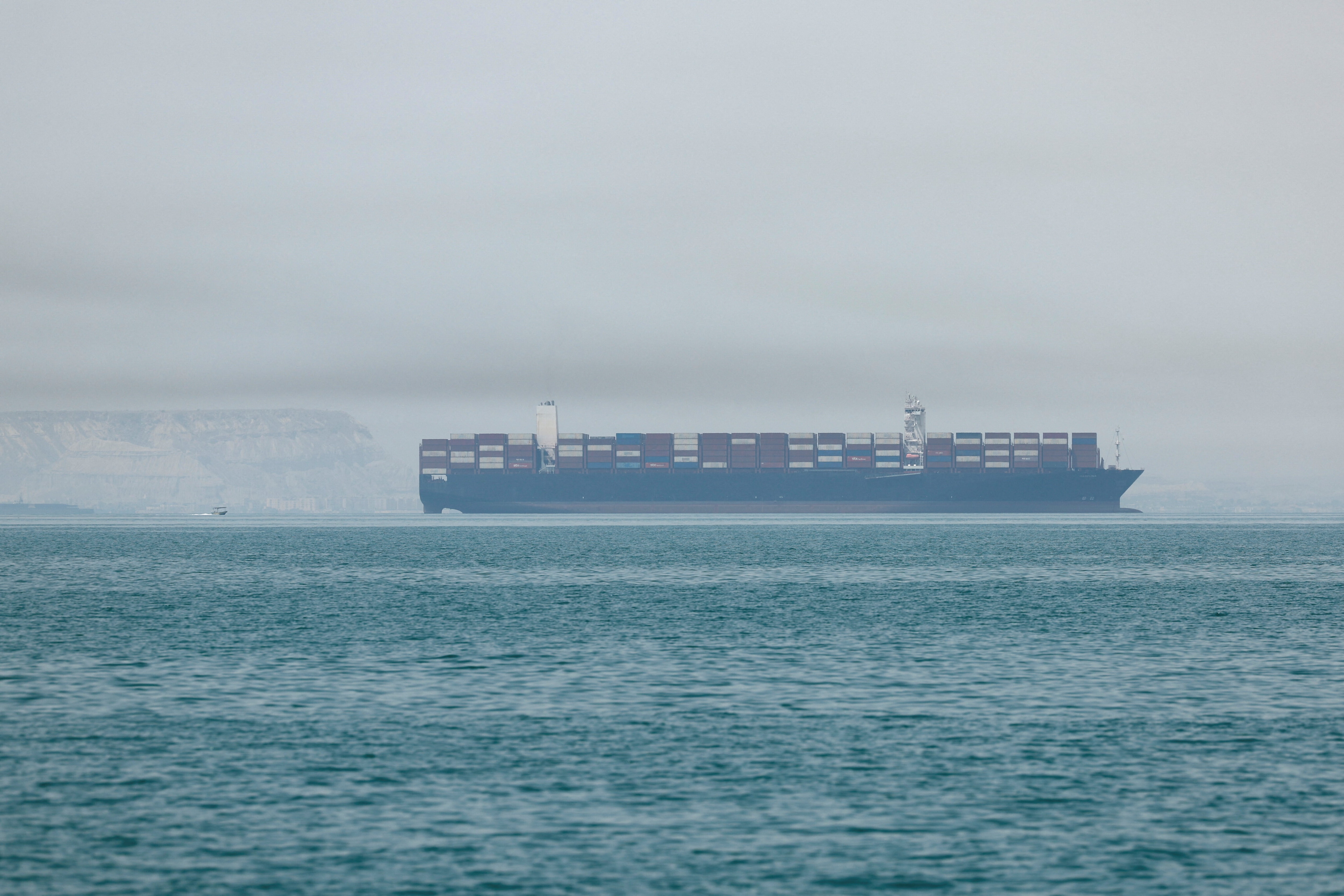
Maritime traffic through the Strait of Hormuz has been at a near standstill since the Iran war broke out. Image: Majid Asgaripour/WANA (West Asia News Agency) via REUTERS
- This monthly round-up brings you a selection of news and updates on the latest geopolitical developments.
- Top international stories: Uncertainty around US-Iran ceasefire; El Niño could further strain Hormuz shortages; Long-range attacks intensify in Ukraine war.
1. Uncertainty surrounds US-Iran talks
Tensions in the Gulf region have escalated amid fresh strikes from the US, Israel and Iran, and uncertainty over peace talks.
Israel and Iran exchanged missile strikes, with US President Donald Trump urging both sides to “immediately stop shooting”. Iran later said it would halt its strikes, before Israel followed suit, saying attacks would end “for now”. Trump subsequently said that Israel would have "no choice" but to accept any deal the US makes with Iran.
Last week, Iranian attacks on Kuwait damaged its airport and killed one person, injuring more than 60 others, Kuwaiti authorities said. Iran also claimed it had hit a US Navy HQ in Bahrain and a US airbase. The US military said it had carried out defensive strikes in southern Iran.
The escalation comes despite the US-Iran ceasefire holding since early April, raising fears that full-scale fighting could resume, according to reports from Al Jazeera and Reuters.
At the time of writing, Iran’s foreign minister said “no tangible progress” had been made in talks to end the conflict. Lines of communication with the US remained open, he confirmed, but warned that any attack on Lebanon’s capital, Beirut, as part of Israel's campaign against Hezbollah, could reignite the US-Iran conflict.
Trump said he would be open to meeting with Iran’s supreme leader if there was an agreement to end the war, and has previously said talks were going well.
Meanwhile, oil industry executives recently warned the US administration that disruption in the Strait of Hormuz caused by the conflict is draining inventories to levels that could send global energy prices surging in the coming weeks. Gulf countries that export oil via the Strait are in talks over pipelines that would allow them to bypass the waterway.
The lack of a diplomatic resolution leaves global energy and other commodity markets exposed.
2. El Niño could compound effects of Hormuz disruption
An “exceptional” El Niño is set to hit a global supply chain already under strain. With global energy reserves running low and traffic through the Strait still far below pre-war levels, experts warn that the climate event could sharply worsen shortages of not just fuel but also fertilizer – another commodity hit hard by the disruption – putting future harvests and food supplies at particular risk.
The naturally occurring climate pattern, characterized by warming of ocean surface temperatures in areas of the Pacific, happens every two to seven years and lasts around nine to 12 months. Even a moderate event makes some weather extremes more likely, according to the World Meteorological Organization.
A new phase of El Niño could begin in a matter of weeks and strengthen throughout the rest of the year, the UN agency says, with some weather experts describing it as potentially one of the strongest ever recorded.
This would layer increased risks of drought, heat and regional crop losses onto a food system already made more fragile by high fuel and fertilizer costs, one expert told the World Resources Institute.
The event is also expected to affect hydropower supply and electricity demand for cooling, further straining the world’s energy supplies.
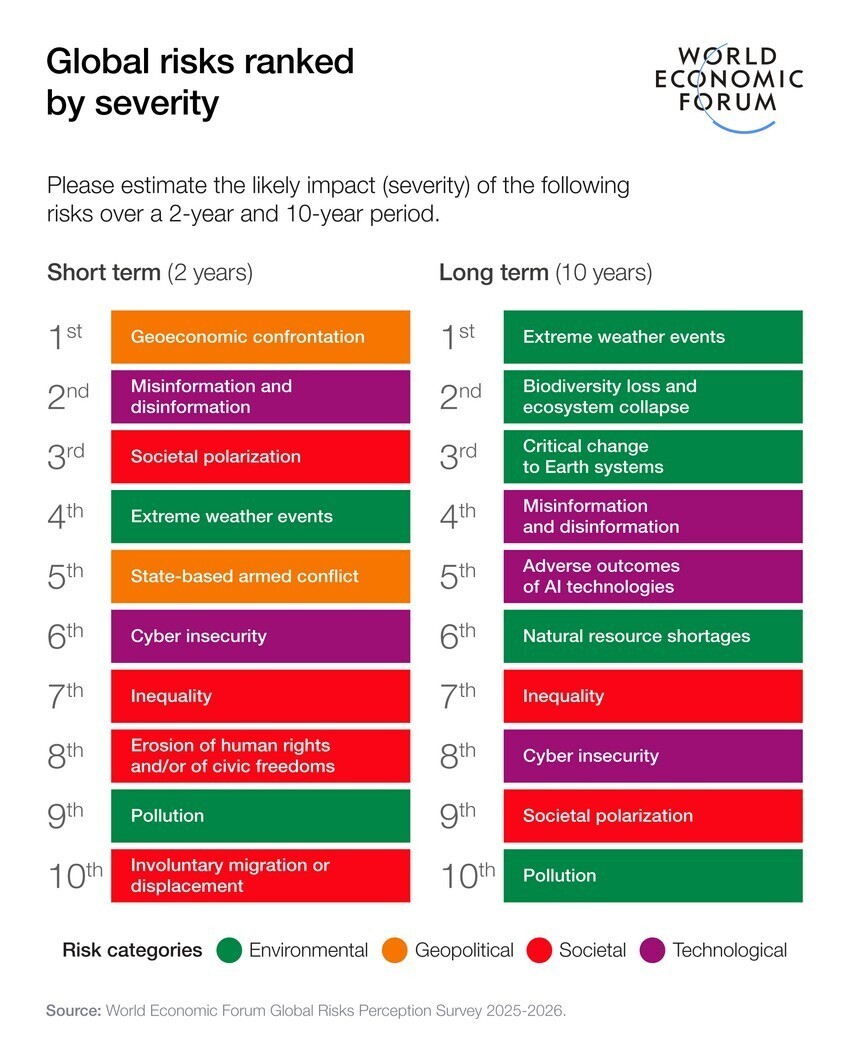
More broadly, this highlights how extreme weather events – the number one long-term risk in the Forum's latest Global Risks Report – do not exist in isolation but exacerbate existing inequalities, supply chain disruptions and geopolitical tensions.
Experts say governments, companies and aid agencies should prepare for what could prove to be a major systemic shock in order to mitigate any potential impact.
3. News in brief: geopolitical developments from around the world
Over the past month, geopolitics has been shaped as much by summitry as by conflict. Trump’s meeting with Xi Jinping sought to steady US-China relations, even as fears of a “Thucydides trap” continued to frame their relationship. Meanwhile, Vladimir Putin’s talks with Xi underscored the durability of the China-Russia alignment and its push for a more multipolar order. At the Shangri-La Dialogue in Singapore, Indo-Pacific debates centred on deterrence and maritime competition. Meanwhile, in St Petersburg, Russia used its economic forum – with Saudi Arabia as a key guest partner – to signal that, despite sanctions and war, Moscow still has non-Western options.
Russia has also escalated air raids on major Ukrainian cities, with analysts saying the strikes were intended in part to distract from the impact of Ukraine’s expanding long-range campaign inside Russia. Those attacks, aimed not at territorial gains but at damaging oil production and disrupting weapons manufacturing, have seen Ukrainian drones travel more than 1,000 kilometres to strike targets, including an oil terminal in St Petersburg, last week.
The UK and Poland have signed a new defence and security treaty that Britain said would improve border security, tackle organized crime and deepen defence cooperation with the European Union. The UK described the determination of the NATO military alliance to defend its territory as “unshakeable”. But following US demands that Europe do more to protect itself, both Britain and Poland have looked to seal defence deals with other nations, including France and Germany.
Congolese authorities suspended all flights to and from Bunia in eastern Democratic Republic of the Congo (DRC) for 10 days in an attempt to contain an outbreak of Ebola. Bunia airport – a key transport link in the province of Ituri, hit by Ebola disease caused by Bundibugyo virus – was reopened with reinforced health checks. The outbreak has also led Uganda to close its border with DRC – the country is one of Bunia’s main cross-border gateways for trade and passenger movement. The measures have already been felt in the city’s commercial activity, according to residents.
How the Forum helps leaders make sense of regional, trade and geopolitical shifts
4. More on geopolitics on Forum Stories
China’s economic story is increasingly about sweeping self-sufficiency. In amongst this is the soybean – and a reliance on imports to support changing diets that has become a vulnerability. What does this say about the trade-offs between food security and natural resource use many countries face? Discover more in this article.
Against a tense global backdrop, the Trump-Xi summit last month aimed to restabilize US-China relations. The leaders shared a vision of building “a constructive relationship of strategic stability” to bring enhanced certainty and predictability for the global economy. But the outcome offers just limited clarity regarding the future direction and stability of a bilateral relationship that affects the entire world. What comes next for China’s trade policy? There are four trends likely to emerge.
In an interconnected world, what happens in one region can send shockwaves across the entire global economy. Supply disruptions, such as the recent effective closure of the Strait of Hormuz, for example, have far-reaching trade impacts. Yet the global trade system often relies on just-in-time logistics and concentrated supply routes. Read why a fragmented world needs more diversified trade hubs in this article.
License and Republishing
World Economic Forum articles may be republished in accordance with the Creative Commons Attribution-NonCommercial-NoDerivatives 4.0 International Public License, and in accordance with our Terms of Use.
The views expressed in this article are those of the author alone and not the World Economic Forum.

Forum Stories newsletter
Bringing you weekly curated insights and analysis on the global issues that matter.
More on Geo-Economics and PoliticsSee all

Iran conflict risks expanding into hybrid warfare, and other geopolitical stories to know this month
Ariel Kastner and Spencer Feingold
October 6, 2026


