WHO says progress stalling on air pollution, and other health stories
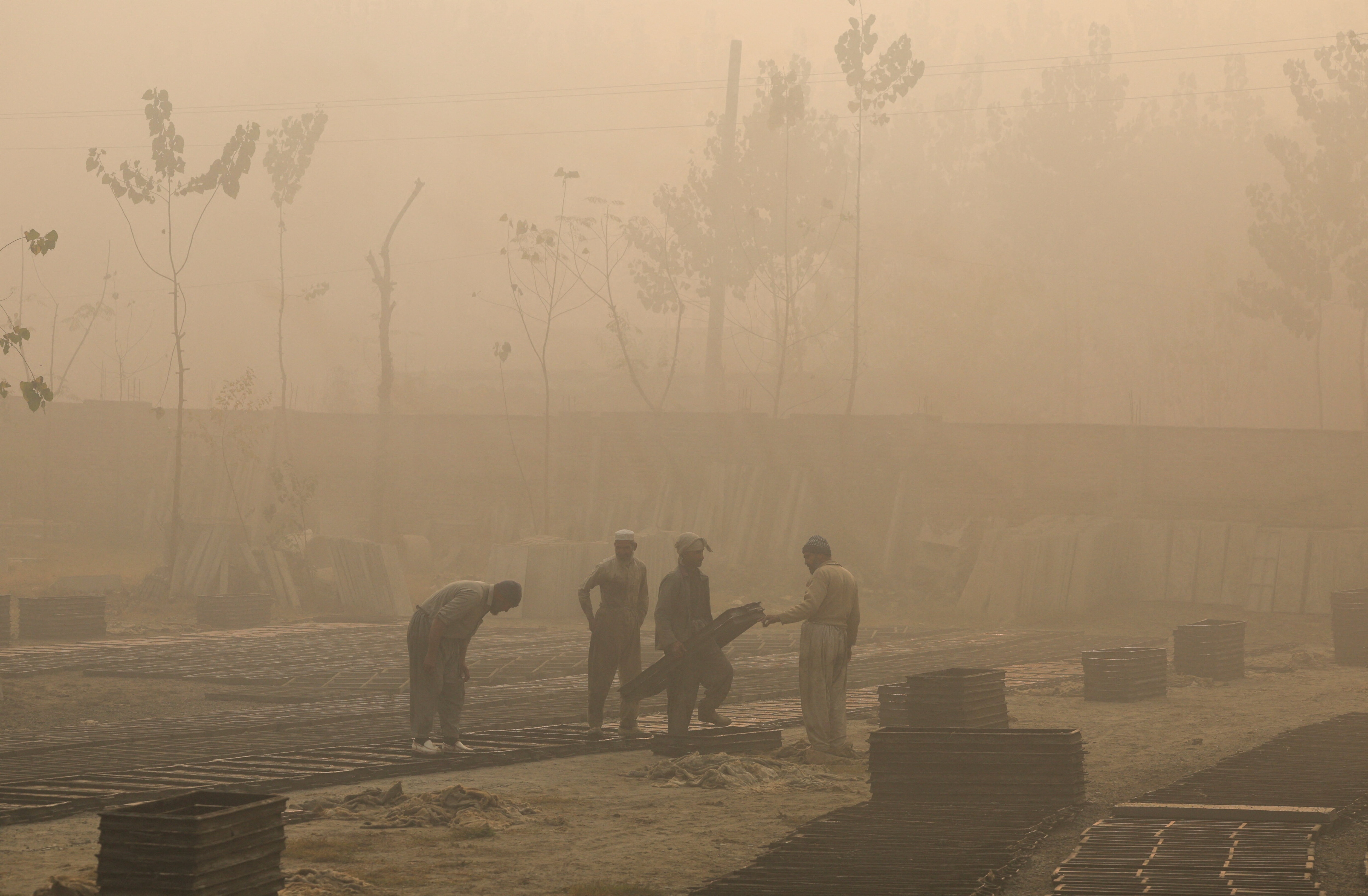
Low- and middle-income countries are exposed to higher air pollution levels, leading to increased health risks. Image: REUTERS/Fayaz Aziz
- This global round-up brings you health stories from the past month.
- Top stories: Air pollution progress stagnates, WHO finds; Ebola epidemic impacting livelihoods; World's largest database of human genomes released.
1. New WHO data reveals inequalities between countries on air pollution progress
Updated data on ambient (outdoor) and household air pollution reveal stalled progress and "critical inequalities" globally, according to the World Health Organization (WHO).
Fine particulate matter (PM2.5) levels have largely stagnated since 2020, it says, while low- and middle-income countries are exposed to higher levels than high-income nations, leading to increased health risks for those populations.
Asia is both the region with the highest levels of air pollution and where the most progress has been made. Access to clean cooking has almost doubled across most of the continent since 2010, while sub-Saharan Africa, western Asia, northern Africa and parts of Oceania are seeing an increase in cooking using polluting fuels.
It's well established that exposure to both atmospheric and household air pollution is a health hazard – leading to noncommunicable diseases such as heart disease, stroke, chronic obstructive pulmonary disease and lung cancer – and low- and middle-income countries bear 90% of these impacts, says the WHO.
Air pollution in numbers:
6.7 million:
Deaths annually from exposure to ambient and household air pollution.
2.1 billion:
Number of people primarily rely on polluting fuels and technologies for cooking.
99%:
Percentage of the world’s population living in places where air pollution levels exceed WHO guideline limits.
Collating data from diverse sources like household surveys, satellite observations and air quality monitoring systems, WHO's research updates three key environmental health indicators within the UN's Sustainable Development Goals (SDG):
- SDG 3.9.1: Mortality rate attributed to ambient and household air pollution
- SDG 7.1.2: Proportion of the population relying on clean fuels and technologies
- SDG 11.6.2: Annual levels of fine particulate matter (PM2.5) in cities.
With most of the world's population breathing insufficiently clean air, monitoring the issue is a priority for global health outcomes.
"As the custodian of environmental health-related SDG indicators, WHO is committed to providing robust, evidence-based data, which is essential for bold decision-making," said the WHO's Bruce Gordon as the new data was released.
2. UN: Ebola epidemic could cost billions and push 1 million into poverty
Contact tracing of potential Ebola patients in the Democratic Republic of Congo (DRC), where the outbreak has been declared a health emergency of international concern, is "dangerously behind", according to Africa's top health agency.
To get on top of the epidemic, 80% of a confirmed Ebola patient's contacts must be tracked, tested and monitored. Currently, only 30% are.
“If we don’t stop this outbreak now, for sure it will be the largest Ebola outbreak ever," Dr Jean Kaseya, the director general of the Africa Centers for Disease Control and Prevention, told the New York Times.
It comes amid warnings from the UN Development Programme (UNDP) that the epidemic could push an additional 985,000 people into poverty in the DRC and cost African economies up to $3.6 billion.
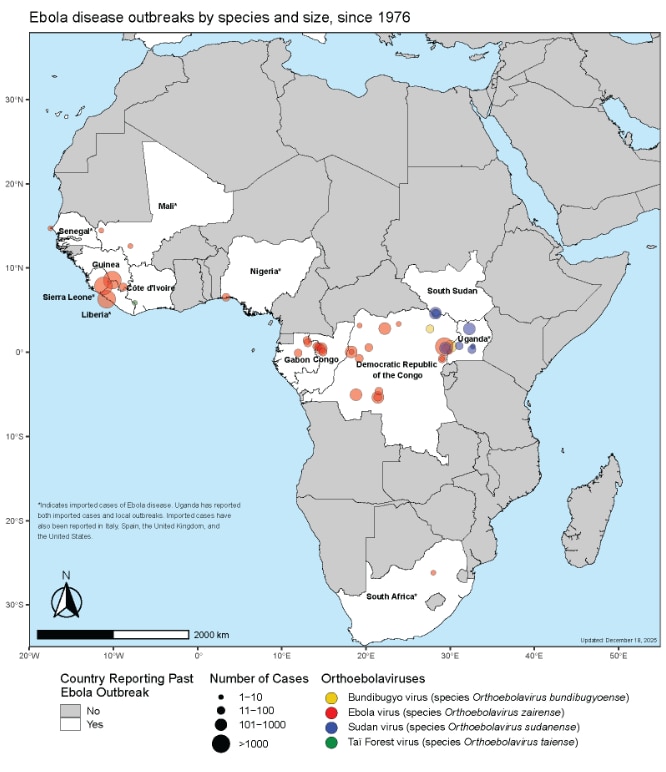
The analysis concludes that, even if the Ebola outbreak is contained within the DRC and Uganda, 55,000 jobs would be lost, with GDP losses of over $1 billion. There is already a knock-on effect on neighbouring countries, with restrictions on travel and trade impacting local economies and livelihoods, says UNDP. The situation could reduce continental GDP by $2.37 billion.
Women are being disproportionately affected, the report says. They make up the majority of informal cross-border traders, and their incomes are being severely hit. Women are also the primary caregivers and frontline health workers, placing them at greater risk of contracting the virus.
With medical resources in the region redirected to the Ebola response, other healthcare services are being severely disrupted. The UNDP warns it could result in up to 2,520 excess infant deaths in the DRC, unrelated to the disease itself.
The report proposes three shifts in policy framework to tackle the situation:
- Direct cash transfers and subsidies for the most vulnerable, especially female-led households.
- Screening protocols at borders, rather than blanket bans, to enable cross-border trade to continue.
- Ring-fencing finance to ensure maternal, reproductive and infant healthcare services are operational.
3. News in brief: Health stories from around the world
The world's largest integrated genomics and health database has just been released. The 'All of Us' programme began in 2018 and is notable for recruiting participants from diverse backgrounds. More than 747,000 people in the US have contributed genetic data, and the National Institutes of Health has paired 535,000 of them with their clinical data – like doctor notes and test results. The data has already helped reduce the risk of kidney disease in people of African ancestry, reports the New York Times.
Venezuela's healthcare system is struggling following June's earthquakes, which killed over 1,700 people, reports Reuters. Out of 21 health centres, at least three are out of action, while six others are damaged, according to WHO. Several healthcare workers who specialize in maternity care are still missing, while the thousands of people displaced by the natural disaster are now at risk of disease outbreaks like yellow fever and dengue, WHO warned.
Obesity rates in England are rising fastest within the younger adult age group, a study published in The Lancet has found. New cases of obesity in 20-year-olds jumped by 16% between the period 2019-20 and 2024-25, reports the BBC. For those in their thirties, the increase was closer to 20%. Three key factors are thought to have contributed to the rise: growing up surrounded by unhealthy food; the impact of the pandemic; and the cost-of-living crisis. "Increasing rates among individuals of childbearing age risk perpetuating intergenerational cycles of health inequality," warned the study's authors.
Bangladesh could be facing a surge in dengue infections over the next two months. Heavy rainfall and high humidity, combined with inadequate mosquito control in the region, have created optimum conditions for transmission of the disease, say health experts. In the 2023 dengue outbreak, more than 321,000 people were infected, and 1,705 died. This June, there were 2,907 infections and 13 deaths, with cases expected to at least double in July.
In the US, also due to changes in the weather, a virus called Powassan is on the rise. Spread mainly via the deer tick, which carries the more well-known Lyme disease, Powassan is a fast-transmitting virus, taking just 15 minutes to transmit (compared to 16-24 hours for Lyme). The US Centers for Disease Control and Prevention reported just seven cases in 2015; last year, there were 76. The disease can lead to brain inflammation or meningitis, and there is currently no treatment or vaccine, reports HealthDay.
E-cigarettes could cause irregular heartbeats or cardiac arrest, according to a new study published by the American Heart Association (AHA). In studies on both mice and lab-grown human heart cells, the synthetic cooling ingredients added to e-cigarettes resulted in arrhythmias and increased cardiovascular risk measures. While the US Food and Drug Administration restricts certain flavours of e-cigarettes, many unauthorized ones remain on the market, says AHA.
Scientists in Singapore have discovered how physical activity can help protect older adults against developing cancer. Ageing muscle can contribute to cancer growth, but exercise can reverse the process, the study found. It focused on sarcopenia, a condition that results in muscle mass loss and can impact mobility, therefore impacting independence and quality of life, too.
Australia has confirmed its first detection of highly pathogenic H5N1 bird flu, after H5N1 was found in a brown skua in Western Australia. The virus, which has devastated wild bird and mammal populations globally, is also suspected to have affected a southern giant petrel found in the same area. While the risk to people remains low, the case underscores the need for continued surveillance, rapid reporting and better tools to assess which emerging pathogens pose the greatest threat.
A major review published in The Lancet has confirmed that mRNA vaccines are safe and effective, drawing on evidence from laboratory research, clinical trials and real-world monitoring of billions of doses. Serious adverse events were found to be rare and substantially outweighed by protection against severe disease, hospitalization and death. The review also highlights the wider potential of mRNA technology, from flu and RSV vaccines to personalized cancer treatments, while calling for continued safety monitoring and more equitable global access.
4. More on health from Forum Stories
Are we approaching our increasingly ageing societies the right way? In this article, a CEO argues that, instead of spending extraordinary sums on treating illness once it appears, we should focus more on preventive health, which is proven to deliver greater long-term value. Studies show that for every $1 invested in public health and prevention in high-income countries, $14 is contributed to society through avoided healthcare costs.
China is approaching its rapidly ageing population with technological innovation. By the end of 2025, the country had over 323 million people aged 60 and above, representing almost a quarter of the population. Helping older people live healthier and independent lives is paramount, and China is moving healthcare to the centre of its innovation agenda to achieve this. Read more about the country's plans here.
Non-communicable diseases like cancer, diabetes and cardiovascular conditions are the leading cause of death worldwide. But it's not just a health system issue. Food, housing, transport, education and air quality are all contributing factors, and tackling the issue requires local coalitions to translate broad principles into practical action, say these Forum experts.
At Summer Davos, health leaders explored how innovation can help strengthen health systems across Asia and beyond. Discussions looked at how non-communicable diseases can be reframed as an economic and development priority, how ageing populations can be seen as an asset rather than only a challenge and how digital healthcare transformation can scale responsibly in China and other fast-moving health systems.
License and Republishing
World Economic Forum articles may be republished in accordance with the Creative Commons Attribution-NonCommercial-NoDerivatives 4.0 International Public License, and in accordance with our Terms of Use.
The views expressed in this article are those of the author alone and not the World Economic Forum.

Forum Stories newsletter
Bringing you weekly curated insights and analysis on the global issues that matter.
More on Health and Healthcare SystemsSee all

Hong Yew Lim
October 7, 2026


