Women’s health investment is growing. How do we turn capital into impact?
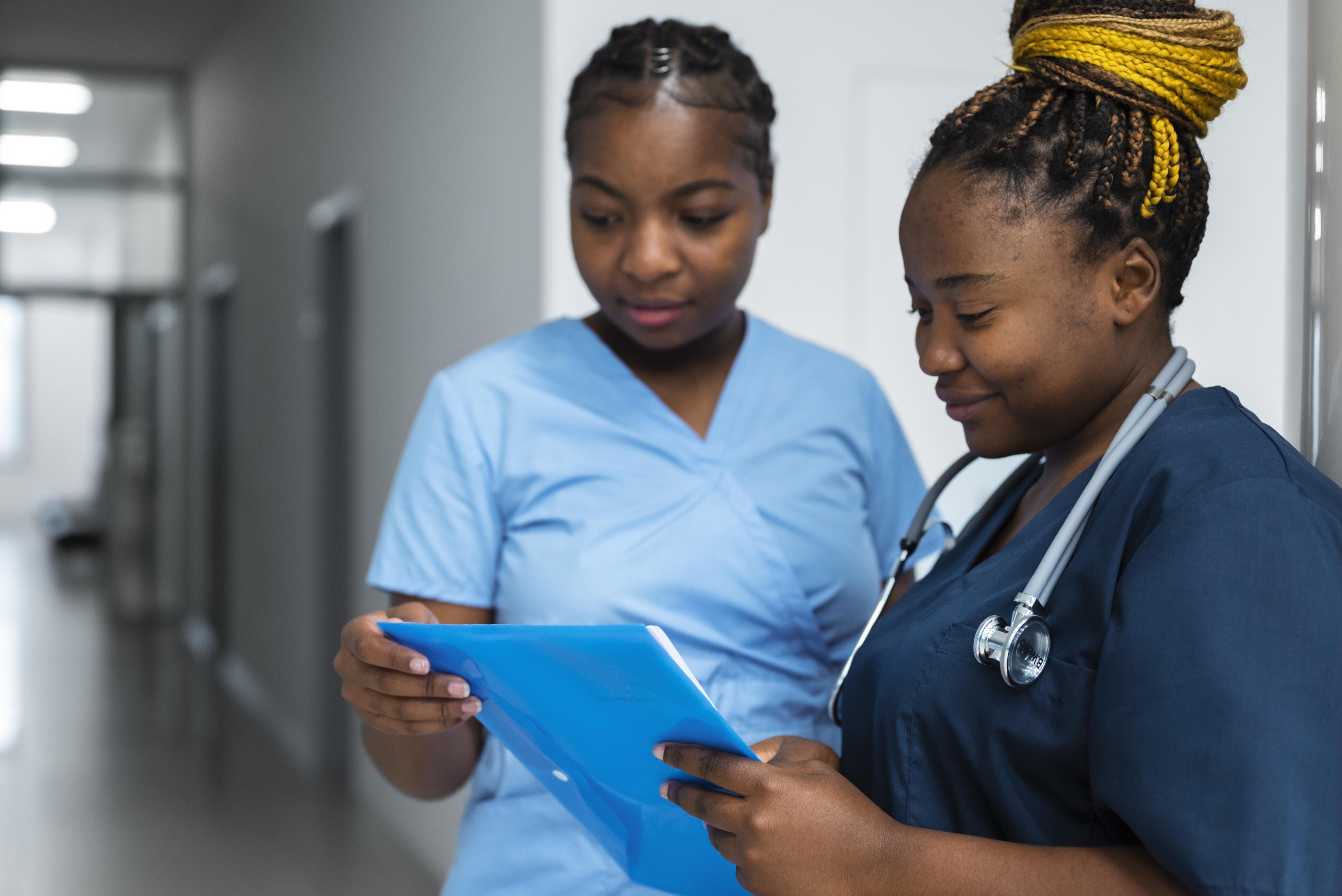
Women's health higher on the agenda, but public-private collaboration will be key to accelerating progress. Image: Magnific
Shyam Bishen
Head, Centre for Health and Healthcare; Member of the Executive Committee, World Economic Forum- Women's health has seen persistent underinvestment for years, but now private capital is increasing and the market is showing signs of maturing.
- As women’s health rises on the agenda, public-private collaboration will be critical to accelerating progress, with Uganda offering a compelling example.
- With multiple stakeholders working together, the world can strengthen health systems, unlock innovation and deliver better outcomes for women.
Women’s health is entering a new phase. After years of persistent underinvestment, private capital is increasing, the market is showing signs of greater maturity, and governments and businesses are placing women’s health higher on their health, innovation and economic agendas.
The question is increasingly shifting from whether to invest in women’s health to where capital can have the greatest impact and how public, private and philanthropic resources can work together to accelerate progress.
In 2025, women’s health companies raised a record $1.55 billion in disclosed equity, up 41% year over year. Growth was also more broadly distributed: investment outside the year’s three largest fundraising deals rose 56%, indicating that capital is reaching a wider range of women’s health companies rather than concentrating in a few market leaders.
This is a notable shift. More than $100 billion in women’s health exits have now been recorded, with nearly half in the past five years. Combined with record equity investment in 2025, this points to a market moving beyond its early stages and attracting a wider range of investors and companies.
Yet significant gaps remain. Capital continues to be concentrated in a relatively narrow set of conditions and solutions, while many areas of high disease burden and unmet need remain undercapitalized.
The Women’s Health Investment Outlook found that only 6% of private healthcare investment over the preceding five years went to women’s health, with capital heavily concentrated in reproductive and maternal health and women-specific cancers.
Growing private-sector momentum coincides with tighter fiscal space, pressure on development assistance and health systems managing infectious disease alongside a growing noncommunicable disease burden.
This creates a more complex financing question than simply how to raise more money: how can new capital complement public expenditure, improve allocative efficiency and translate into better outcomes?
The case of Uganda: From more capital to more productive capital
Uganda illustrates why the timing and allocation of expenditure matter.
Cervical cancer caused an estimated 350,000 deaths globally in 2022, with the greatest burden falling on low- and middle-income countries, despite the availability of effective prevention, screening and early-treatment interventions.
For Uganda, late diagnosis materially changes both the clinical and economic equation. A study at Mulago Hospital found five-year survival of 74% for patients with early-stage breast cancer, compared with 39% for those with advanced disease. A separate cost analysis at Mbarara Regional Referral Hospital found average treatment costs rising from approximately $538 for Stage I disease to $1,403 for Stage IV – more than 2.5 times higher.
Earlier intervention can therefore improve outcomes while reducing treatment costs and protecting household income, workforce participation and health-system capacity. But realizing these gains requires more than additional financing. It requires making existing expenditure more productive.
Uganda offers a practical example of making capital work harder, linking financing to improvements in early detection, diagnosis and continuity of care while leveraging community and referral infrastructure established through its HIV and AIDS response.
In addition, there is the potential of diaspora capital, with Uganda receiving approximately $1.5 billion annually in remittances. Together, these approaches demonstrate how existing systems and different sources of capital can be better aligned around national priorities and measurable outcomes.
The World Economic Forum has partnered with health and finance ministries across Africa, the Global Financing Facility and other partners to develop a Pan-African Public Resource Optimisation Framework for Women’s Health, focused on how governments prioritize budgets, improve execution and connect expenditure to measurable service-delivery outcomes.
This matters because additional financing has limited value where systems cannot absorb and deploy it effectively. Public financial management, procurement, referral capacity and service delivery are therefore part of the investment infrastructure for women’s health.
Building a more effective financing architecture
The opportunity is not simply to mobilize more capital, but to better align different sources of financing with the barriers they are best placed to address.
Public resources can strengthen health systems and create demand for priority interventions; philanthropic and catalytic capital can support evidence generation and de-risk earlier-stage innovation; and commercial investment can provide the financing and capabilities needed to develop and scale viable solutions.
This is particularly important in women’s health, where gaps in data, clinical evidence, regulatory pathways, reimbursement and procurement can prevent promising innovations from progressing or reaching patients at scale.
Addressing these barriers can help create clearer pathways for investment while directing capital towards areas of high disease burden and unmet need that have historically been overlooked.
A more effective financing architecture must therefore connect investment decisions with the full pathway from innovation to adoption. This means identifying where the greatest gaps and opportunities lie, understanding which risks are preventing progress, and determining which combination of public, private and philanthropic resources can address them. Done effectively, this can make existing resources more productive while creating stronger conditions for new investment to enter and scale.
The role of public-private collaboration in women's health
Putting this financing architecture into practice will require stronger public-private collaboration.
No single actor can address the barriers that determine whether capital and innovation ultimately translate into better outcomes. Governments, businesses, investors, philanthropies and development partners each bring different resources, capabilities and levers, but greater impact will depend on aligning them around shared priorities and clearer pathways from investment to adoption and scale.
This reflects a broader challenge in women’s health: strengthening coordination across the pathway from evidence and R&D to investment, market access and care delivery. Building on its work over the past three years, the World Economic Forum’s Global Alliance for Women’s Health, co-chaired by the Gates Foundation and the Ministry of Health of Spain, will increasingly focus its efforts on addressing these interdependencies and bringing together the actors, resources and market conditions needed to move promising solutions from unmet need to adoption and scale.
Against the backdrop of the Forum’s Sustainable Development Impact Meetings (SDIM), the Global Alliance for Women’s Health is convening a diverse group of leaders across key industries to examine this evolving landscape.
The shift is visible across the sector: investment and exits are increasing, new models for financing and delivery are emerging, and a broader group of public and private sector leaders are stepping forward. The Ministry of Health of Spain, the Ministry of Health of Singapore, Bayer and Reckitt are joining the Alliance’s Board, reflecting growing leadership across sectors and regions.
And as global leaders gather at the 81st United Nations General Assembly in New York, there is an opportunity to strengthen this collaboration and move from growing momentum to measurable impact, ensuring that capital is directed and deployed in ways that strengthen health systems, unlock innovation and deliver better outcomes for women.
Don't miss any update on this topic
Create a free account and access your personalized content collection with our latest publications and analyses.
License and Republishing
World Economic Forum articles may be republished in accordance with the Creative Commons Attribution-NonCommercial-NoDerivatives 4.0 International Public License, and in accordance with our Terms of Use.
The views expressed in this article are those of the author alone and not the World Economic Forum.
Stay up to date:
Women's Health


Forum Stories newsletter
Bringing you weekly curated insights and analysis on the global issues that matter.
More on Health and Healthcare SystemsSee all

Jayasree K. Iyer
September 23, 2026