How philanthropy can serve as a catalyst for climate and nature solutions
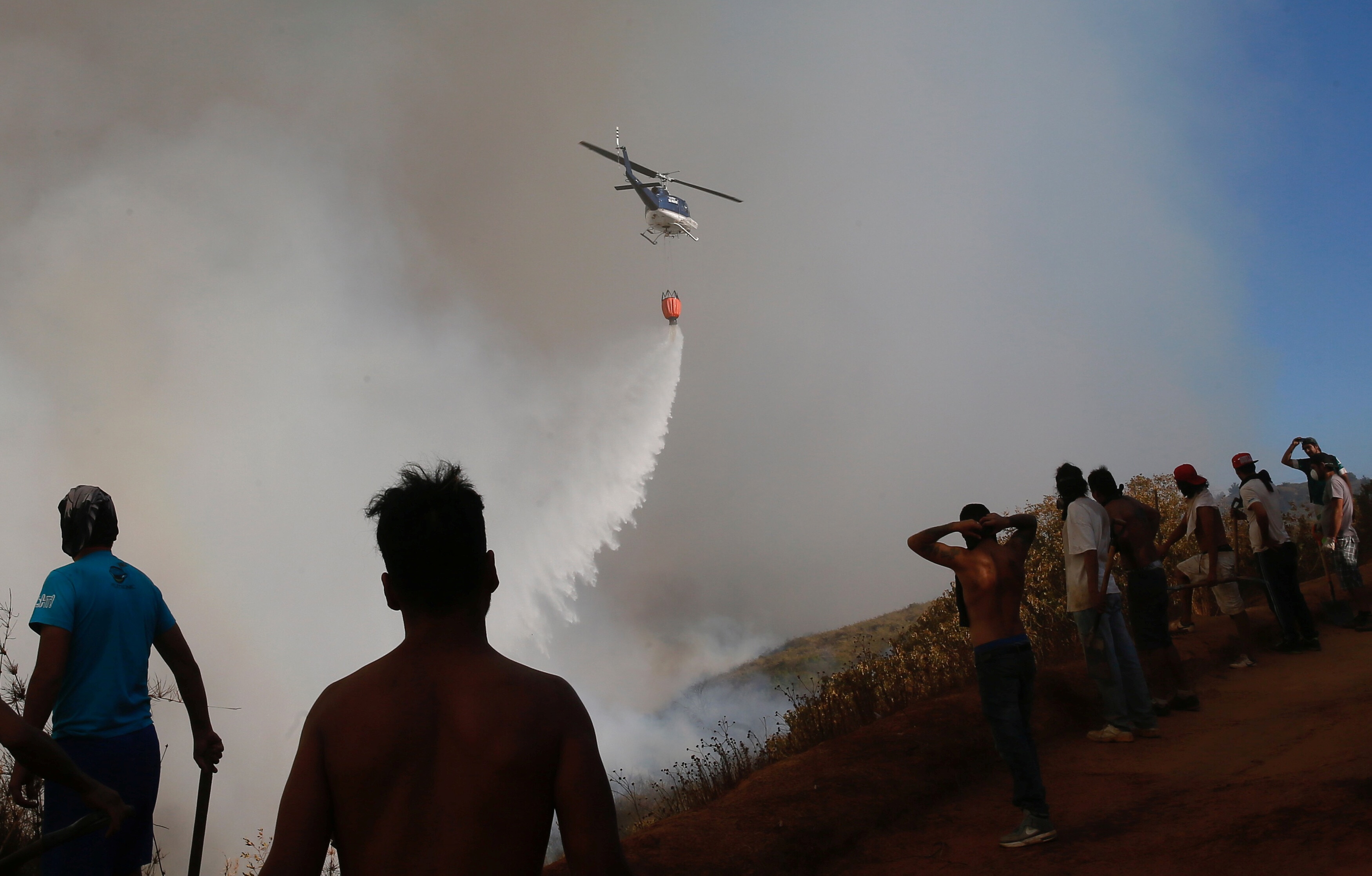
Philanthropy can help create conditions that unlock investment in climate and nature solutions. Image: Reuters/Rodrigo Garrido
- Building a better future that is prosperous, free and secure for all requires collective action to unlock investment in climate and nature solutions.
- Catalytic, philanthropic capital that is patient, flexible and risk tolerant is key to solving bottlenecks that the public and private sectors cannot address.
- By activating catalytic leaders across philanthropy, business, finance and the public sector, we can advance climate and nature solutions at scale.
Amid increasingly polarized public discourse, we must not lose sight of what we hold in common: a desire to live in a world that is prosperous, free and secure and not one defined by polluted air, dirty water and barren earth.
Yet that future will remain out of reach unless we can catalyze the collective action required to unlock investment in impactful climate and nature solutions.
Catalytic, philanthropic capital that is patient, flexible and risk tolerant will be key to solving bottlenecks that the public and private sectors are not well positioned to address, by identifying targeted intervention points in the system.
At the Gordon and Betty Moore Foundation, we are committed to using sustained, scientifically sound philanthropy to help realize durable solutions for nature, climate and people.
Many of these solutions represent a compelling commercial opportunity but languish when competing in a system that externalizes the cost of environmental impacts and forces first-movers to bear the full expense.
At the same time, explicit subsidies of more than $1 trillion and implicit subsidies estimated at 8% of global gross domestic product (GDP) for fossil fuels, agriculture and fisheries reinforce incentives of climate-disrupting and nature-depleting systems.
Impactful solutions therefore require more than just commitments; they need catalytic investment in the foundational architecture which can help drive systemic change.
Here are some examples.
Building wildfire resilience
Wildfires act as a global stress test of our ability to tackle the nature and climate crisis, yet we manage modern fires with out-of-date approaches.
The Moore Foundation’s Wildfire Resilience Initiative seeks to address this problem by helping shift the system from reaction towards prevention, preparedness and long-term resilience.
Alongside our grantees and partners, Moore seeks to demonstrate effective wildfire solutions at both community and landscape levels, while de-risking the public and private investment required for scale. Investments in coalition capacity provide for shared agendas, evidence and coordination, reducing fragmentation and helping effective solutions spread.
The Global Wildfire Leadership Network (GWLN) plays this “market enabling” role by compiling research and case studies, identifying pathways for investment and action, and clarifying roles for stakeholders.
FireSat, for example, is a partnership led by the Earth Fire Alliance and supported by Moore, Google.org and others, that can revolutionize wildfire monitoring and response. Upon full deployment, its satellite constellation will be able to scan for ignition events at 15- to 20-minute intervals and detect fires 400 times smaller than current systems.
In such cases, philanthropic investments can help influence capital allocation by giving public agencies and insurers the data and infrastructure needed to justify sustained investment in wildfire prevention, enabling new forms of public-private resilience financing.
Brazil’s agricultural transition
Brazil is another case in point. The country has over 100 millions of hectares of degraded pastureland suitable for expanding production without additional deforestation. However, while the innovation is there, scaling is not – and at its core, Brazil faces a finance problem.
Proven business models exist, including expansion onto already‑cleared pastureland, sustainable cattle farming and production integrated with restoration. But many are early stage and bring commercial uncertainty. Catalytic capital can help close that gap by improving the economics for first movers and absorbing risks that private markets are not yet ready to price.
The Catalytic Capital for the Agricultural Transition in Brazil (CCAT) fund provides concessional capital that de-risks private investment and improves terms for farmers. It builds on the Innovative Finance for the Amazon, Cerrado, and Chaco (IFACC) initiative, which helped establish shared standards, incentives and financial frameworks for deforestation- and conversion-free supply chains, by using catalytic capital to scale.
CCAT has set a target of raising $200 million in catalytic capital and aims to crowd in an extra $800 million in private finance. Moore Foundation investment helped catalyse additional donor and philanthropic capital to secure $50.5 million by the end of 2025.
Over time, CCAT aims to create a market for sustainable agriculture investing that is not reliant on catalytic capital and can attract global institutional capital at scale. It will use philanthropic investment to improve the risk-return profile for early adopters – enabling development finance institutions to extend concessional and blended finance and giving commercial lenders the confidence to finance sustainable farming at scale.
Underwriting discipline in the Arctic Ocean
As new areas of the Arctic Ocean emerge for human use, the risks associated with ships transiting the region are rising, but remain under-recognized in financial decision-making. This is bad for both business and nature.
To help shift this dynamic, the Moore Foundation has supported the data that makes risks visible, the platforms that enable collective action on such risks, and the tools that make new risk management commitments practicable.
Moore and other donors have also backed initiatives like the #BackBlue Ocean Finance Commitment, led by the Ocean Risk and Resilience Action Alliance (ORRAA) and the World Economic Forum’s ACT Ocean.
The #BackBlue initiative helps financial institutions consider the ocean when assessing risk and allocating capital. It covers trillions of dollars in assets under management as banks, insurers and asset managers commit to setting net-zero commitments, aligning standards with climate and nature frameworks, and accelerating financing approaches that reduce risk and build resilience for coastal communities.
Meanwhile, ORRAA works with insurers to design Arctic-specific insurance guardrails and use insurance and financial mechanisms to influence the rules vessels must meet. This is both about risk, identifying the places where vessels should not operate due to liability concerns, but also about opportunity – enabling investment to flow to sustainable “blue economy” initiatives led by coastal communities.
By equipping insurers and lenders to price Arctic and ocean risks into underwriting and lending decisions, these philanthropic investments enable capital to avoid the highest-risk activities while scaling investment into more resilient blue economy opportunities.
Why catalytic leadership matters for climate solutions
Philanthropy on its own isn’t large enough to shift the dynamics around nature and climate solutions. However, philanthropy can act as a catalyst that helps build the scaffolding for multistakeholder solutions to thrive.
The examples above show catalytic leadership in practice. Progress came not simply from mobilizing more resources, but from directing the right combination of capital, expertise, networks, influence and risk appetite towards a specific bottleneck. Leaders absorbed risk, built markets, convened coalitions and developed the evidence and standards needed for others to act.
GAEA, the Global Accelerator for Earth Action, is the World Economic Forum’s platform for unlocking more of this leadership. It helps catalytic leaders identify where their unique capabilities for greatest impact and which counterparts they need alongside them.
When the right actors converge on the same point of leverage, catalytic leadership can mobilize wider action and bring a prosperous, free and secure future within reach.
Don't miss any update on this topic
Create a free account and access your personalized content collection with our latest publications and analyses.
License and Republishing
World Economic Forum articles may be republished in accordance with the Creative Commons Attribution-NonCommercial-NoDerivatives 4.0 International Public License, and in accordance with our Terms of Use.
The views expressed in this article are those of the author alone and not the World Economic Forum.
Stay up to date:
Climate Crisis
Related topics:


Forum Stories newsletter
Bringing you weekly curated insights and analysis on the global issues that matter.
More on Nature and BiodiversitySee all

Emily Bayley and Nadia Greutert
October 15, 2026


